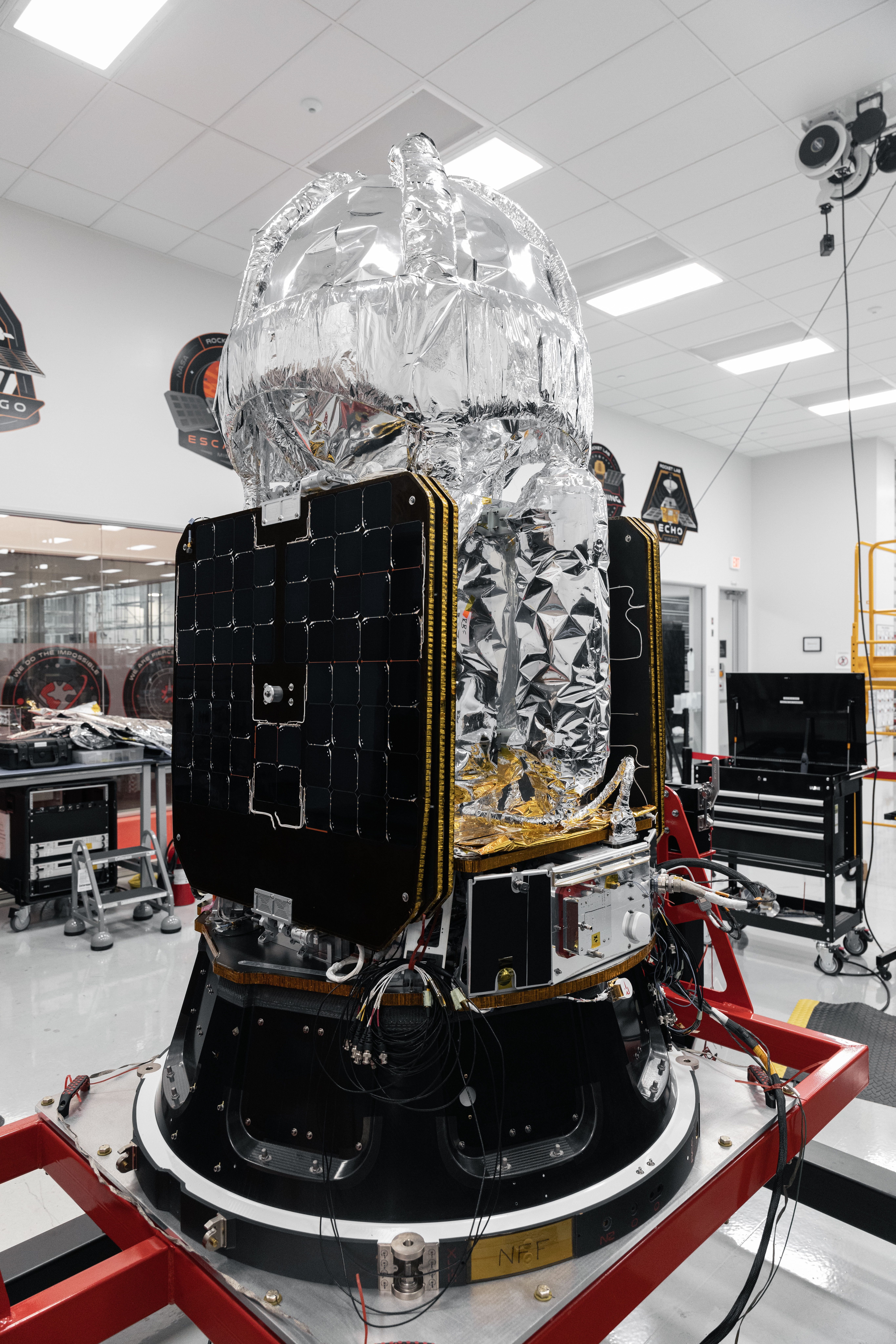
NASA and Eta Space to Demo Cryogenic Fuel Tech in Orbit
The Gist
NASA and Eta Space will test cryogenic fluid management technologies for in-space propellant depots via the LOXSAT mission.
Explain Like I'm Five
"Imagine gas stations in space! NASA is testing special tanks that can keep rocket fuel super cold so spaceships can fill up and travel farther into space."
Deep Intelligence Analysis
The data collected from LOXSAT's tests will support the development of in-space propellant depots, which could refuel spacecraft on their journeys to the Moon, Mars, and other deep space destinations. NASA's LOXSAT team comprises members from the Cryogenic Fluid Management Portfolio Project at NASA's Marshall Space Flight Center, Glenn Research Center, and Kennedy Space Center. The cryogenic portfolio's work is part of NASA's Space Technology Mission Directorate and encompasses over 20 individual technology development activities.
Successful demonstration of these technologies is critical for enabling long-duration space missions and reducing the cost of space exploration. In-space propellant depots would allow spacecraft to carry smaller fuel loads at launch, increasing payload capacity and reducing overall mission costs. This technology is a key enabler for sustainable and affordable deep space exploration. *Transparency Statement: This analysis was generated by an AI model and reviewed by human experts.*
_Context: This intelligence report was compiled by the DailyOrbitalWire Strategy Engine. Verified for Art. 50 Compliance._
Impact Assessment
Successful demonstration of cryogenic fuel management is crucial for long-duration space missions. In-space propellant depots will enable refueling of spacecraft for lunar, Martian, and deep-space exploration.
Read Full Story on NASA Breaking NewsKey Details
- ● LOXSAT will demonstrate 11 cryogenic fluid management technologies.
- ● Mission duration is nine months.
- ● Rocket Lab is providing spacecraft and launch services.
- ● Launch is scheduled no earlier than July 17 from New Zealand.
Optimistic Outlook
Advancements in cryogenic fuel management could revolutionize space travel, making deep-space missions more feasible and affordable. Successful LOXSAT mission could attract further investment in in-space refueling infrastructure.
Pessimistic Outlook
Technical challenges in managing cryogenic fluids in microgravity could delay or hinder the development of in-space propellant depots. Failure of the LOXSAT mission could set back deep-space exploration efforts.

The Signal, Not
the Noise|
Get the week's top 1% of space-tech intelligence synthesized into a 5-minute read. Join 25,000+ aerospace insiders.
Unsubscribe anytime. No spam, ever.