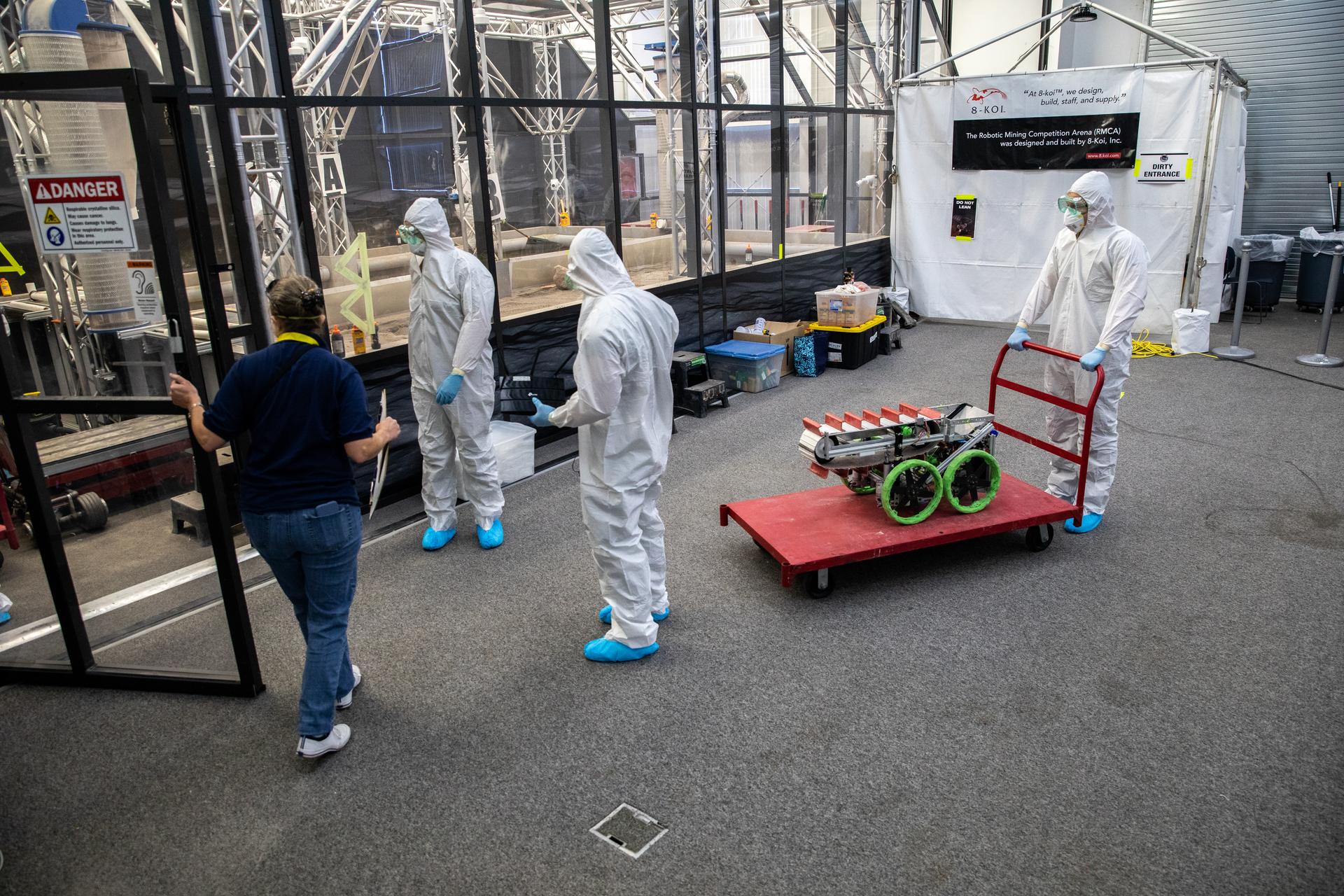
NASA's 2026 Lunabotics Challenge Focuses on Lunar Infrastructure Protection
The Gist
NASA's 2026 Lunabotics Challenge tasks college teams with designing robots to build lunar berms for Artemis infrastructure protection.
Explain Like I'm Five
"NASA is having a robot-building contest where college students make robots that can build walls on the Moon to protect astronauts and their stuff from space dangers!"
Deep Intelligence Analysis
The challenge highlights the importance of in-situ resource utilization (ISRU) for sustainable lunar operations. By using locally sourced materials to build infrastructure, NASA can reduce the cost and complexity of transporting resources from Earth. The Lunabotics competition serves as a valuable platform for developing and testing ISRU technologies, as well as training the next generation of engineers and scientists.
While the Lunabotics Challenge focuses on a specific application of lunar robotics, the skills and technologies developed have broader implications for space exploration. The ability to autonomously construct habitats, landing pads, and other infrastructure will be essential for establishing a permanent human presence on the Moon and other planetary bodies. The competition also fosters collaboration between academia, industry, and government, accelerating the pace of innovation in the space sector.
_Context: This intelligence report was compiled by the DailyOrbitalWire Strategy Engine. Verified for Art. 50 Compliance._
Impact Assessment
The Lunabotics Challenge fosters STEM skills and develops technologies for lunar resource utilization and infrastructure protection. Berm construction is crucial for shielding Artemis missions from debris, radiation, and other hazards on the Moon.
Read Full Story on NASA Breaking NewsKey Details
- ● The Lunabotics Challenge will be held May 19-21, 2026, at Kennedy Space Center.
- ● 50 college teams will design and operate lunar robot prototypes.
- ● Robots must build berms from simulated lunar regolith to protect Artemis infrastructure.
Optimistic Outlook
The competition drives innovation in lunar robotics and in-situ resource utilization, potentially accelerating the development of sustainable lunar habitats and operations. The skills gained by participating students will contribute to the future Artemis missions and the broader space industry.
Pessimistic Outlook
The challenge focuses on a specific aspect of lunar infrastructure, and the solutions developed may not be directly transferable to other lunar construction tasks. The reliance on student teams may limit the scope and complexity of the technologies developed.

The Signal, Not
the Noise|
Get the week's top 1% of space-tech intelligence synthesized into a 5-minute read. Join 25,000+ aerospace insiders.
Unsubscribe anytime. No spam, ever.