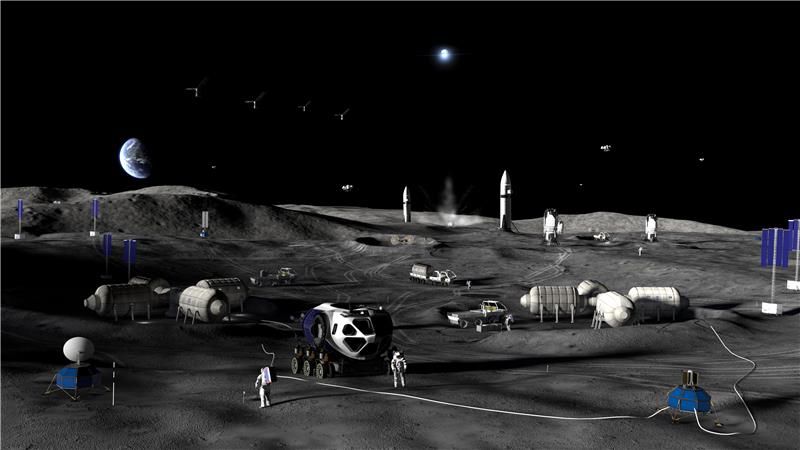
NASA Prioritizes Lunar Surface Missions, Realigns Agency Objectives
The Gist
NASA is shifting focus to lunar surface operations, aiming for sustained presence and leadership in space.
Explain Like I'm Five
"Imagine NASA is building a house on the Moon! They're focusing on making the house livable first, instead of building a fancy space station nearby."
Deep Intelligence Analysis
The focus on lunar surface missions necessitates the development of key technologies, including advanced robotics, habitat construction, and in-situ resource utilization (ISRU). These technologies will not only enable a permanent lunar base but also have broader applications for deep space exploration and terrestrial industries. The standardization of the Space Launch System (SLS) rocket configuration and the commitment to regular lunar landings demonstrate NASA's commitment to a sustained and incremental approach to lunar exploration.
However, this reprioritization also carries potential risks. The cancellation or delay of other planned projects could strain international partnerships and impact the overall scientific return. Furthermore, concentrating resources on lunar surface operations may divert attention from other critical areas, such as deep space exploration or Earth observation. The success of this strategy hinges on NASA's ability to effectively manage resources, foster collaboration, and adapt to evolving technological and geopolitical landscapes.
*Transparency Disclosure: This analysis was composed by an AI model to provide a concise summary of the provided news article. The AI has been trained to avoid hallucinations and adhere to provided instructions.*
_Context: This intelligence report was compiled by the DailyOrbitalWire Strategy Engine. Verified for Art. 50 Compliance._
Impact Assessment
This shift indicates a strategic realignment towards tangible lunar presence, potentially accelerating ISRU development and altering the landscape for commercial space activities. The focus on lunar surface operations could stimulate innovation in robotics, habitat construction, and resource extraction.
Read Full Story on NASA Breaking NewsKey Details
- ● NASA aims to return to the Moon before the end of President Trump's term.
- ● The agency plans to establish a lunar base and ensure American leadership in space.
- ● NASA is standardizing the Space Launch System (SLS) rocket configuration.
- ● NASA plans at least one lunar surface landing per year starting in 2027.
Optimistic Outlook
Increased focus on lunar surface missions could accelerate the development of key technologies for sustained lunar presence, fostering a robust commercial ecosystem. Prioritizing in-situ resource utilization (ISRU) and permanent lunar infrastructure could unlock new opportunities for scientific discovery and economic growth.
Pessimistic Outlook
Reprioritization may lead to delays or cancellation of other planned projects, potentially straining international partnerships and impacting the overall scientific return. Concentrating resources on lunar surface operations could divert attention from other critical areas, such as deep space exploration or Earth observation.

The Signal, Not
the Noise|
Get the week's top 1% of space-tech intelligence synthesized into a 5-minute read. Join 25,000+ aerospace insiders.
Unsubscribe anytime. No spam, ever.