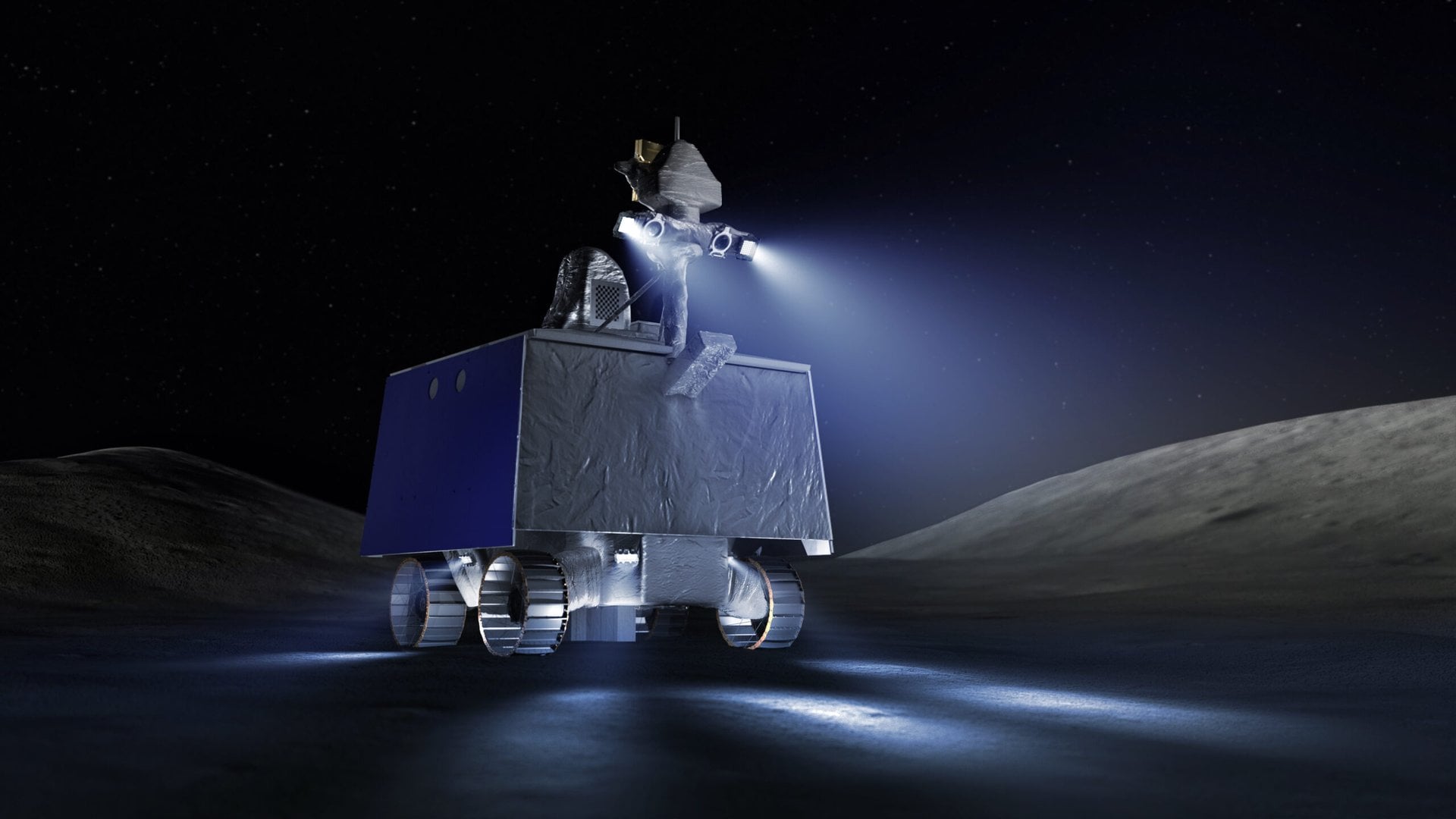
Nuclear Rovers Could Unlock Lunar South Pole's Water Ice Riches
The Gist
Nuclear-powered rovers are proposed for exploring permanently shadowed regions (PSRs) on the Moon to access water ice deposits.
Explain Like I'm Five
"Imagine the Moon has super cold, dark caves with ice. We need special robots with tiny nuclear batteries to explore them because it's too cold for solar panels. This ice can be turned into water and rocket fuel for future Moon missions!"
Deep Intelligence Analysis
However, the extreme environmental conditions within PSRs present considerable engineering challenges. Maintaining operational functionality in temperatures below -240 °C requires robust thermal management systems and radiation-hardened electronics. Communication limitations, particularly on the far side of the Moon, necessitate autonomous operation capabilities and reliable data relay systems. The success of these missions hinges on the development and deployment of reliable Americium-241 based Radioisotope Power Systems (RPSs).
From a market perspective, the development of nuclear-powered rovers for lunar exploration could stimulate growth in the space robotics and power systems sectors. Companies specializing in radioisotope thermoelectric generators (RTGs) and advanced materials could benefit from increased demand. Furthermore, the validation of ISRU technologies through these missions will pave the way for commercial lunar resource extraction ventures, attracting investment and fostering innovation in the space economy. The reliance on Americium-241 also introduces new supply chain considerations and regulatory frameworks, potentially impacting the cost and timeline of future lunar missions.
_Context: This intelligence report was compiled by the DailyOrbitalWire Strategy Engine. Verified for Art. 50 Compliance._
Impact Assessment
Accessing water ice in lunar PSRs is crucial for ISRU, reducing reliance on Earth for future lunar missions. Validating orbital remote sensing data via ground-truth measurements reduces risks for crewed landings.
Read Full Story on Universe TodayKey Details
- ● PSRs have temperatures below -240 °C (-400 °F), precluding solar-powered rovers.
- ● Americium-241 is suggested as a power source due to Pu-238 shortages.
- ● The mission concepts involve direct landing/entry into a PSR.
- ● The study was presented at the 2026 Lunar Planetary Science Conference (LPSC).
Optimistic Outlook
Americium-241 availability could bypass Pu-238 supply bottlenecks, accelerating lunar resource prospecting. Successful PSR exploration will enable long-term lunar habitation and resource extraction, supporting programs like Artemis and commercial ventures.
Pessimistic Outlook
Extreme temperatures, lack of sunlight, and communication challenges in PSRs pose significant engineering hurdles. Delays in Pu-238 production could further incentivize reliance on alternative radioisotopes with unknown long-term performance.

The Signal, Not
the Noise|
Get the week's top 1% of space-tech intelligence synthesized into a 5-minute read. Join 25,000+ aerospace insiders.
Unsubscribe anytime. No spam, ever.