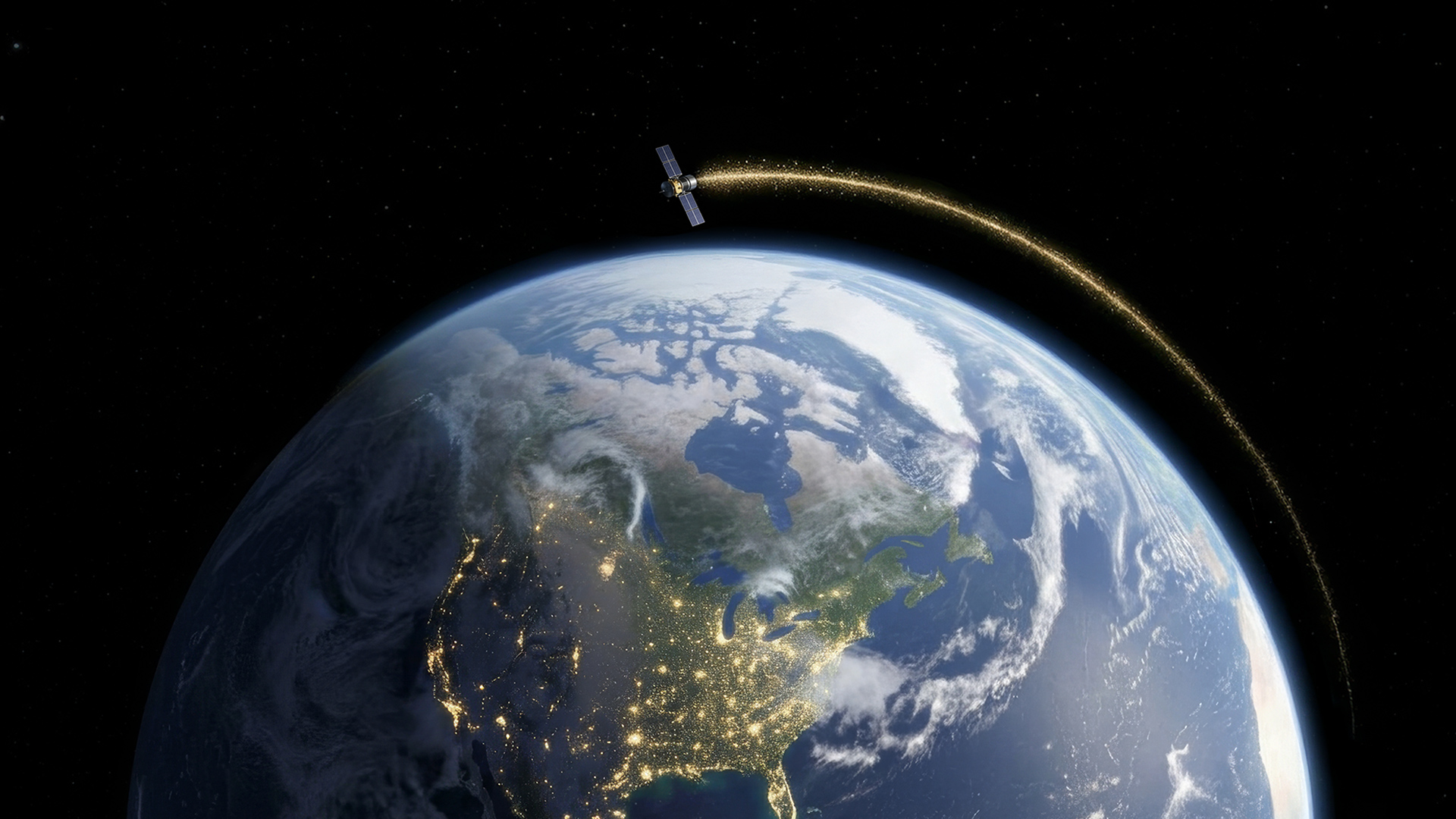
Nvidia Aims to Power Orbital Data Centers with New Space-1 Module
The Gist
Nvidia's Space-1 Vera Rubin Module targets in-space computing, offering up to 25x the AI-compute of the H100 GPU.
Explain Like I'm Five
"Imagine a super-fast computer that lives in space! Nvidia made a special chip that's like 25 times faster than their regular chips, so satellites can do more smart things without sending all the information back to Earth first."
Deep Intelligence Analysis
The adoption of Nvidia's existing platforms, such as IGX Thor and Jetson Orin, by companies like Axiom Space and Planet Labs, underscores the growing demand for in-space computing capabilities. These early adopters are paving the way for more sophisticated applications, including enhanced Earth observation, faster communication networks, and autonomous spacecraft operations.
However, the successful deployment of orbital data centers hinges on addressing the challenge of thermal management in the vacuum of space. As Nvidia CEO Jensen Huang acknowledged, dissipating heat through radiation alone presents a complex engineering problem. Innovative cooling solutions will be essential to ensure the reliable operation of high-performance computing hardware in orbit. The development and validation of these solutions will likely be a key focus in the coming years, influencing the timeline for widespread adoption of in-space data centers. The Space-1 module is a critical piece of the puzzle, but thermal management will be the key to unlocking its full potential.
*Transparency Disclosure: This analysis was generated by an AI model. While efforts have been made to ensure accuracy and objectivity, readers are encouraged to consult multiple sources before making decisions.*
_Context: This intelligence report was compiled by the DailyOrbitalWire Strategy Engine. Verified for Art. 50 Compliance._
Impact Assessment
Moving data processing to space reduces latency and terrestrial power consumption. This enables faster decision-making for Earth observation satellites and autonomous space operations.
Read Full Story on Payload SpaceKey Details
- ● Nvidia unveiled the Space-1 Vera Rubin Module for in-space computing.
- ● Space-1 is designed to perform in low-SWaP environments.
- ● Space-1 offers up to 25x more AI-compute than Nvidia's H100 GPU.
- ● Customers like Axiom Space and Planet Labs are using Nvidia tech for in-space applications.
Optimistic Outlook
Space-1's increased AI-compute could accelerate the development of orbital data centers. This could lead to new applications in real-time satellite connectivity and on-orbit data processing, boosting the space-based economy.
Pessimistic Outlook
Cooling systems in space remain a significant challenge for in-space data centers. Overcoming this hurdle is crucial for realizing the full potential of Nvidia's Space-1 module and orbital computing.

The Signal, Not
the Noise|
Get the week's top 1% of space-tech intelligence synthesized into a 5-minute read. Join 25,000+ aerospace insiders.
Unsubscribe anytime. No spam, ever.