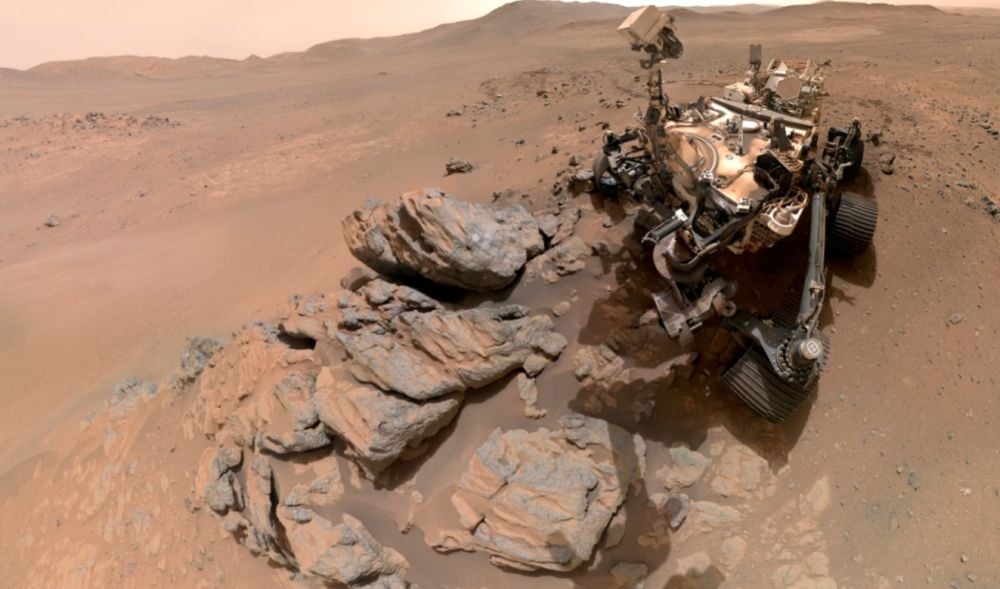
Perseverance Rover Explores Ancient Lakebed on Mars
The Gist
NASA's Perseverance rover explores the "Lac de Charmes" region, an ancient paleolake outside Jezero Crater, seeking the oldest rocks and megabreccia.
Explain Like I'm Five
"Imagine a robot car exploring an old dried-up lake on Mars, looking for clues about what Mars was like a long, long time ago!"
Deep Intelligence Analysis
From a scientific perspective, the findings from Perseverance contribute to our understanding of Mars' past environment and its potential to support microbial life. The discovery of diverse rock types and potential volcanic features suggests a complex geological history, increasing the chances of finding evidence of past life. The rover's ability to collect and cache samples for future return to Earth holds the potential for even more detailed analysis and groundbreaking discoveries.
Looking ahead, the continued exploration of Jezero Crater and its surroundings will be crucial for unraveling the mysteries of Mars' past. Future missions with more advanced capabilities, such as sample return missions and subsurface exploration, will be needed to confirm the presence of biosignatures and gain a more complete understanding of the planet's history.
_Context: This intelligence report was compiled by the DailyOrbitalWire Strategy Engine. Verified for Art. 50 Compliance._
Impact Assessment
Perseverance's exploration of Jezero Crater and its surroundings provides valuable insights into Mars' geological history and potential for past habitability. Analyzing ancient rocks and megabreccia helps scientists understand the planet's early environment and search for signs of life.
Read Full Story on Universe TodayKey Details
- ● Perseverance is exploring the "Lac de Charmes" region, west of Jezero Crater's rim.
- ● The rover analyzed the "Arathusa" outcrop, finding it composed of igneous minerals and potentially older than Jezero Crater.
- ● The region contains megabreccia, rock fragments from an ancient meteorite impact on Isidis Planitia 3.9 billion years ago.
- ● The rover abrades rocks to study their pristine composition beneath the weathered surface.
Optimistic Outlook
The discovery of diverse rock types and potential volcanic features suggests a complex geological history, increasing the chances of finding evidence of past life. Continued exploration could reveal more about Mars' ancient environment and its potential to support microbial life.
Pessimistic Outlook
The harsh Martian environment and the limitations of rover technology pose challenges to the search for past life. The rover's findings may be inconclusive, requiring future missions with more advanced capabilities to confirm the presence of biosignatures.

The Signal, Not
the Noise|
Get the week's top 1% of space-tech intelligence synthesized into a 5-minute read. Join 25,000+ aerospace insiders.
Unsubscribe anytime. No spam, ever.