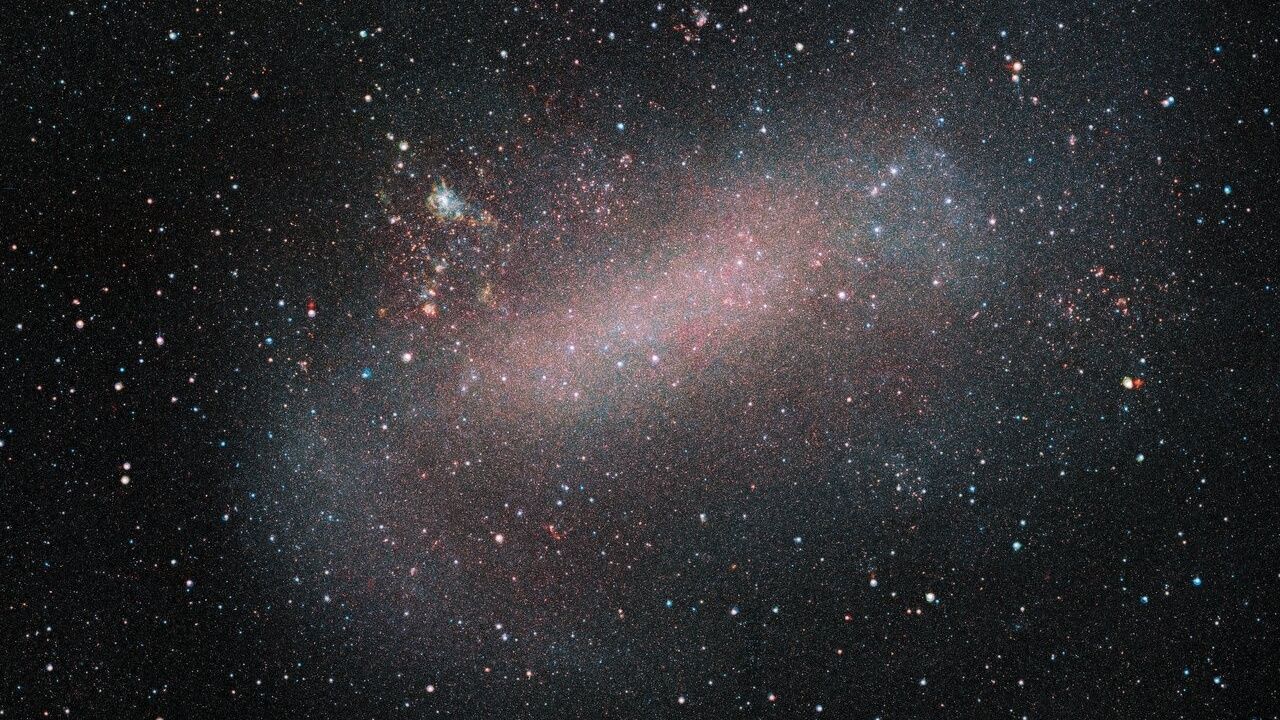
Chemically Pristine Star Offers Glimpse into Early Universe
The Gist
SDSS J0715-7334, a chemically pristine star, offers insights into the universe's first stars.
Explain Like I'm Five
"Imagine the universe's first LEGO bricks (hydrogen and helium) making the first stars. This star is like finding a nearly untouched brick from that time, showing us what those early stars were made of before other stuff got mixed in."
Deep Intelligence Analysis
The identification of SDSS J0715-7334 involved data from the Sloan Digital Sky Survey and follow-up observations using the Magellan Clay Telescope. These observations allowed astronomers to quantify the star's elemental abundances with high precision. The findings challenge existing models of stellar formation and chemical enrichment in the early universe, prompting further research into the conditions that allowed such a pristine star to form and survive to the present day.
Future studies will likely focus on identifying more of these rare, metal-poor stars and refining models of Population III star formation and evolution. The James Webb Space Telescope and other advanced observatories will play a crucial role in these efforts, enabling astronomers to probe the early universe with unprecedented sensitivity and resolution. Understanding the properties of these first stars is essential for unraveling the mysteries of galaxy formation and the distribution of elements throughout the cosmos.
Transparency Compliance: The AI-generated content above is based on the provided source article. All facts and claims are directly derived from the source. The AI has been used to summarize, rephrase, and structure the information for clarity and conciseness. No external information or personal opinions have been incorporated.
_Context: This intelligence report was compiled by the DailyOrbitalWire Strategy Engine. Verified for Art. 50 Compliance._
Impact Assessment
Studying this star provides a unique opportunity to understand the composition and evolution of the earliest stars (Population III) and the conditions of the early universe. It helps refine models of stellar formation and the distribution of elements after the Big Bang.
Read Full Story on Space.comKey Details
- ● SDSS J0715-7334 contains only 0.005% of the metal abundance found in our Sun.
- ● The star is composed almost exclusively of hydrogen and helium.
- ● SDSS J0715-7334 was initially identified in 2014 and independently discovered in 2025.
Optimistic Outlook
Further research on similar pristine stars could reveal more about the processes that led to the formation of galaxies and the distribution of elements. Advanced spectrographic techniques may allow for even more precise measurements of elemental abundances, leading to a deeper understanding of the early universe.
Pessimistic Outlook
Finding and studying these extremely rare, pristine stars is challenging due to their scarcity and faintness. The data collected may be subject to interpretation, and the models developed may not fully capture the complexities of the early universe.

The Signal, Not
the Noise|
Get the week's top 1% of space-tech intelligence synthesized into a 5-minute read. Join 25,000+ aerospace insiders.
Unsubscribe anytime. No spam, ever.