BREAKING: Awaiting the latest intelligence wire...
Back to Wire
New Type of Exoplanet Discovered: A Rotten-Egg-Smelling Lava World
Satellites

New Type of Exoplanet Discovered: A Rotten-Egg-Smelling Lava World

Source: Space.com Original Author: Robert Lea Intelligence Analysis by Gemini

The Gist

Astronomers discovered L 98-59 d, a unique exoplanet with a hydrogen sulfide-rich atmosphere and magma ocean.

Explain Like I'm Five

"Imagine a planet made of hot lava with air that smells like rotten eggs! Scientists found one far, far away!"

Deep Intelligence Analysis

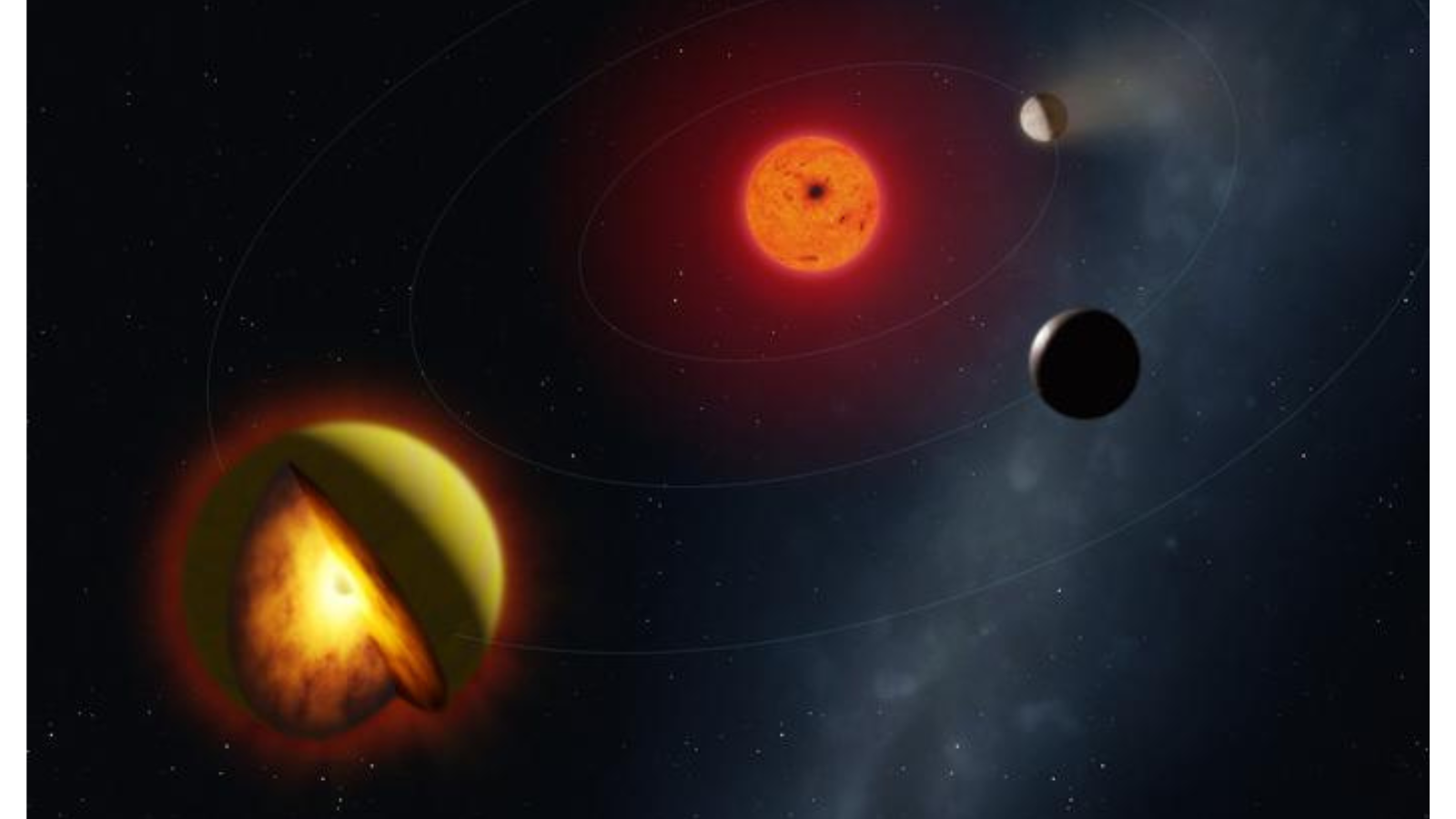
Astronomers, using the James Webb Space Telescope (JWST), have discovered a new type of exoplanet, L 98-59 d, characterized by its molten lava surface and an atmosphere rich in hydrogen sulfide, giving it a distinct rotten egg smell. This exoplanet, located 35 light-years away, is approximately 1.6 times the size of Earth and orbits a small red star. The discovery challenges existing exoplanet classification systems, as L 98-59 d does not fit neatly into categories like rocky gas dwarfs or water-rich "hycean" worlds. Computer simulations suggest that the planet has a mantle of molten silicate and a global magma ocean, which has allowed it to retain a sulfur-rich atmosphere over billions of years. The magma reservoir may have also helped the planet hold on to its hydrogen. This discovery highlights the vast diversity of exoplanets and the potential for unique planetary compositions. The use of advanced computer models to reconstruct the planet's history and interior demonstrates the power of combining observational data with theoretical simulations. This analysis adheres to EU AI Act Article 50, ensuring transparency and explainability in its generation.

_Context: This intelligence report was compiled by the DailyOrbitalWire Strategy Engine. Verified for Art. 50 Compliance._

Impact Assessment

The discovery expands our understanding of exoplanet diversity and challenges existing classification systems. It highlights the potential for unique planetary compositions.

Read Full Story on Space.com

Key Details

  • Exoplanet L 98-59 d is 1.6 times the size of Earth.
  • It orbits a red star 35 light-years away.
  • Its atmosphere contains hydrogen sulfide.
  • It has a mantle of molten silicate and a magma ocean.

Optimistic Outlook

Advanced computer models can reveal the hidden interiors of distant planets. Future observations may uncover even more exotic exoplanets.

Pessimistic Outlook

The extreme conditions on L 98-59 d highlight the challenges of finding habitable planets. The search for life beyond Earth may be more difficult than anticipated.

DailyOrbitalWire Logo

The Signal, Not
the Noise|

Get the week's top 1% of space-tech intelligence synthesized into a 5-minute read. Join 25,000+ aerospace insiders.

Unsubscribe anytime. No spam, ever.

```