Small Trojan Asteroids Exhibit Uniform Color Distribution
The Gist
Smaller Trojan asteroids lack the distinct color-coding observed in larger asteroids, challenging existing formation theories.
Explain Like I'm Five
"Imagine big and small space rocks near Jupiter. The big ones have different colors, but the small ones are all mixed up! Scientists are trying to figure out why."
Deep Intelligence Analysis
The research team utilized the Suprime-Cam on the 8.2m Subaru Telescope in Hawai'i to observe 44 unbiased small Trojans ranging from 3 km to 16 km in diameter. The Suprime-Cam's fast filter changing speed was crucial for capturing accurate spectrographic profiles of these rapidly rotating asteroids. The data revealed that, unlike larger Trojans, the smaller ones did not exhibit the characteristic bifurcation in color.
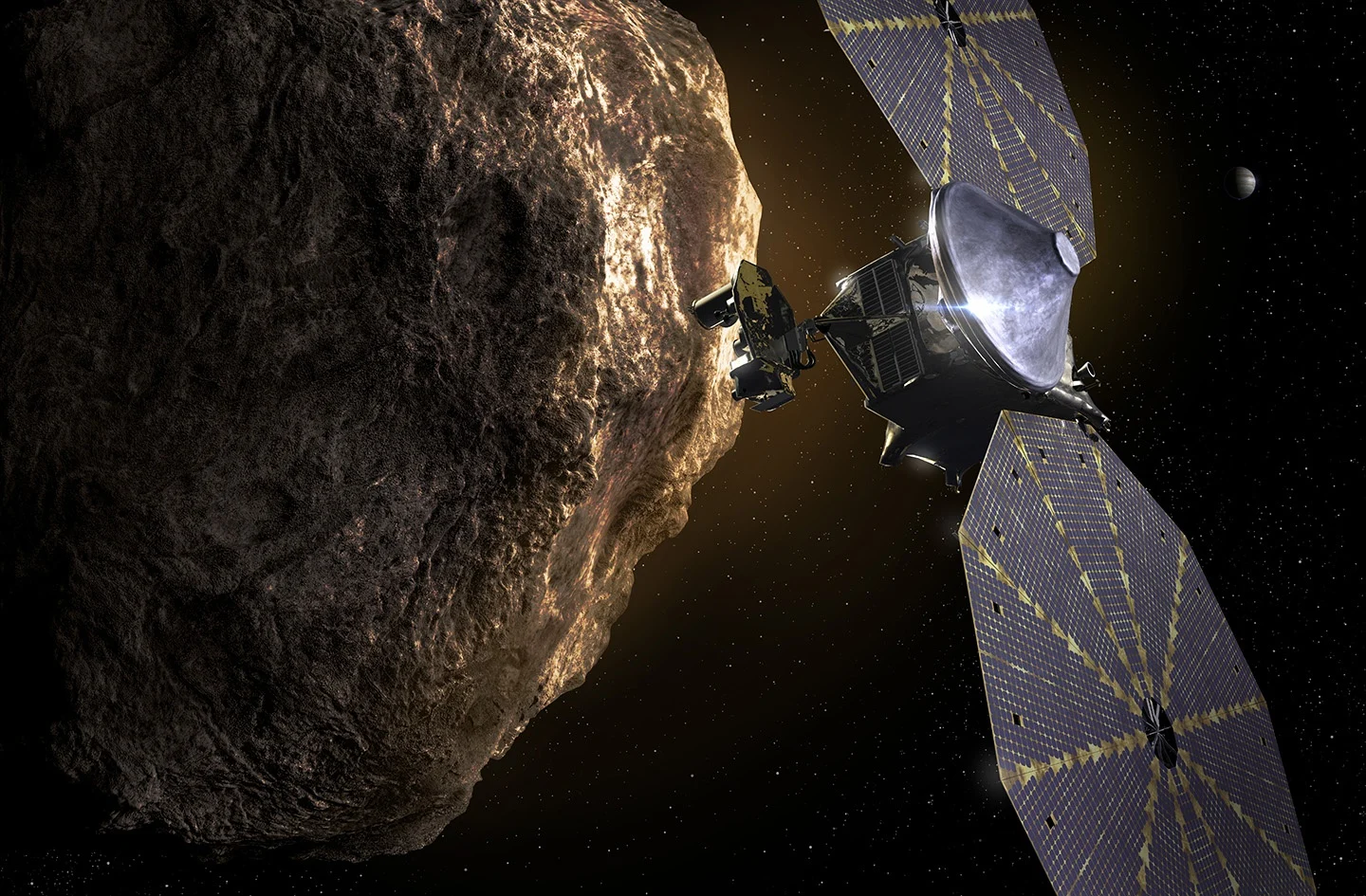
This discovery raises fundamental questions about the processes that shaped the Trojan asteroids. The prevailing theories suggest that Trojans formed near Jupiter's orbit and were subsequently captured into their current locations. However, the difference in color distribution between small and large Trojans implies that different formation mechanisms or evolutionary pathways may be at play. Further research, including data from the Lucy mission, is needed to fully understand the origins and composition of these intriguing objects. Understanding the composition of asteroids can help us understand the early solar system and the distribution of resources in space.
_Context: This intelligence report was compiled by the DailyOrbitalWire Strategy Engine. Verified for Art. 50 Compliance._
Impact Assessment
The uniform color distribution in smaller Trojan asteroids suggests different formation processes or evolutionary histories compared to their larger counterparts. This challenges existing models and necessitates further investigation into the early solar system.
Read Full Story on Universe TodayKey Details
- ● Researchers studied 44 unbiased small Trojan asteroids ranging from 3 km to 16 km in diameter.
- ● The Suprime-Cam on the Subaru Telescope was used due to its fast filter changing speed.
- ● Smaller Trojans show an even distribution across the color spectrum, unlike larger Trojans.
- ● Size distribution was equal for arbitrarily drawn 'red' vs 'less red' small Trojan asteroids.
Optimistic Outlook
Further research into small Trojan asteroids, potentially through missions like Lucy, could reveal new insights into the building blocks of planets and the conditions present in the early solar system. Understanding these processes could aid in predicting the composition and distribution of resources in other star systems.
Pessimistic Outlook
The discrepancy in color distribution between small and large Trojan asteroids highlights the complexity of solar system formation. Current models may be incomplete, and further research could reveal unforeseen challenges in understanding the origins of planetary systems.

The Signal, Not
the Noise|
Get the week's top 1% of space-tech intelligence synthesized into a 5-minute read. Join 25,000+ aerospace insiders.
Unsubscribe anytime. No spam, ever.