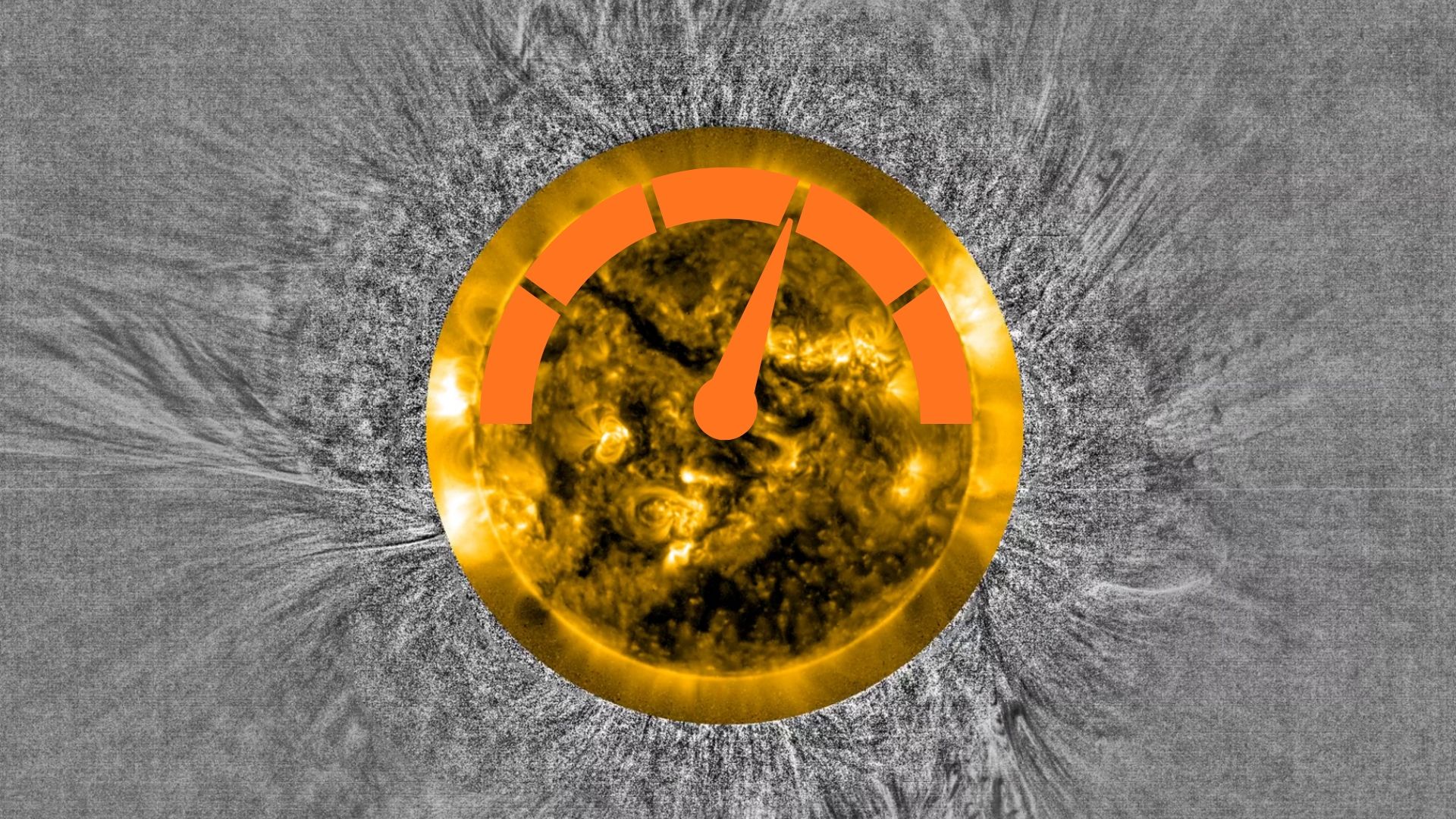
Solar Wind Speeds Exceed Expectations, Proba-3 Eclipse Spacecraft Reveals
The Gist
ESA's Proba-3 mission discovers slow solar wind gusts travel 3-4 times faster than previously estimated in the inner corona.
Explain Like I'm Five
"The sun shoots out tiny particles called solar wind. Scientists thought it traveled at a certain speed, but a special satellite found out it's actually much faster! This helps us understand space weather better."
Deep Intelligence Analysis
The implications of this discovery extend beyond academic curiosity. Solar wind is a major driver of space weather, which can disrupt satellite operations, communication systems, and power grids. A better understanding of solar wind dynamics is crucial for improving space weather forecasting and mitigating the potential impact of geomagnetic storms. The Proba-3 mission's findings could lead to more accurate predictions of solar wind arrival times and intensities, allowing for proactive measures to protect vulnerable infrastructure.
Future research will focus on further characterizing the properties of the fast-moving slow solar wind and investigating the underlying physical processes responsible for its acceleration. This will involve combining data from Proba-3 with observations from other solar observatories, such as the Parker Solar Probe and the Solar Orbiter. By integrating these diverse datasets, scientists hope to develop a more comprehensive picture of the sun's corona and its influence on the heliosphere.
_Context: This intelligence report was compiled by the DailyOrbitalWire Strategy Engine. Verified for Art. 50 Compliance._
Impact Assessment
This discovery challenges existing models of solar wind generation and could improve our understanding of space weather. More accurate predictions of geomagnetic storms and radiation events are crucial for protecting satellites and infrastructure.
Read Full Story on Space.comKey Details
- ● Slow solar wind gusts reach speeds of up to 300 miles (480 km) per second.
- ● Proba-3 consists of two spacecraft flying in formation 490 feet (150 meters) apart.
- ● The previously known speed of slow solar wind was 60 miles per second (100 km/s).
Optimistic Outlook
Improved understanding of solar wind dynamics could lead to better forecasting of space weather events, enhancing the resilience of satellite operations and power grids. Advanced warning systems could mitigate the impact of geomagnetic storms on critical infrastructure.
Pessimistic Outlook
The faster-than-expected solar wind speeds may indicate a greater potential for disruptive space weather events, posing increased risks to satellites and terrestrial infrastructure. Further research is needed to fully understand the implications of this discovery.

The Signal, Not
the Noise|
Get the week's top 1% of space-tech intelligence synthesized into a 5-minute read. Join 25,000+ aerospace insiders.
Unsubscribe anytime. No spam, ever.