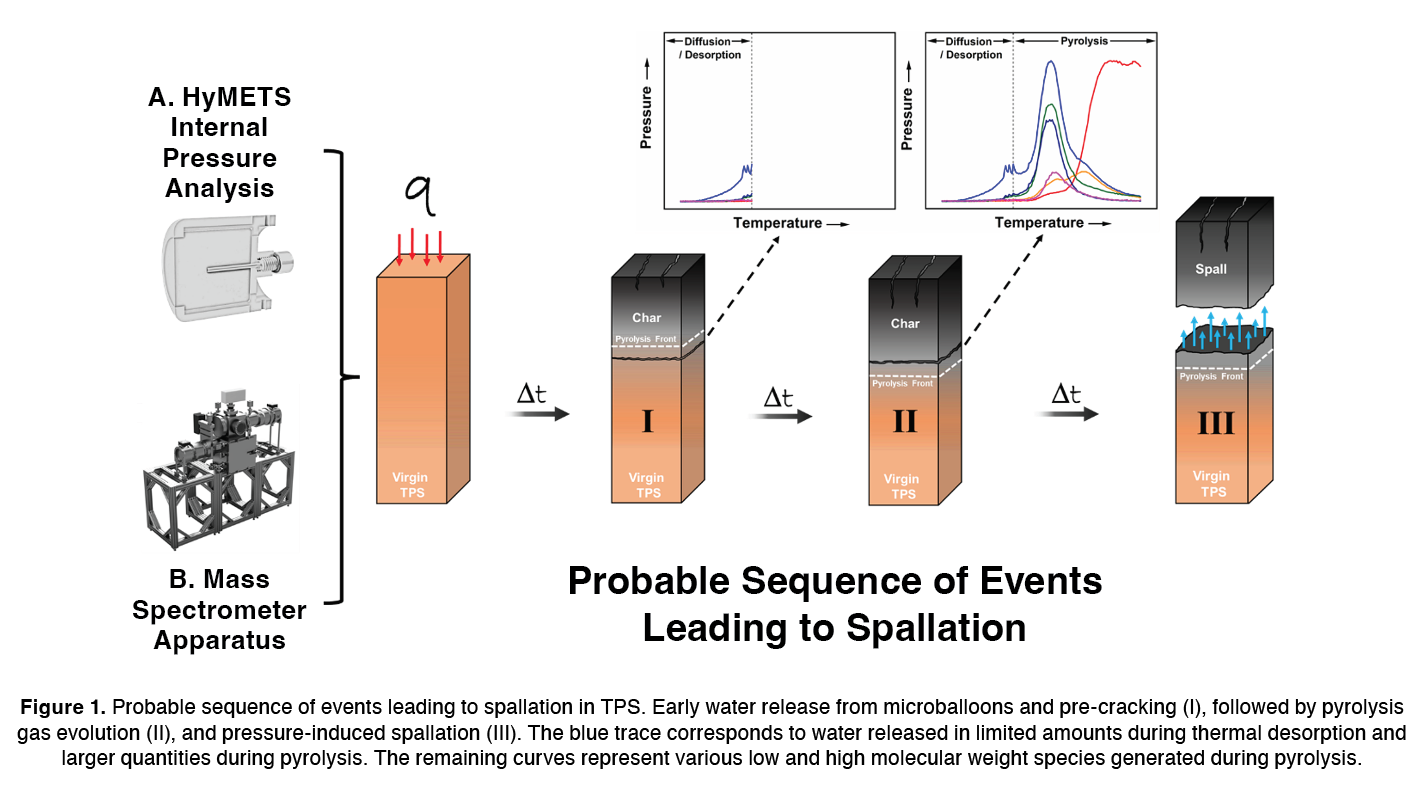
Mass Spectrometry and HyMETS Testing Reveal Spallation Mechanisms in Thermal Protection Systems
The Gist
Understanding gas evolution within Thermal Protection Systems (TPS) is crucial for predicting degradation and spallation.
Explain Like I'm Five
"Imagine your spaceship has a special shield that gets hot when it flies fast. This research helps us understand how that shield can break, so we can make better shields!"
Deep Intelligence Analysis
_Context: This intelligence report was compiled by the DailyOrbitalWire Strategy Engine. Verified for Art. 50 Compliance._
Impact Assessment
Predicting TPS degradation is vital for spacecraft safety during atmospheric entry. This research links chemical decomposition to mechanical response, improving material stability models.
Read Full Story on NASA Breaking NewsKey Details
- ● HyMETS testing quantifies subsurface pressure buildup in TPS materials.
- ● Mass spectrometry identifies volatile species released during TPS decomposition.
- ● Early water release can cause localized stresses and crack formation.
- ● Pyrolysis gas evolution leads to rapid pressure buildup and potential spallation.
Optimistic Outlook
Enhanced understanding of spallation mechanisms could lead to the development of more robust TPS materials. This would improve the safety and reliability of spacecraft during high-speed atmospheric entry.
Pessimistic Outlook
The interplay between volatile release, pyrolysis, and stress generation is complex and difficult to model accurately. Inaccurate models could lead to premature TPS failure and mission loss.

The Signal, Not
the Noise|
Get the week's top 1% of space-tech intelligence synthesized into a 5-minute read. Join 25,000+ aerospace insiders.
Unsubscribe anytime. No spam, ever.