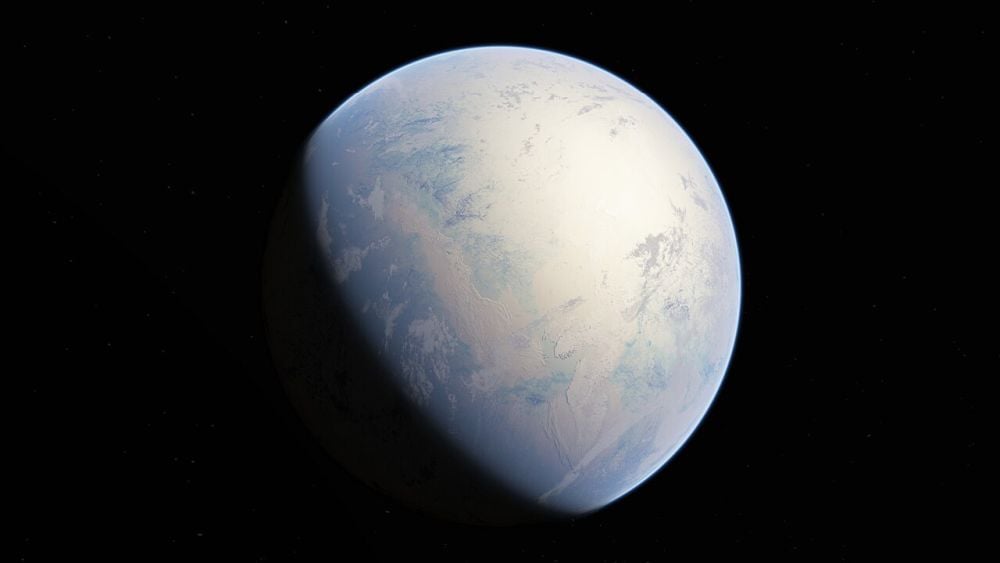
Volcanic Activity and Weathering Cycles Drove 'Snowball Earth' Events
The Gist
Research suggests the Sturtian glaciation involved repeated cycles of freezing and thawing driven by volcanic activity and basalt weathering.
Explain Like I'm Five
"Imagine Earth was a giant snowball, but instead of staying frozen, it kept melting and refreezing because of volcanoes and rocks soaking up air!"
Deep Intelligence Analysis
Transparency Footnote: This analysis was conducted by an AI model to provide insights into the provided article. The AI model is trained on a vast dataset of scientific and technical information to generate summaries, identify key details, and assess the potential impact of the research. The analysis is intended for informational purposes only and should not be considered as professional scientific advice. The AI model's interpretations are based on the available data and may be subject to limitations and uncertainties.
_Context: This intelligence report was compiled by the DailyOrbitalWire Strategy Engine. Verified for Art. 50 Compliance._
Impact Assessment
Understanding past climate events like 'Snowball Earth' provides insights into long-term climate dynamics and the interplay between geological processes and planetary habitability. This knowledge is crucial for modeling future climate scenarios on Earth and potentially on other planets.
Read Full Story on Universe TodayKey Details
- ● The Sturtian glaciation lasted 56 million years during the Cryogenian Period (720-635 million years ago).
- ● The Franklin Large Igneous Province, a large volcanic region in Canada, erupted for about 2 million years during this period.
- ● Researchers found the Sturtian glaciation consisted of multiple short 'snowball' events and warm interglacial periods.
Optimistic Outlook
The discovery of cyclical patterns within the Sturtian glaciation suggests a more dynamic and resilient early Earth climate system. This could imply that planetary environments are more adaptable to extreme conditions than previously thought, increasing the potential for life to persist even during severe climate shifts.
Pessimistic Outlook
The extreme climate fluctuations during the Sturtian glaciation highlight the potential for rapid and drastic environmental changes driven by geological events. This underscores the vulnerability of planetary environments to volcanic activity and the complex feedback loops that can amplify climate instability.

The Signal, Not
the Noise|
Get the week's top 1% of space-tech intelligence synthesized into a 5-minute read. Join 25,000+ aerospace insiders.
Unsubscribe anytime. No spam, ever.