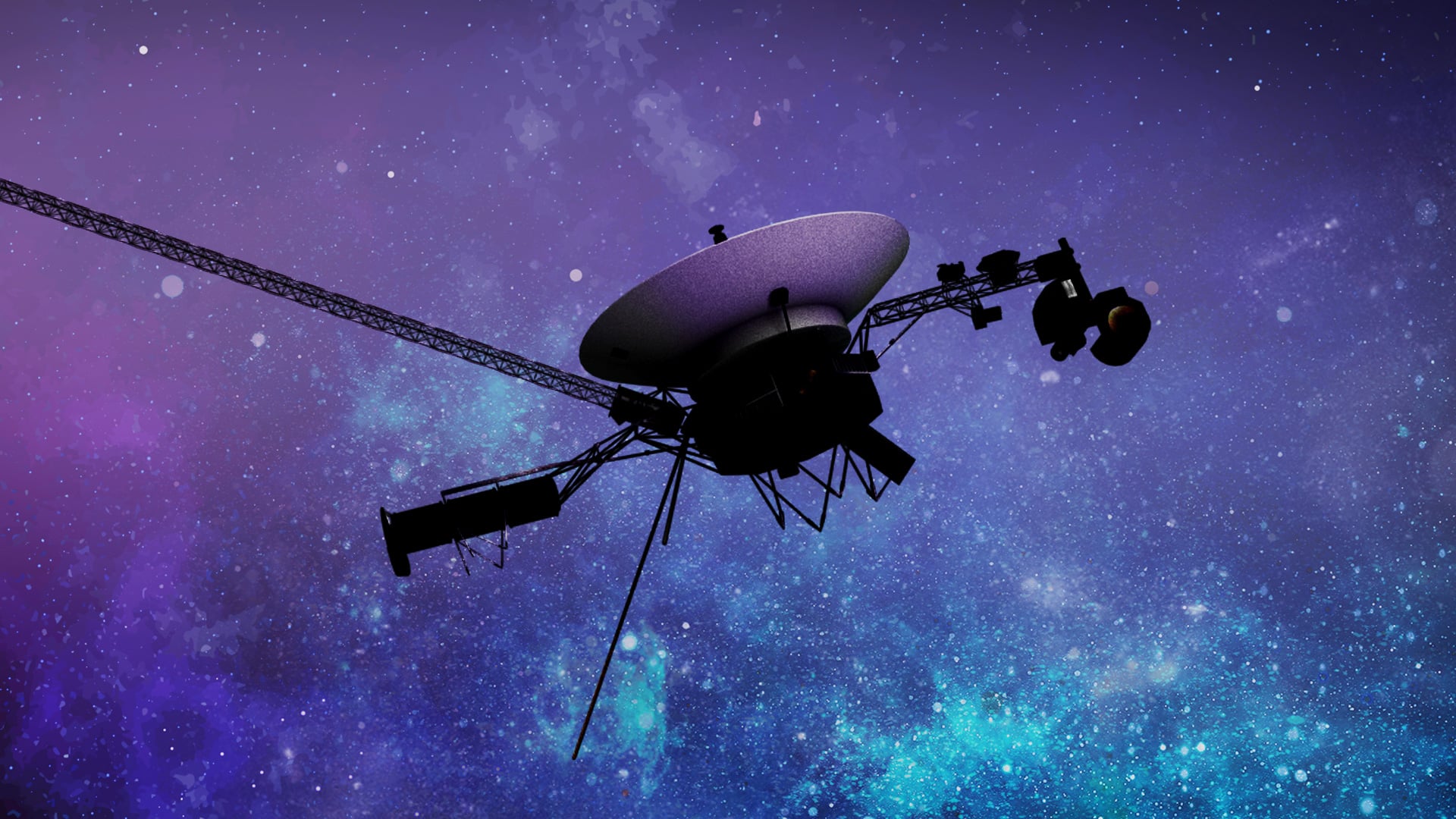
Voyager 1 Shuts Down Instrument to Conserve Power
The Gist
Voyager 1 deactivates the Low-energy Charged Particles (LECP) experiment to conserve dwindling power from its Radioisotope Thermoelectric Generators (RTGs).
Explain Like I'm Five
"Voyager 1 is like an old car that needs to save gas. It turned off one of its gadgets (LECP) to keep going and exploring space between stars!"
Deep Intelligence Analysis
The LECP has provided invaluable data on the structure of the interstellar medium, including pressure fronts and variations in particle density beyond the heliosphere. Its loss will impact the scientific community's ability to study this region using in-situ measurements. Voyager 1's team had previously shut down the Cosmic Ray Subsystem (CRS) in February 2025, as well as the imaging system and ultraviolet spectrometer in the 1990s. The remaining instruments, which measure plasma waves and magnetic fields, will continue to provide data as long as power levels allow.
This situation highlights the need for advancements in power generation technology for future deep-space missions. More efficient and longer-lasting power sources would enable spacecraft to operate for extended periods and collect more comprehensive data. The Voyager missions have provided unprecedented insights into the outer solar system and interstellar space, and their legacy will continue to inspire future generations of space explorers. The team's careful management of Voyager 1's limited resources demonstrates the ingenuity and dedication required to push the boundaries of space exploration.
*Transparency Disclosure: This analysis was generated by an AI model and reviewed by a human expert. All information is derived from the provided source content.*
_Context: This intelligence report was compiled by the DailyOrbitalWire Strategy Engine. Verified for Art. 50 Compliance._
Impact Assessment
The shutdown highlights the challenges of long-duration space missions and the limitations of current power generation technology. Data from Voyager 1 and 2 provides unique insights into the interstellar medium and the heliosphere's boundary.
Read Full Story on Universe TodayKey Details
- ● Voyager 1's LECP was shut down on April 17th, 2026.
- ● The LECP studied solar wind and the interstellar medium.
- ● Voyager 1's RTGs are producing less than half their original power.
- ● Voyager 1 is approximately 25 billion km (15 billion mi) from Earth.
Optimistic Outlook
Remaining instruments can continue to gather valuable data on plasma waves and magnetic fields in interstellar space. Future advancements in power generation could extend the lifespan and capabilities of deep-space probes.
Pessimistic Outlook
Further instrument shutdowns are likely as Voyager 1's power output continues to decline. Loss of scientific data from the LECP impacts understanding of the interstellar medium.

The Signal, Not
the Noise|
Get the week's top 1% of space-tech intelligence synthesized into a 5-minute read. Join 25,000+ aerospace insiders.
Unsubscribe anytime. No spam, ever.