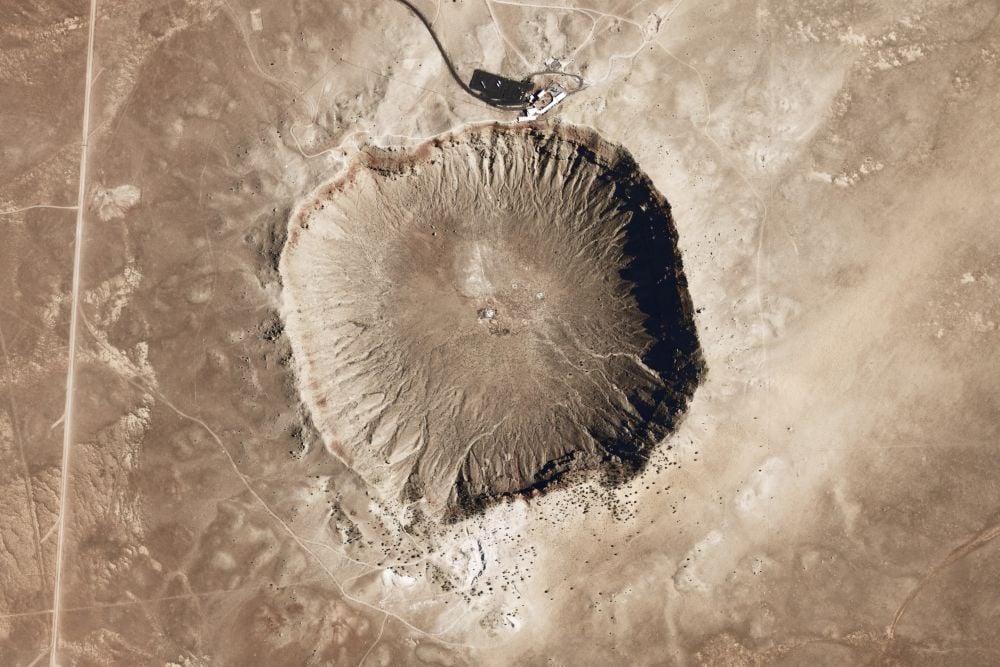
Zhamanshin Impact Event's Destructive Power Underestimated
The Gist
New research suggests the Zhamanshin impact crater in Kazakhstan, a relatively recent hypervelocity event, may be significantly larger and more impactful than previously thought.
Explain Like I'm Five
"Imagine throwing a rock in a pond. The splash is like the crater we see, but there are also bigger, harder-to-see ripples. Scientists now think a big 'rock' hit Earth a long time ago and made bigger 'ripples' than we thought, which means it was a much bigger splash!"
Deep Intelligence Analysis
The implications of a larger Zhamanshin impact are far-reaching. A more energetic impact could have triggered more substantial environmental changes, potentially leading to a nuclear winter scenario. This would have had profound effects on the climate and ecosystems of the time. Furthermore, the re-evaluation of Zhamanshin highlights the challenges in accurately assessing ancient impact events. Erosion and degradation can obscure the true dimensions of craters, leading to underestimates of their impact energy.
The use of advanced remote sensing techniques like LiDAR is crucial for uncovering these hidden features and gaining a more complete understanding of Earth's impact history. This knowledge is essential for assessing the risks posed by future impact events and developing strategies for planetary defense. The research underscores the dynamic nature of Earth's geological past and the ongoing need to refine our understanding of the processes that have shaped our planet.
_Context: This intelligence report was compiled by the DailyOrbitalWire Strategy Engine. Verified for Art. 50 Compliance._
Impact Assessment
Re-evaluating the Zhamanshin impact's size and energy could reshape our understanding of how such events have influenced Earth's climate and life. A larger impact implies a greater potential for triggering environmental changes, including a possible nuclear winter scenario.
Read Full Story on Universe TodayKey Details
- ● The Zhamanshin impact occurred approximately 900,000 years ago during the Pleistocene epoch.
- ● The visible crater measures about 14 km in diameter.
- ● LiDAR analysis suggests the crater is a multi-ringed structure with an outer ring of approximately 26.5 km in diameter.
- ● Researchers used five different types of Digital Elevation Models (DEM) from LiDAR and other data sources to determine the crater's diameter.
Optimistic Outlook
Improved remote sensing techniques like LiDAR offer a more accurate assessment of ancient impact events. This could lead to a better understanding of Earth's history and inform strategies for mitigating future impact risks, potentially aiding in planetary defense efforts.
Pessimistic Outlook
If the Zhamanshin impact was indeed more powerful than initially believed, it raises concerns about the potential for similar, underestimated events in Earth's past. This could mean that the frequency and severity of impact-related environmental disruptions have been historically underestimated.

The Signal, Not
the Noise|
Get the week's top 1% of space-tech intelligence synthesized into a 5-minute read. Join 25,000+ aerospace insiders.
Unsubscribe anytime. No spam, ever.