BREAKING: • astroCAMP: Sustainable Benchmarking for SKA-Scale Radio Imaging • Deep Learning Optimizes Redshift Estimation for Roman Space Telescope • Machine Learning Enhances Weak-Lensing Cosmology • DEFROST Algorithm Disentangles Faraday Rotation for Extragalactic Magnetic Field Studies • NASA Heliolab Releases Machine Learning Dataset for Ionospheric Forecasting
astroCAMP: Sustainable Benchmarking for SKA-Scale Radio Imaging
Satellites May 14
arXiv Instrumentation // 2026-05-14

astroCAMP: Sustainable Benchmarking for SKA-Scale Radio Imaging

THE GIST: astroCAMP provides a framework for benchmarking and co-designing sustainable SKA-scale radio imaging pipelines.

IMPACT: Improving the efficiency and sustainability of SKA-scale radio imaging is crucial for reducing energy consumption and operational costs. astroCAMP enables principled hardware-software co-design.
Optimistic
Pessimistic
ELI5
Deep Dive // Full Analysis
Deep Learning Optimizes Redshift Estimation for Roman Space Telescope
Satellites May 14
arXiv Instrumentation // 2026-05-14

Deep Learning Optimizes Redshift Estimation for Roman Space Telescope

THE GIST: Semi-supervised deep learning enhances photometric redshift accuracy for the Roman Space Telescope, crucial for galaxy evolution studies.

IMPACT: Accurate photometric redshifts are essential for studying galaxy evolution and large-scale structure with the Roman Space Telescope. Improved redshift estimation enhances the telescope's scientific output.
Optimistic
Pessimistic
ELI5
Deep Dive // Full Analysis
Machine Learning Enhances Weak-Lensing Cosmology
Satellites May 14
arXiv Instrumentation // 2026-05-14

Machine Learning Enhances Weak-Lensing Cosmology

THE GIST: Machine learning is improving the extraction of cosmological information from weak gravitational lensing data.

IMPACT: Improved weak lensing analysis refines our understanding of dark matter and large-scale structure formation. This leads to more accurate cosmological models and simulations.
Optimistic
Pessimistic
ELI5
Deep Dive // Full Analysis
DEFROST Algorithm Disentangles Faraday Rotation for Extragalactic Magnetic Field Studies
Satellites May 14
arXiv Instrumentation // 2026-05-14

DEFROST Algorithm Disentangles Faraday Rotation for Extragalactic Magnetic Field Studies

THE GIST: A new algorithm, DEFROST, disentangles the Faraday effect to study extragalactic magnetic fields.

IMPACT: Understanding cosmological magnetic fields requires knowledge of magnetic fields in different extragalactic environments. This algorithm improves the accuracy of these studies.
Optimistic
Pessimistic
ELI5
Deep Dive // Full Analysis
NASA Heliolab Releases Machine Learning Dataset for Ionospheric Forecasting
Satellites May 14
arXiv Earth & Planetary // 2026-05-14

NASA Heliolab Releases Machine Learning Dataset for Ionospheric Forecasting

THE GIST: NASA Heliolab releases a curated, open-access dataset for machine learning-based ionospheric forecasting models.

IMPACT: Improved ionospheric forecasting is crucial for GNSS, communications, aviation safety, and satellite operations. This dataset supports the development of more accurate and timely predictions.
Optimistic
Pessimistic
ELI5
Deep Dive // Full Analysis
Earth Science Foundation Models Integrate Multimodal Data for Discovery
Satellites May 14
arXiv Earth & Planetary // 2026-05-14

Earth Science Foundation Models Integrate Multimodal Data for Discovery

THE GIST: Large foundation models are transforming Earth science by integrating diverse multimodal data for advanced scientific discovery.
IMPACT: Earth science foundation models can accelerate research and improve our understanding of complex Earth systems. This could lead to better climate models and resource management strategies.
Optimistic
Pessimistic
ELI5
Deep Dive // Full Analysis
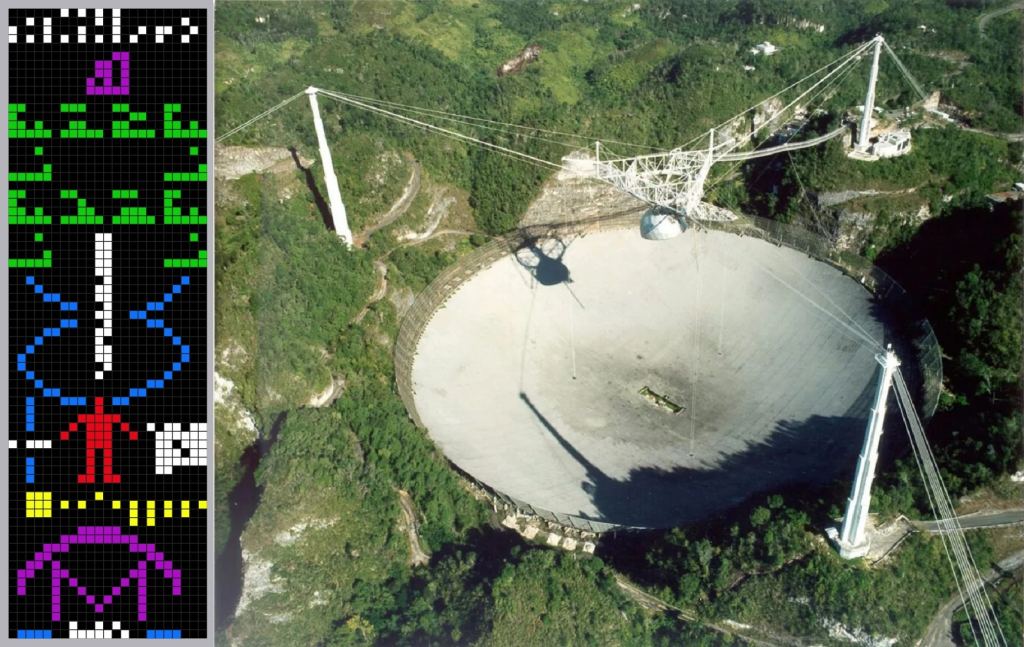
Arecibo Message and WOW! Signal: Pivotal SETI Moments
Satellites May 14
Universe Today // 2026-05-14

Arecibo Message and WOW! Signal: Pivotal SETI Moments

THE GIST: The Arecibo Message and WOW! Signal represent key milestones in the search for extraterrestrial intelligence (SETI).

IMPACT: These events highlight humanity's early attempts to communicate with potential extraterrestrial civilizations. The Arecibo Message, in particular, served as a technology demonstration of our scientific knowledge and location in the galaxy. These efforts, though not yielding definitive contact, shaped the field of SETI and METI.
Optimistic
Pessimistic
ELI5
Deep Dive // Full Analysis
Israeli Tech Can Locate Starlink Users
Satellites May 14
Hacker News Space // 2026-05-14

Israeli Tech Can Locate Starlink Users

THE GIST: Israeli firms develop tech to pinpoint and potentially identify Starlink users.

IMPACT: This technology raises privacy concerns for Starlink users, especially in sensitive regions. It could impact Starlink's role in providing secure communication in conflict zones or areas with restricted internet access.
Optimistic
Pessimistic
ELI5
Deep Dive // Full Analysis
Pattern Recognition Emerges as Key Biosignature Detection Method
Satellites May 13
Universe Today // 2026-05-13

Pattern Recognition Emerges as Key Biosignature Detection Method

THE GIST: New research suggests that identifying patterns in molecular diversity may be more effective than searching for individual biosignatures in exoplanet atmospheres.

IMPACT: This approach shifts the focus from identifying specific molecules to analyzing the overall composition and abundance of organic molecules, potentially improving the accuracy of biosignature detection. It also highlights the limitations of remote atmospheric analysis and the need for in-situ planetary missions.
Optimistic
Pessimistic
ELI5
Deep Dive // Full Analysis
JWST Reveals Super-Quasars' Role in Shaping Early Galaxies
Satellites May 13
Universe Today // 2026-05-13

JWST Reveals Super-Quasars' Role in Shaping Early Galaxies

THE GIST: JWST observations suggest super-quasars quenched star formation in early galaxies, challenging current models of galaxy evolution.
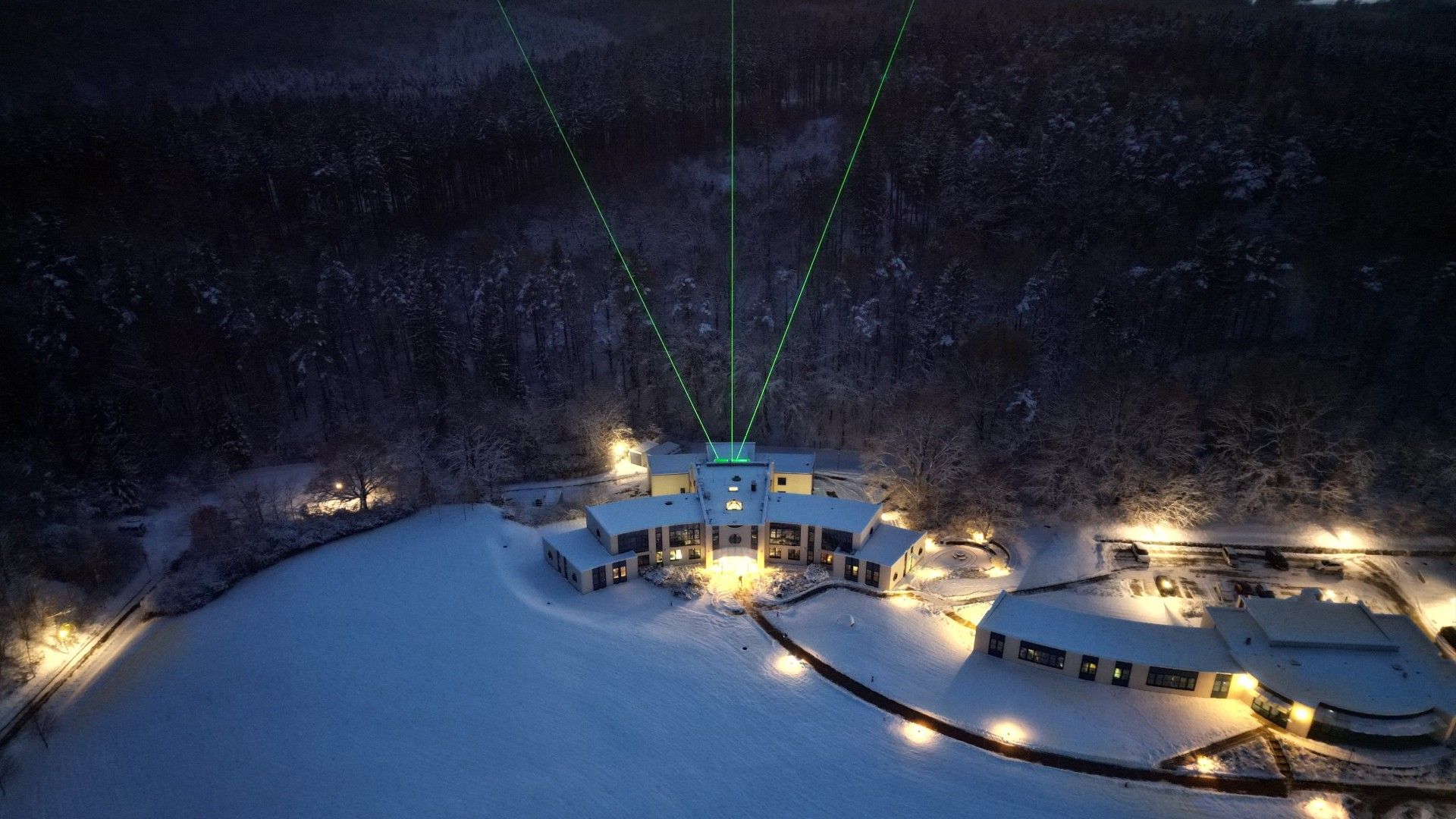
IMPACT: Understanding the role of quasars in galaxy evolution is crucial for refining cosmological models. The JWST's findings challenge existing theories and provide new insights into the early universe.
Optimistic
Pessimistic
ELI5
Deep Dive // Full Analysis
Lasers Track Space Junk, Reveal Atmospheric Pollution
Satellites May 13
Space.com // 2026-05-13

Lasers Track Space Junk, Reveal Atmospheric Pollution

THE GIST: LiDAR technology detects metal clouds from falling satellites, revealing the impact of space debris on Earth's atmosphere.
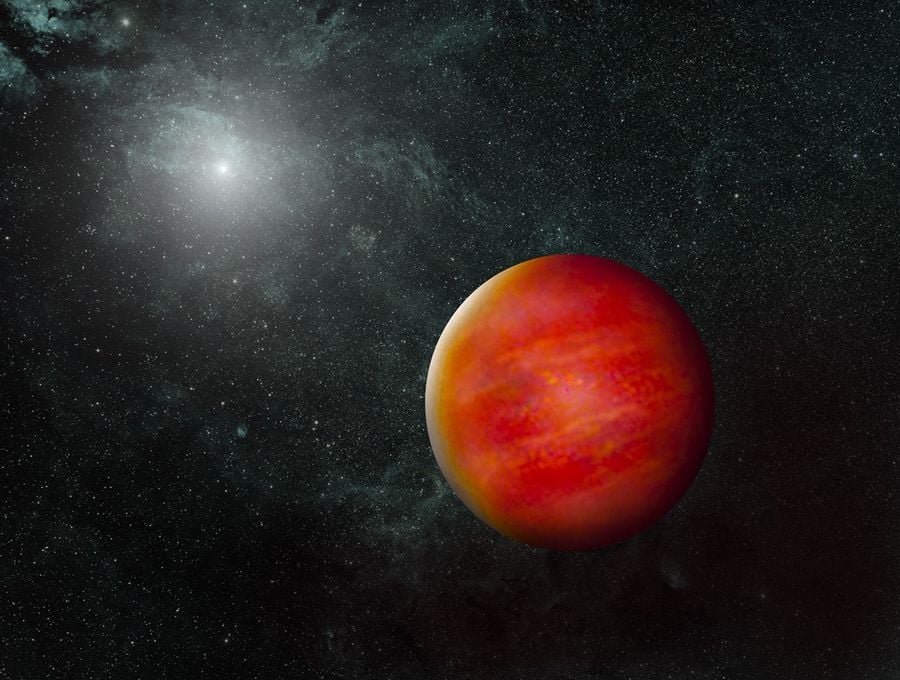
IMPACT: The increasing number of satellite launches is changing the composition of the upper atmosphere. Monitoring space debris ablation is crucial for understanding its impact on the ozone layer and climate.
Optimistic
Pessimistic
ELI5
Deep Dive // Full Analysis
Citizen Scientists Double Known Brown Dwarf Count
Satellites May 13
Universe Today // 2026-05-13

Citizen Scientists Double Known Brown Dwarf Count

THE GIST: Citizen scientists using archival infrared data discovered over 3,000 new brown dwarf candidates, doubling the known total.

IMPACT: The discovery of these brown dwarfs, particularly the rare binary systems, provides valuable data for refining orbital mechanics theories. The success highlights the potential of citizen science in astronomical research.
Optimistic
Pessimistic
ELI5
Deep Dive // Full Analysis
Previous
Page 12 of 75
Next
```