BREAKING: • Upper Bound Set on Non-Stationary Gravitational Wave Background • Machine Learning Aids 21 cm Cosmology Research • Python Framework Improves Radio Interferometry Imaging with uGMRT • Radio Wave Imaging Offers New Method for Cosmic Ray Air Shower Observation • Liquid Mirror Telescope Detects Transients, Catalogs Asteroids
Upper Bound Set on Non-Stationary Gravitational Wave Background
Satellites May 18
arXiv Cosmology // 2026-05-18

Upper Bound Set on Non-Stationary Gravitational Wave Background

THE GIST: Researchers have established the first upper bound on the non-stationary gravitational wave background using LIGO-Virgo-KAGRA data.

IMPACT: This research provides constraints on the merger rate of primordial black holes at high redshift. Future detection of this signal will offer a new way to probe the high-redshift black hole population.
Optimistic
Pessimistic
ELI5
Deep Dive // Full Analysis
Machine Learning Aids 21 cm Cosmology Research
Satellites May 18
arXiv Cosmology // 2026-05-18

Machine Learning Aids 21 cm Cosmology Research

THE GIST: Machine learning is being applied to redshifted 21 cm cosmology to study the cosmic dawn and Epoch of Reionization.

IMPACT: Machine learning helps overcome the difficulties in analyzing the 21 cm signal. This allows for better understanding of the early universe and the impact of various factors.
Optimistic
Pessimistic
ELI5
Deep Dive // Full Analysis
Python Framework Improves Radio Interferometry Imaging with uGMRT
Satellites May 18
arXiv Instrumentation // 2026-05-18

Python Framework Improves Radio Interferometry Imaging with uGMRT

THE GIST: A new Python-based framework enhances radio interferometry imaging by mitigating direction-dependent calibration challenges.

IMPACT: This framework improves the quality of radio astronomy data from arrays like uGMRT. By reducing artifacts, it allows for more accurate observation of faint sources.
Optimistic
Pessimistic
ELI5
Deep Dive // Full Analysis
Radio Wave Imaging Offers New Method for Cosmic Ray Air Shower Observation
Satellites May 18
arXiv Instrumentation // 2026-05-18

Radio Wave Imaging Offers New Method for Cosmic Ray Air Shower Observation

THE GIST: Researchers propose imaging radio emissions from cosmic-ray-induced air showers, similar to Cherenkov techniques.

IMPACT: This new imaging method could enhance ultra-high-energy gamma-ray astronomy. It also allows for detailed observations of air showers, potentially improving our understanding of cosmic ray origins and behavior.
Optimistic
Pessimistic
ELI5
Deep Dive // Full Analysis
Liquid Mirror Telescope Detects Transients, Catalogs Asteroids
Satellites May 18
arXiv Instrumentation // 2026-05-18

Liquid Mirror Telescope Detects Transients, Catalogs Asteroids

THE GIST: The 4-m International Liquid Mirror Telescope (ILMT) detected over 500 transient candidates and cataloged asteroids in two fields.

IMPACT: The ILMT's ability to detect transients and catalog asteroids contributes to our understanding of the dynamic sky. The discovery of new transients, like AT 2024fxn, warrants further investigation.
Optimistic
Pessimistic
ELI5
Deep Dive // Full Analysis
Open Science Data Federation Streamlines Solar Data Access
Satellites May 18
arXiv Instrumentation // 2026-05-18

Open Science Data Federation Streamlines Solar Data Access

THE GIST: The Open Science Data Federation (OSDF) provides efficient and reliable data access to the Big Bear Solar Observatory (BBSO) data worldwide.

IMPACT: Efficient data distribution is crucial for scientific research. The OSDF enables researchers worldwide to easily access and process data from the BBSO, accelerating discoveries in solar physics.
Optimistic
Pessimistic
ELI5
Deep Dive // Full Analysis
Automated Toolkit Speeds Up Gravitational Wave Data Analysis
Satellites May 18
arXiv Instrumentation // 2026-05-18

Automated Toolkit Speeds Up Gravitational Wave Data Analysis

THE GIST: The DQRbuild toolkit automates data quality investigations for gravitational-wave events, identifying 96% of problems previously found manually.

IMPACT: Rapid and automated data quality checks are crucial for efficiently analyzing gravitational-wave events. This toolkit accelerates the process and reduces reliance on manual intervention.
Optimistic
Pessimistic
ELI5
Deep Dive // Full Analysis
AI Boosts Space Weather Forecasts, Protecting Satellites
Satellites May 18
arXiv Instrumentation // 2026-05-18

AI Boosts Space Weather Forecasts, Protecting Satellites

THE GIST: A machine-learning pipeline, including TimesFM, significantly improves forecasting of megaelectron-volt electron flux in Earth's outer radiation belt, crucial for satellite protection.
IMPACT: Accurate forecasting of MeV electrons is vital for mitigating risks to satellites from radiation. Improved forecasting models enhance spacecraft operations and reduce potential damage from space weather events.
Optimistic
Pessimistic
ELI5
Deep Dive // Full Analysis
SpaceX Dragon Delivers Science, Supplies to ISS
Satellites May 17
Space.com // 2026-05-17

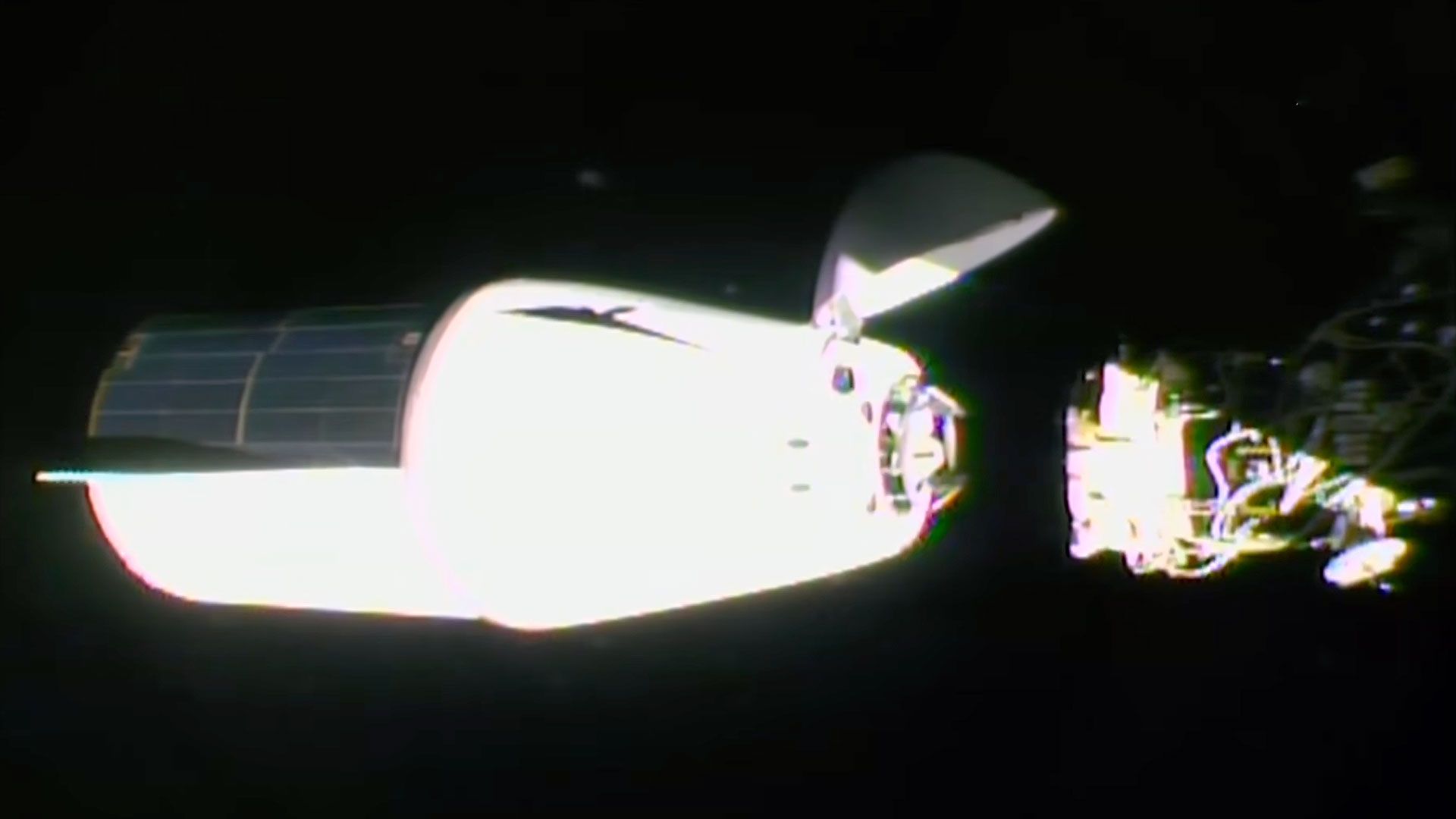
SpaceX Dragon Delivers Science, Supplies to ISS

THE GIST: SpaceX's Dragon capsule successfully docked with the ISS, delivering essential science and supplies.
IMPACT: This mission highlights the ongoing importance of commercial resupply services for maintaining the ISS and enabling critical scientific research in space. The experiments delivered could lead to advancements in understanding bone conditions and planetary formation.
Optimistic
Pessimistic
ELI5
Deep Dive // Full Analysis
Mars ESCAPADE Mission to Study Atmospheric Loss
Satellites May 16
Space.com // 2026-05-16

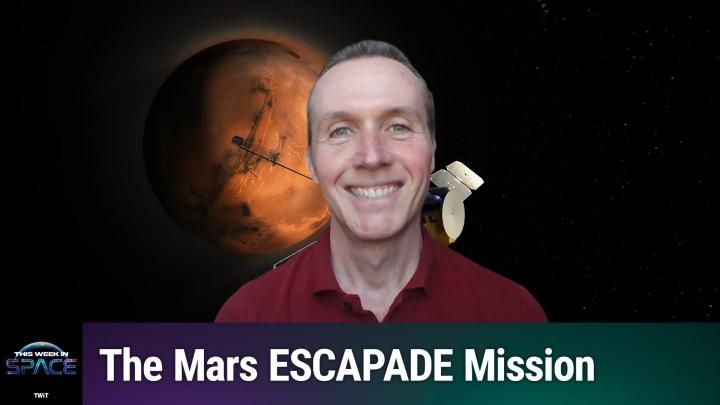
Mars ESCAPADE Mission to Study Atmospheric Loss

THE GIST: Twin orbiters will study Martian atmospheric loss, built by Rocket Lab and launching on New Glenn.
IMPACT: Understanding Martian atmospheric loss is crucial for determining the planet's past habitability. ESCAPADE's budget-conscious approach, utilizing Rocket Lab and New Glenn, could pave the way for more affordable interplanetary missions.
Optimistic
Pessimistic
ELI5
Deep Dive // Full Analysis
SpaceX CRS-34 Delivers Science and Cargo to ISS
Satellites May 15
NASA Space Station // 2026-05-15

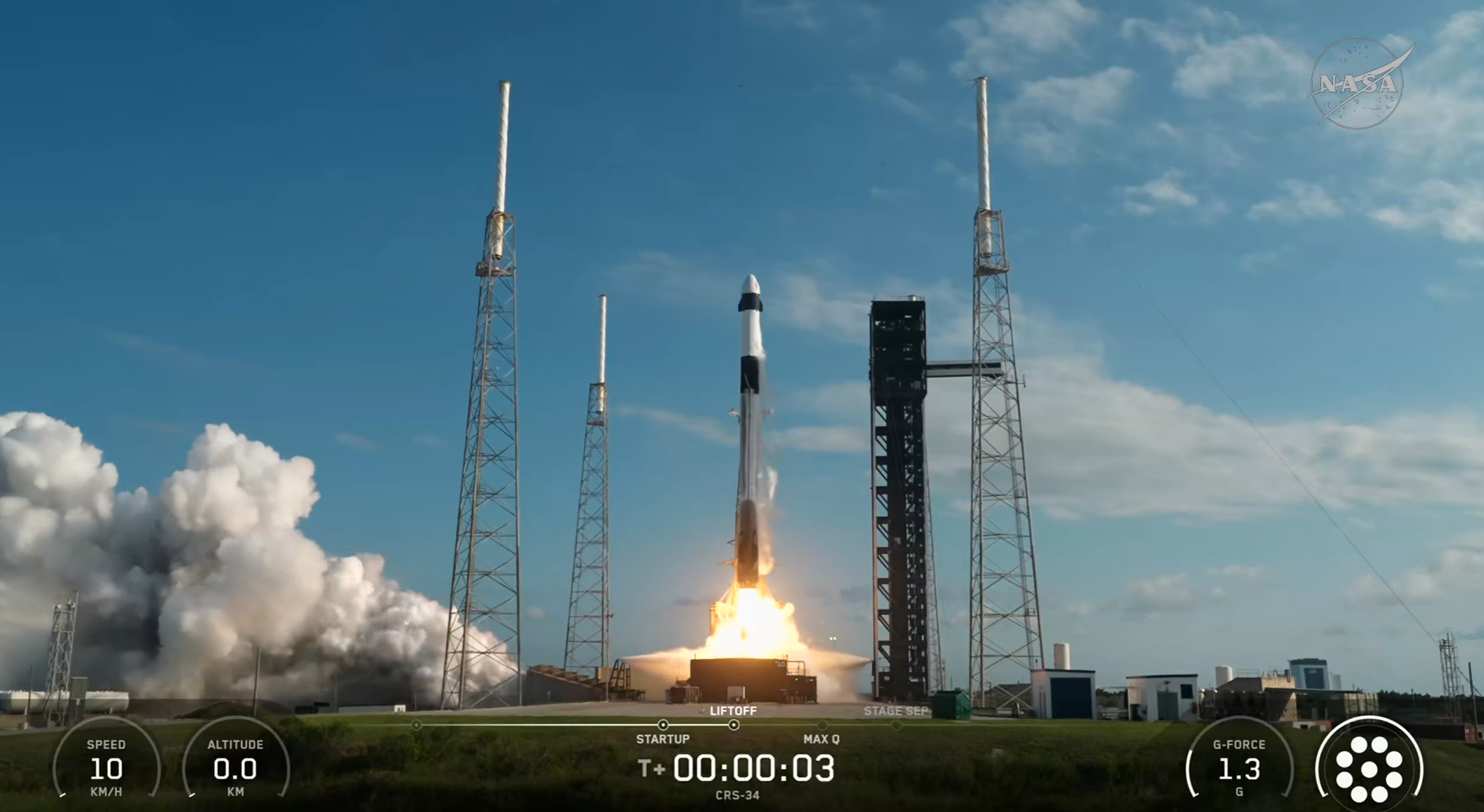
SpaceX CRS-34 Delivers Science and Cargo to ISS

THE GIST: SpaceX's 34th resupply mission successfully launched, delivering critical experiments and cargo to the International Space Station.
IMPACT: This mission ensures the continued operation of the ISS and the advancement of scientific knowledge in space. The experiments conducted on the ISS contribute to understanding the challenges of long-duration spaceflight and developing new technologies for future missions.
Optimistic
Pessimistic
ELI5
Deep Dive // Full Analysis
Earth's Nighttime Light Shows Volatile Changes, NASA Data Reveals
Satellites May 15
Universe Today // 2026-05-15

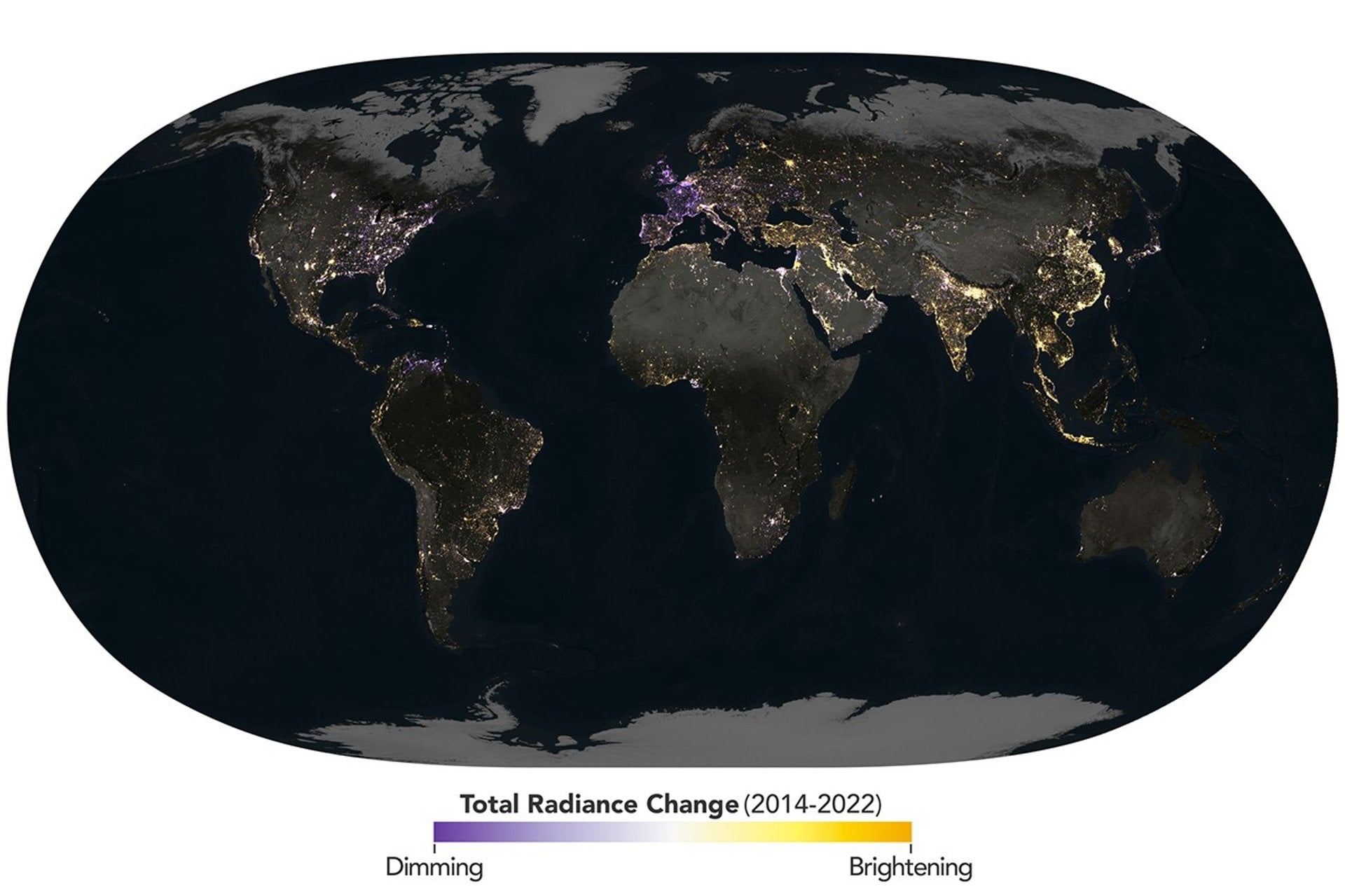
Earth's Nighttime Light Shows Volatile Changes, NASA Data Reveals

THE GIST: NASA's Black Marble project reveals Earth's nighttime illumination is increasingly volatile, with regional brightening and dimming trends.

IMPACT: Understanding these changes is crucial for assessing urbanization, industrial activity, and the impact of events like conflicts and policy changes on energy consumption. The data challenges simplistic models linking nighttime illumination directly to GDP growth.
Optimistic
Pessimistic
ELI5
Deep Dive // Full Analysis
Previous
Page 9 of 75
Next
```