BREAKING: • SpaceX's Starship V3 Mega-rocket Set for Debut Flight • Gravitational Waves Offer New Way to Measure Cosmic Dipole • Supernova Data Compressed Losslessly for Faster Cosmological Analysis • First Detection of the Moving Lens Effect Confirmed • High-Precision Lunar Laser Ranging Achieves Millimeter Accuracy
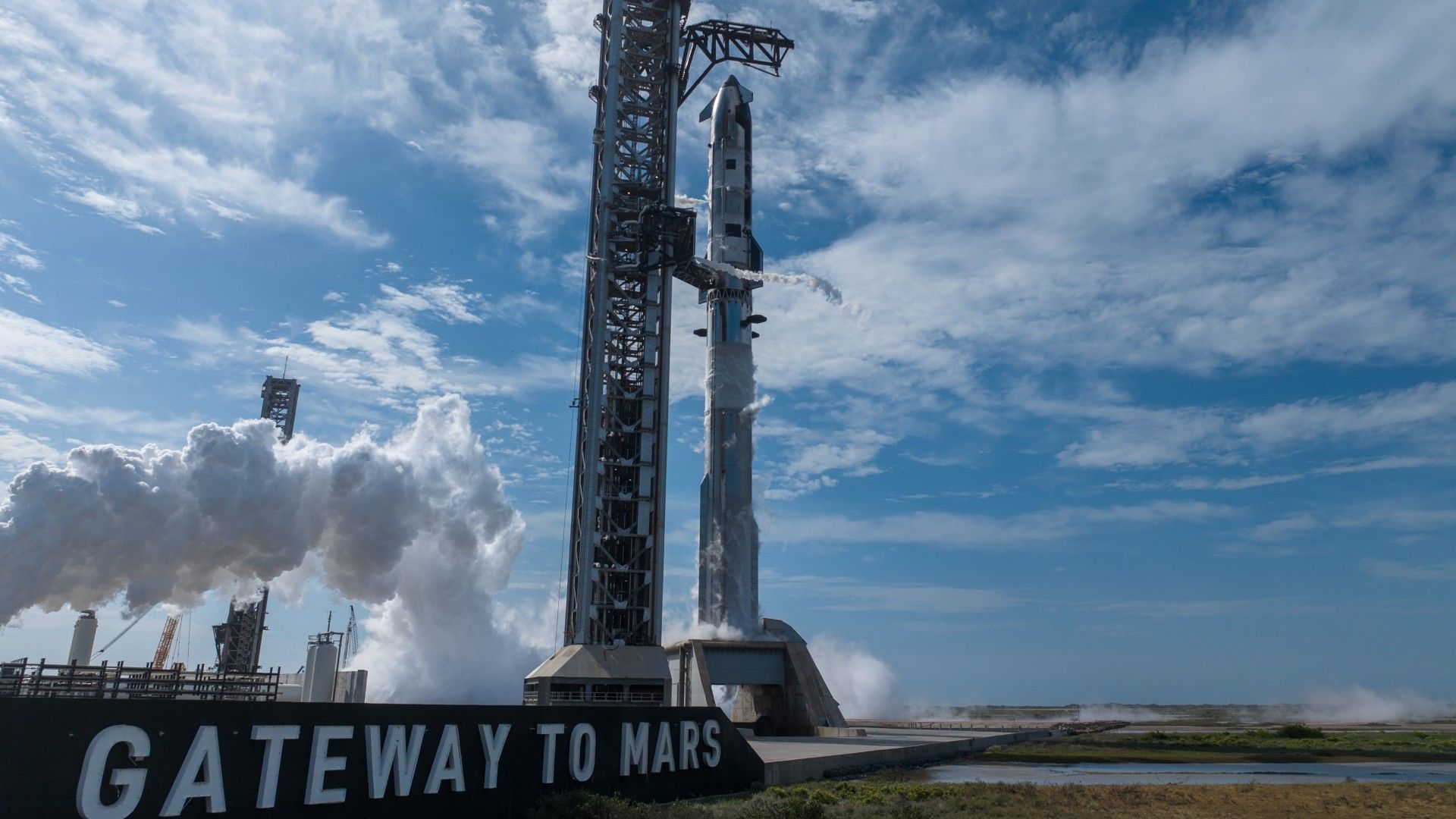
SpaceX's Starship V3 Mega-rocket Set for Debut Flight
Launch Vehicles May 20
Space.com // 2026-05-20

SpaceX's Starship V3 Mega-rocket Set for Debut Flight

THE GIST: SpaceX plans the first flight of its Starship V3, a more powerful iteration, on May 21 for a suborbital test.

IMPACT: This launch is crucial for SpaceX's ambitions to enable lunar and Martian settlements. NASA also relies on Starship for its Artemis program, making this test flight a key milestone for future crewed lunar landings.
Optimistic
Pessimistic
ELI5
Deep Dive // Full Analysis
Gravitational Waves Offer New Way to Measure Cosmic Dipole
Satellites May 20
arXiv Cosmology // 2026-05-20

Gravitational Waves Offer New Way to Measure Cosmic Dipole

THE GIST: Strongly lensed gravitational waves, associated with galaxy surveys, offer a novel approach to measuring the cosmic dipole.

IMPACT: Measuring the cosmic dipole using gravitational waves provides an independent consistency test with different systematics from electromagnetic probes. This could resolve tensions with dipole measurements from radio galaxy counts.
Optimistic
Pessimistic
ELI5
Deep Dive // Full Analysis
Supernova Data Compressed Losslessly for Faster Cosmological Analysis
Satellites May 20
arXiv Cosmology // 2026-05-20

Supernova Data Compressed Losslessly for Faster Cosmological Analysis

THE GIST: Type Ia supernova distance measurements can be compressed losslessly into eleven data points for faster cosmological parameter inference.

IMPACT: This lossless compression method significantly speeds up cosmological analysis of supernova data. It will benefit future surveys from Euclid, Roman, and LSST, which will deliver much larger SNe Ia samples.
Optimistic
Pessimistic
ELI5
Deep Dive // Full Analysis
First Detection of the Moving Lens Effect Confirmed
Satellites May 20
arXiv Cosmology // 2026-05-20

First Detection of the Moving Lens Effect Confirmed

THE GIST: The moving lens effect, a secondary CMB anisotropy, has been detected using ACT DR6 CMB temperature maps and DESI Legacy Imaging Surveys.

IMPACT: Detecting the moving lens effect provides a new method for probing the growth of structure and gravity on large scales. Combining it with the kinematic Sunyaev-Zel'dovich effect could map the Universe's three-dimensional velocity field.
Optimistic
Pessimistic
ELI5
Deep Dive // Full Analysis
High-Precision Lunar Laser Ranging Achieves Millimeter Accuracy
Satellites May 20
arXiv Instrumentation // 2026-05-20

High-Precision Lunar Laser Ranging Achieves Millimeter Accuracy

THE GIST: Amplitude-modulated continuous-wave lunar laser ranging (AM-CW LLR) achieves millimeter-class precision for relativistic gravity tests and lunar interior studies.

IMPACT: Improved LLR precision enhances tests of relativistic gravity and provides more detailed data on the lunar interior. This technology could refine our understanding of fundamental physics and lunar geology.
Optimistic
Pessimistic
ELI5
Deep Dive // Full Analysis
Starlink TLE Accuracy: Empirical Comparison of Propagation Methods
Satellites May 20
arXiv Instrumentation // 2026-05-20

Starlink TLE Accuracy: Empirical Comparison of Propagation Methods

THE GIST: Analysis of Starlink TLE propagation accuracy reveals SGP4 often outperforms high-fidelity methods using public data.

IMPACT: Understanding TLE accuracy is crucial for space situational awareness and collision avoidance, especially with megaconstellations. This research highlights the limitations of using public TLEs for high-fidelity propagation.
Optimistic
Pessimistic
ELI5
Deep Dive // Full Analysis
SPADE: A Compact Phased Array for Solar Activity Monitoring
Satellites May 20
arXiv Instrumentation // 2026-05-20

SPADE: A Compact Phased Array for Solar Activity Monitoring

THE GIST: SPADE, a compact phased array spectrograph, monitors solar activity using digital operations and open-source software.

IMPACT: SPADE's high temporal and frequency resolution allows for studying turbulence in the coronal medium and radio wave propagation effects. This contributes to better understanding of space weather and its impact on satellites.
Optimistic
Pessimistic
ELI5
Deep Dive // Full Analysis
Cloud-Based Tool Aids Meteorite Recovery Using Drones and ML
Habitats & ISRU May 20
arXiv Instrumentation // 2026-05-20

Cloud-Based Tool Aids Meteorite Recovery Using Drones and ML

THE GIST: A cloud-based tool using drones and machine learning assists in recovering observed meteorite falls.

IMPACT: This tool streamlines meteorite recovery, potentially increasing the number of recovered meteorites and improving our understanding of the early solar system. It also demonstrates the application of drone and machine learning technology to planetary science.
Optimistic
Pessimistic
ELI5
Deep Dive // Full Analysis
Synergies Found Between Technosignature and UHE Neutrino Searches
Satellites May 20
arXiv Instrumentation // 2026-05-20

Synergies Found Between Technosignature and UHE Neutrino Searches

THE GIST: Radio technosignature and UHE neutrino experiments share data analysis methodologies for identifying rare signals.

IMPACT: This research promotes cross-community collaboration by establishing a 'preserve-then-rank' workflow for rare-event discovery. It could lead to more efficient and effective searches for extraterrestrial intelligence and UHE neutrinos.
Optimistic
Pessimistic
ELI5
Deep Dive // Full Analysis
SpaceX Launches 24 Starlink Satellites on Falcon 9
Satellites May 20
Spaceflight Now // 2026-05-20

SpaceX Launches 24 Starlink Satellites on Falcon 9

THE GIST: SpaceX launched 24 Starlink satellites on a Falcon 9 rocket from Vandenberg Space Force Base.
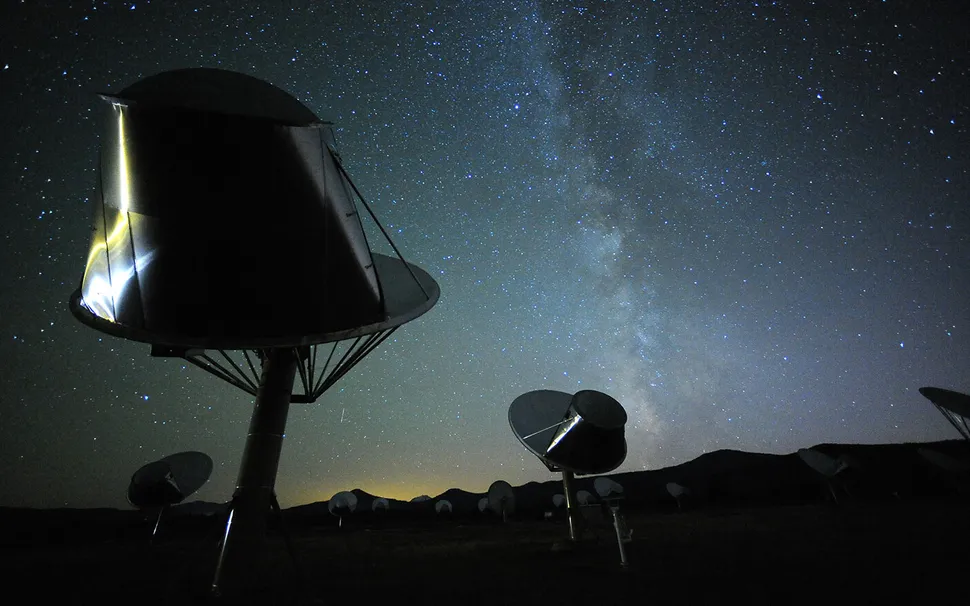
IMPACT: This launch expands SpaceX's Starlink constellation, enhancing global broadband internet access and direct-to-device communication capabilities. Successful booster landings are crucial for reducing launch costs and increasing launch cadence.
Optimistic
Pessimistic
ELI5
Deep Dive // Full Analysis
Fermi Paradox Explores the 'Great Silence' in SETI
Satellites May 19
Universe Today // 2026-05-19

Fermi Paradox Explores the 'Great Silence' in SETI

THE GIST: Fermi's Paradox highlights the contradiction between the high probability of extraterrestrial life and the lack of observed evidence.
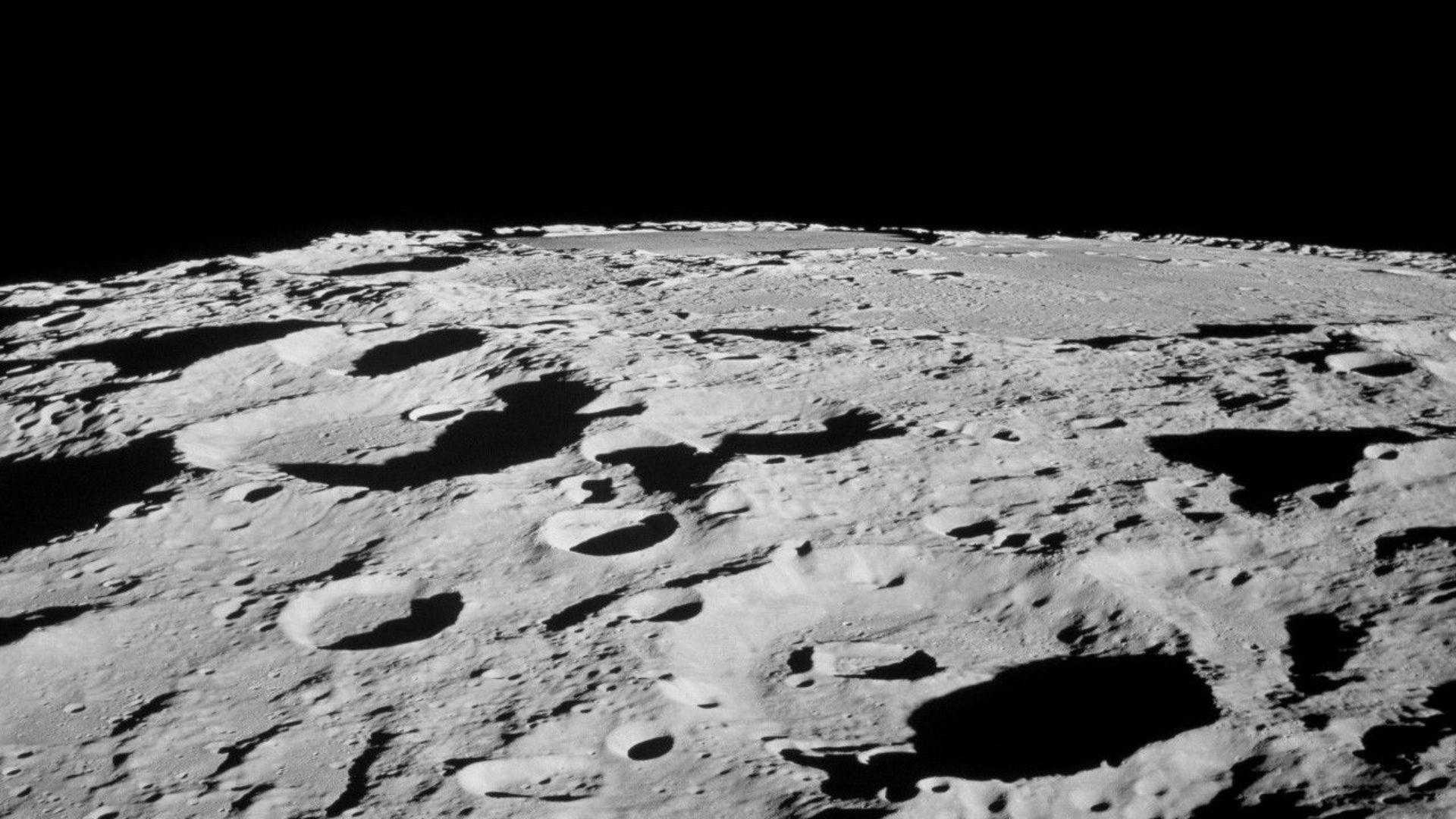
IMPACT: Understanding Fermi's Paradox is crucial for shaping SETI research and astrobiology, influencing resource allocation and search strategies. Proposed resolutions to the paradox impact our understanding of universal development and potential risks.
Optimistic
Pessimistic
ELI5
Deep Dive // Full Analysis
Lunar Craters as Natural Labs for Laser-Based GPS
Habitats & ISRU May 19
Space.com // 2026-05-19

Lunar Craters as Natural Labs for Laser-Based GPS

THE GIST: Ultrastable lasers in permanently shadowed lunar craters could enable a GPS-like navigation system for Artemis missions.

IMPACT: A lunar GPS would reduce reliance on Earth-based tracking, enhancing the autonomy and precision of lunar missions. This technology could be crucial for establishing long-term lunar bases and supporting extensive exploration.
Optimistic
Pessimistic
ELI5
Deep Dive // Full Analysis
Previous
Page 11 of 134
Next
```