BREAKING: • Isaacman Aims for Monthly Uncrewed Lunar Landings Starting in 2027 • 100 Years Since First Liquid-Fueled Rocket Launch • JWST Observations Constrain Exoplanet Cloud Microphysics • CSST Faces Challenges Resolving Stellar Populations in Palomar 5 • Improved CMB Telescope Windows Enhance Detector Sensitivity
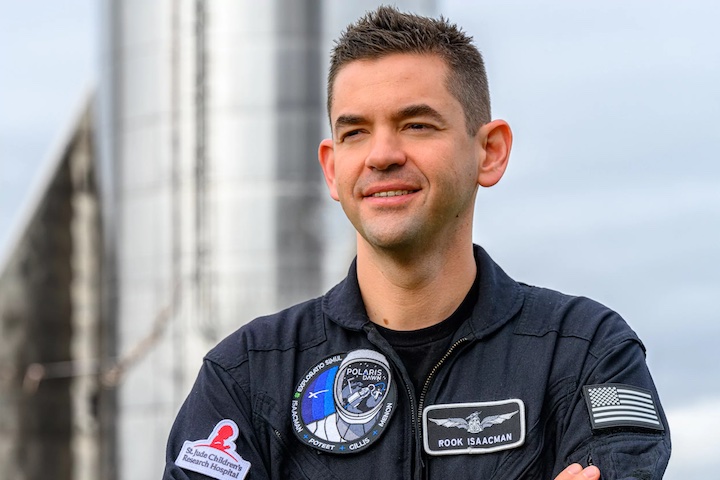
Isaacman Aims for Monthly Uncrewed Lunar Landings Starting in 2027
Habitats & ISRU Mar 16
Payload Space // 2026-03-16

Isaacman Aims for Monthly Uncrewed Lunar Landings Starting in 2027

THE GIST: Jared Isaacman proposes monthly lunar lander missions to the South Pole starting in 2027 to accelerate Moon base construction.
IMPACT: Frequent lunar missions could significantly accelerate the development of a permanent lunar base, enabling more extensive scientific research and resource utilization. Streamlining NASA's workforce and policies is crucial for supporting these ambitious goals.
Optimistic
Pessimistic
ELI5
Deep Dive // Full Analysis
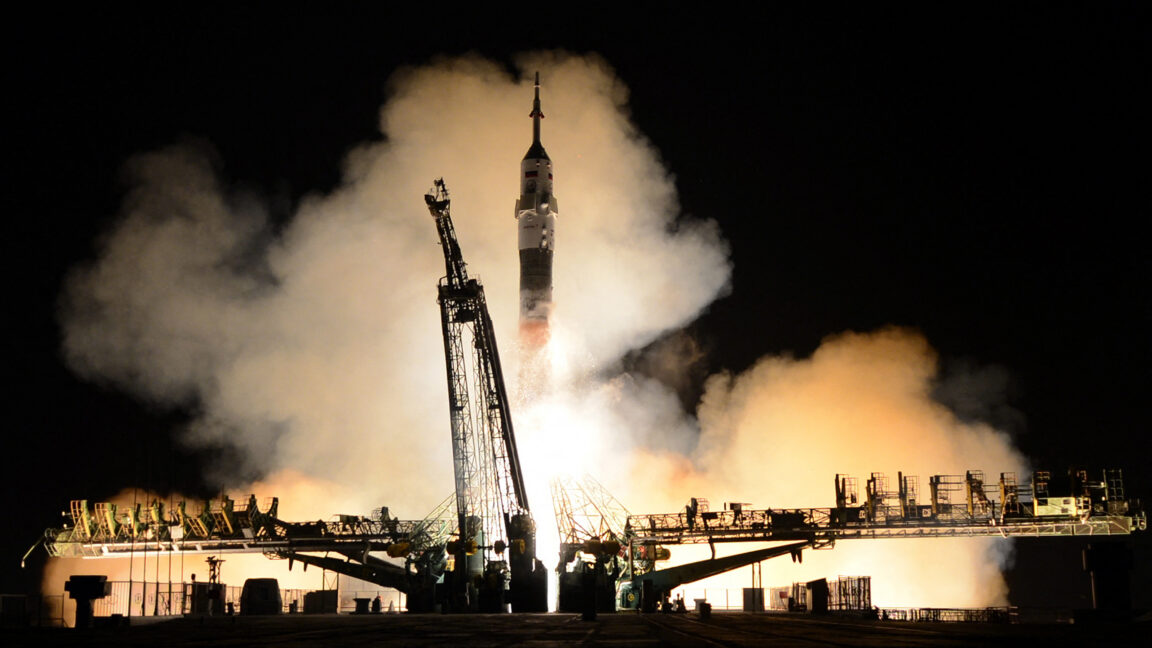
100 Years Since First Liquid-Fueled Rocket Launch
Launch Vehicles Mar 16
Ars Technica Space // 2026-03-16

100 Years Since First Liquid-Fueled Rocket Launch

THE GIST: Robert Goddard's 1926 launch of the first liquid-fueled rocket marked a pivotal moment in spaceflight history.

IMPACT: Goddard's experiment paved the way for modern rocketry and space exploration. The Space Shuttle Endeavour's STS-130 mission highlighted continued advancements in space station assembly.
Optimistic
Pessimistic
ELI5
Deep Dive // Full Analysis
JWST Observations Constrain Exoplanet Cloud Microphysics
Satellites Mar 16
arXiv Instrumentation // 2026-03-16

JWST Observations Constrain Exoplanet Cloud Microphysics

THE GIST: JWST data, combined with cloud models, reveals insights into silicate cloud formation in exoplanet atmospheres.

IMPACT: Understanding exoplanet cloud formation helps characterize exoplanet atmospheres and assess their potential habitability. This research bridges the gap between observations and microphysical models.
Optimistic
Pessimistic
ELI5
Deep Dive // Full Analysis
CSST Faces Challenges Resolving Stellar Populations in Palomar 5
Satellites Mar 16
arXiv Instrumentation // 2026-03-16

CSST Faces Challenges Resolving Stellar Populations in Palomar 5

THE GIST: Simulations suggest the Chinese Space Station Survey Telescope (CSST) will struggle to resolve multiple stellar populations in distant stellar streams.

IMPACT: Understanding the limitations of CSST helps optimize observation strategies for studying stellar populations. Future observations will require multiple epochs and bands to obtain necessary data.
Optimistic
Pessimistic
ELI5
Deep Dive // Full Analysis
Improved CMB Telescope Windows Enhance Detector Sensitivity
Satellites Mar 16
arXiv Instrumentation // 2026-03-16

Improved CMB Telescope Windows Enhance Detector Sensitivity

THE GIST: New thin composite polymer vacuum windows improve detector sensitivity in millimeter-wave telescopes observing the cosmic microwave background.

IMPACT: Increased detector sensitivity allows for more precise measurements of the cosmic microwave background. This leads to a better understanding of the early universe and its fundamental properties.
Optimistic
Pessimistic
ELI5
Deep Dive // Full Analysis
AI Speeds Up Black Hole Image Generation
Satellites Mar 16
arXiv Instrumentation // 2026-03-16

AI Speeds Up Black Hole Image Generation

THE GIST: A new AI model drastically reduces the computational cost of generating black hole images.

IMPACT: Faster black hole image generation enables quicker parameter exploration and more precise tests of strong-field gravity. This accelerates research and potentially improves our understanding of black hole physics.
Optimistic
Pessimistic
ELI5
Deep Dive // Full Analysis
Traveling-Wave Parametric Amplifier for Scalable Quantum Computing
Satellites Mar 16
arXiv Instrumentation // 2026-03-16

Traveling-Wave Parametric Amplifier for Scalable Quantum Computing

THE GIST: A traveling-wave parametric amplifier achieves broadband amplification and backward isolation in a compact circuit for superconducting quantum computers.

IMPACT: This technology could simplify the readout hardware for superconducting quantum computers, enabling scalability and improved measurement efficiency.
Optimistic
Pessimistic
ELI5
Deep Dive // Full Analysis
Reprogrammable Totimorphic Structures for Autonomous Space Applications
Habitats & ISRU Mar 16
arXiv Instrumentation // 2026-03-16

Reprogrammable Totimorphic Structures for Autonomous Space Applications

THE GIST: A computational framework enables continuous reprogramming of Totimorphic lattices for space applications, offering flexibility and autonomous self-configuration.

IMPACT: This technology could revolutionize space structure design by enabling autonomous self-configuration and self-repair. This is particularly valuable in harsh and resource-constrained deep space environments.
Optimistic
Pessimistic
ELI5
Deep Dive // Full Analysis
Global IoT Networks as Distributed Radio Telescopes: A Feasibility Study
Satellites Mar 16
arXiv Instrumentation // 2026-03-16

Global IoT Networks as Distributed Radio Telescopes: A Feasibility Study

THE GIST: Researchers propose using global IoT networks as a distributed radio telescope, potentially increasing antenna gain and survey speed significantly.

IMPACT: This innovative approach could revolutionize radio astronomy by providing a cost-effective and widely accessible platform for astronomical observations. The increased antenna gain and survey speed could lead to new discoveries.
Optimistic
Pessimistic
ELI5
Deep Dive // Full Analysis
Dichroic Metasurface Design Enables Dual-Angle Beam Refraction
Satellites Mar 16
arXiv Instrumentation // 2026-03-16

Dichroic Metasurface Design Enables Dual-Angle Beam Refraction

THE GIST: A transmissive Huygens' metasurface model achieves diverse refraction angles at two distinct frequency bands, potentially improving satellite communication.
IMPACT: This technology could lead to more efficient and versatile satellite communication systems. The ability to refract beams at different angles and frequencies could improve signal targeting and reduce interference.
Optimistic
Pessimistic
ELI5
Deep Dive // Full Analysis
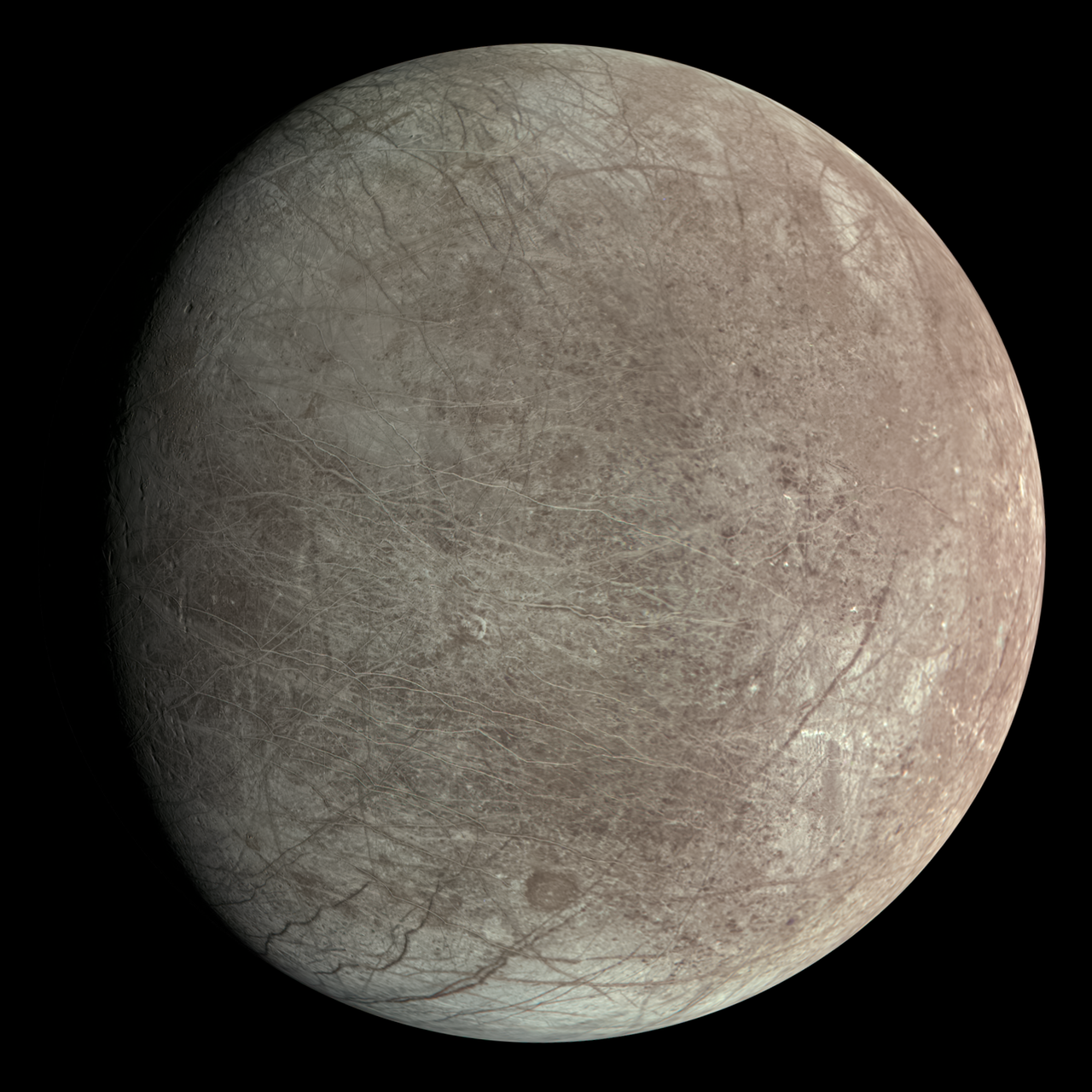
JWST Reveals Carbon Dioxide Distribution on Europa, Hints at Subsurface Ocean Composition
Habitats & ISRU Mar 16
Universe Today // 2026-03-16

JWST Reveals Carbon Dioxide Distribution on Europa, Hints at Subsurface Ocean Composition

THE GIST: <b>JWST observations reveal carbon dioxide distribution on Europa, suggesting a carbon-rich subsurface ocean in communication with the surface.</b>
IMPACT: The discovery of carbon dioxide distribution patterns on Europa provides insights into the composition of its subsurface ocean. This ocean's potential habitability is a key focus for astrobiology, and this data will inform future exploration efforts.
Optimistic
Pessimistic
ELI5
Deep Dive // Full Analysis
Assembly Theory: A New Approach to Detecting Extraterrestrial Life
Satellites Mar 16
Universe Today // 2026-03-16

Assembly Theory: A New Approach to Detecting Extraterrestrial Life

THE GIST: <b>Assembly Theory offers a novel method for detecting life by assessing molecular complexity rather than specific biosignatures.</b>

IMPACT: Assembly Theory provides a new, agnostic approach to detecting life on exoplanets, moving beyond the limitations of Earth-centric biosignature searches. It offers a continuous complexity score, potentially capturing the gradual transition between abiotic and biotic environments.
Optimistic
Pessimistic
ELI5
Deep Dive // Full Analysis
Previous
Page 111 of 134
Next
```