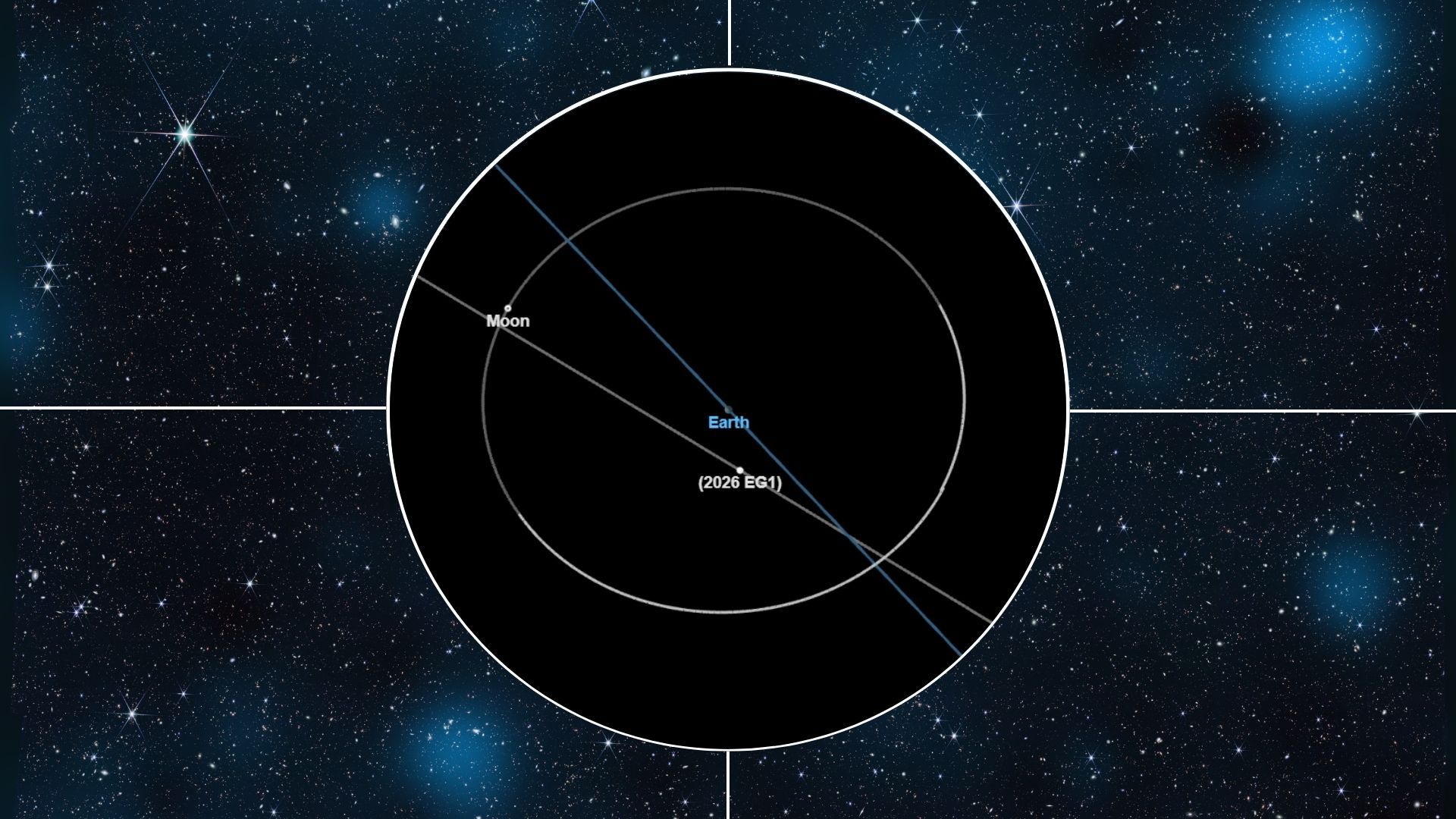
Bus-Sized Asteroid to Pass Earth Closely
The Gist
A newly discovered asteroid, designated 2026 EG1, will pass within 197,466 miles of Earth.
Explain Like I'm Five
"Imagine a rock flying close to our planet! This one is the size of a bus and zoomed past us, but scientists are watching to make sure bigger ones don't get too close and cause problems."
Deep Intelligence Analysis
_Context: This intelligence report was compiled by the DailyOrbitalWire Strategy Engine. Verified for Art. 50 Compliance._
Impact Assessment
Near-Earth object tracking is crucial for planetary defense. While this asteroid poses no immediate threat, it highlights the importance of continued monitoring and development of mitigation strategies.
Read Full Story on Space.comKey Details
- ● Asteroid 2026 EG1 was discovered on March 8.
- ● The asteroid's closest approach occurred on March 12 at 11:27 p.m. EDT.
- ● The asteroid is estimated to be 32-72 feet (10-22 meters) wide.
- ● The asteroid's speed relative to Earth was 21,513 miles per hour (34,621 kilometers per hour).
- ● Its next closest planetary approach will be on Sept. 13, 2186, passing 7.5 million miles from Mars.
Optimistic Outlook
Advanced detection capabilities, like those of the Vera Rubin Observatory, are increasing the number of identified near-Earth asteroids. This allows for more accurate risk assessment and potentially earlier intervention if a hazardous object is detected.
Pessimistic Outlook
Despite increased detection, the sheer number of near-Earth asteroids means that potentially hazardous objects could still be discovered with little warning. Continued investment in both detection and mitigation technologies is essential.

The Signal, Not
the Noise|
Get the week's top 1% of space-tech intelligence synthesized into a 5-minute read. Join 25,000+ aerospace insiders.
Unsubscribe anytime. No spam, ever.