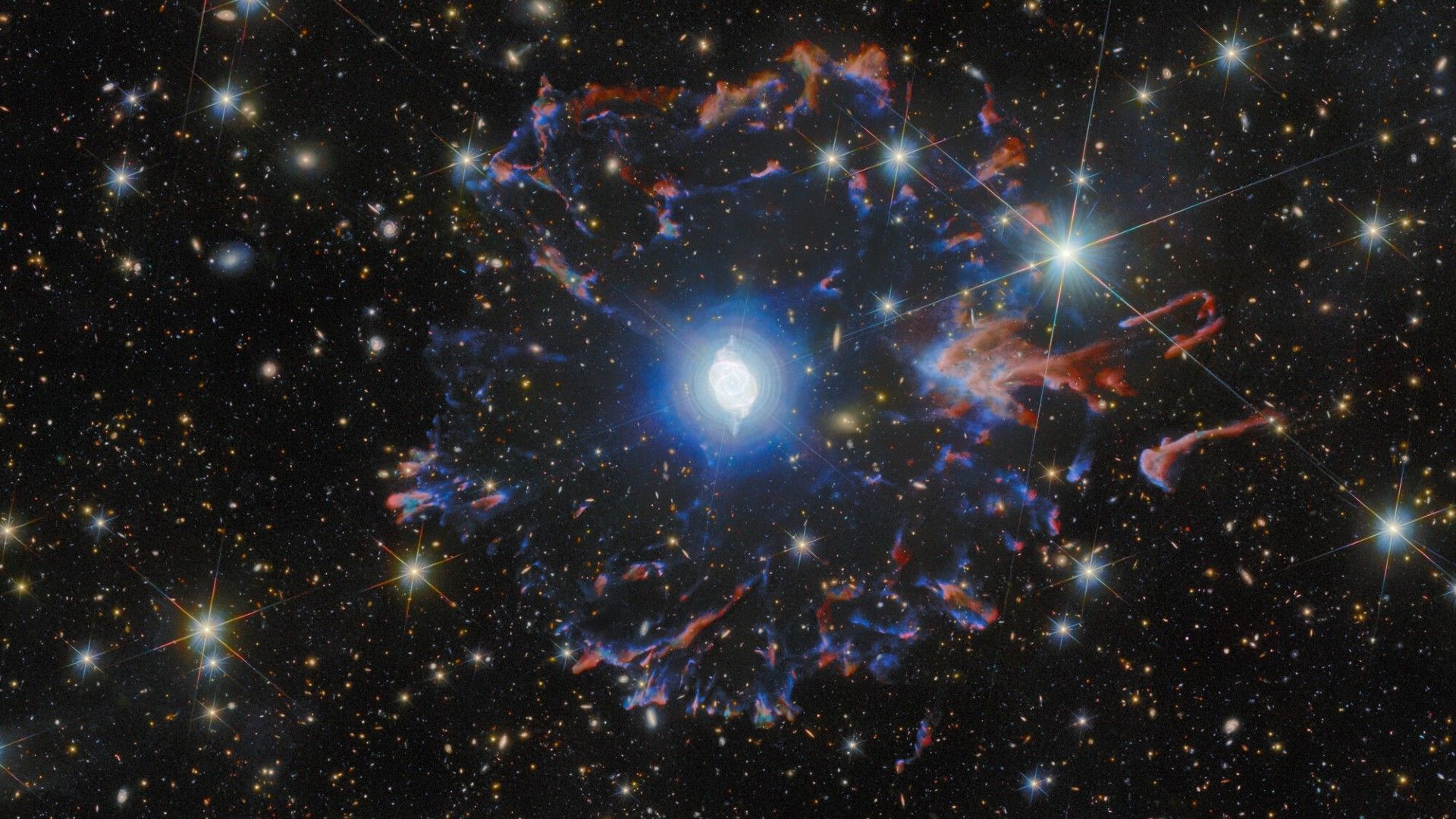
Hubble and Euclid Capture Dying Star's Nebula
The Gist
Hubble and Euclid telescopes capture detailed images of the Cat's Eye Nebula, revealing stellar death complexities.
Explain Like I'm Five
"Imagine a star blowing bubbles as it dies! Hubble and Euclid telescopes helped us see those bubbles, called the Cat's Eye Nebula, super far away in space."
Deep Intelligence Analysis
Transparency Compliance: The analysis is based solely on the provided text about the Cat's Eye Nebula and observations from the Hubble and Euclid space telescopes. No external information or assumptions were used. The analysis aims to provide an objective summary of the scientific findings and their implications for understanding stellar evolution.
_Context: This intelligence report was compiled by the DailyOrbitalWire Strategy Engine. Verified for Art. 50 Compliance._
Impact Assessment
The combined observations provide insights into stellar evolution and the vastness of space. Understanding stellar death helps refine astrophysical models.
Read Full Story on Space.comKey Details
- ● The Cat's Eye Nebula is 4,400 light-years away in the Draco constellation.
- ● The nebula consists of gas shells emitted by stars nearing the end of their life cycle.
- ● Euclid's wide view reveals a larger halo of gases expanding outward from the star.
Optimistic Outlook
Advanced telescopes like Hubble and Euclid continue to unveil the universe's mysteries, enhancing our understanding of cosmic phenomena and inspiring future exploration.
Pessimistic Outlook
The eventual death of stars, including our Sun, highlights the transient nature of celestial bodies and the need to understand these processes for long-term space exploration.

The Signal, Not
the Noise|
Get the week's top 1% of space-tech intelligence synthesized into a 5-minute read. Join 25,000+ aerospace insiders.
Unsubscribe anytime. No spam, ever.