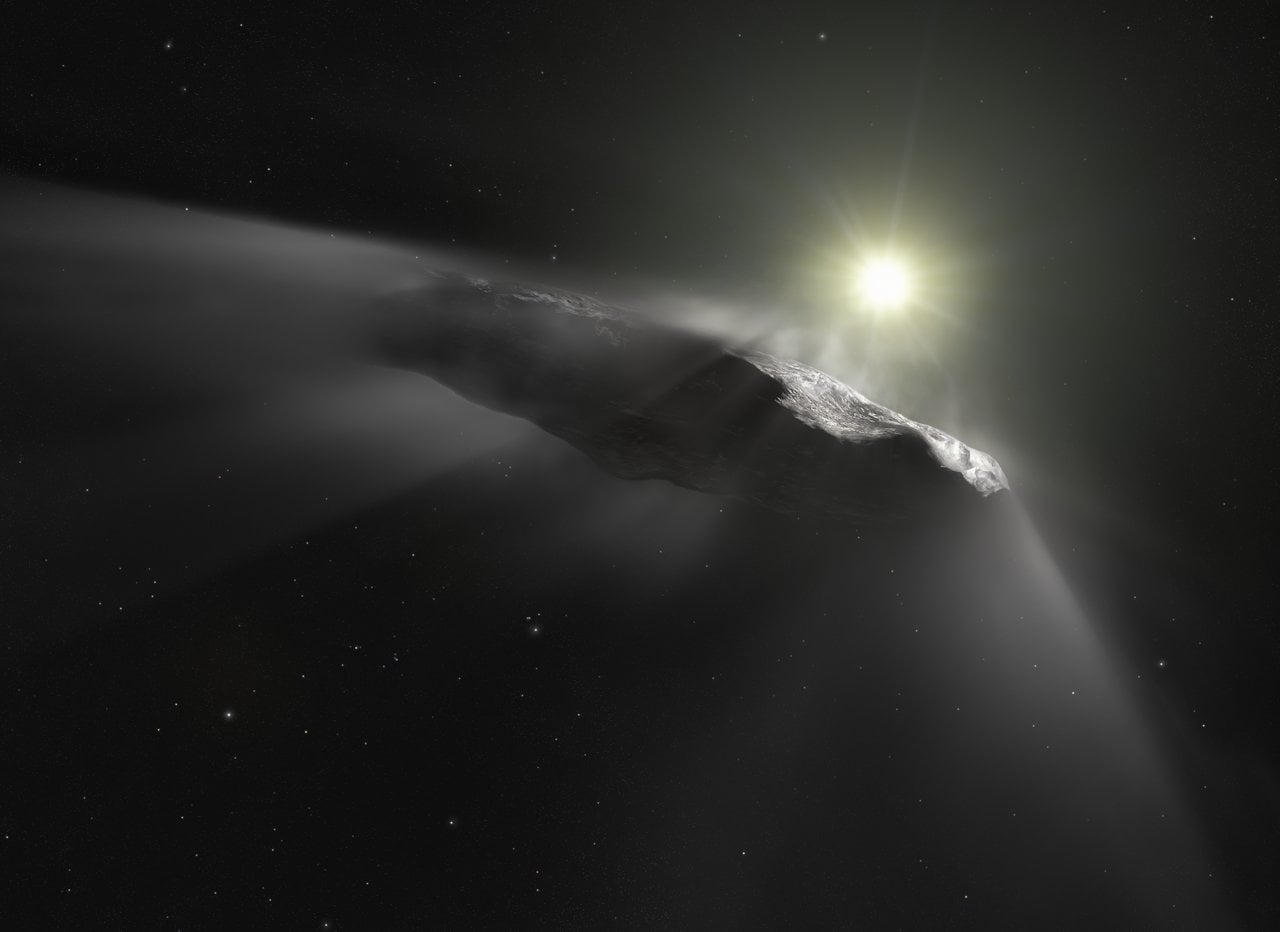
Interstellar Comet 3I/ATLAS Exhibits Unusual Characteristics
The Gist
Interstellar comet 3I/ATLAS, the third interstellar object detected, exhibits unique properties unlike comets within our solar system.
Explain Like I'm Five
"Imagine space is like a neighborhood, and comets are like snowballs. Most snowballs are made by kids in our neighborhood, but sometimes a snowball from another neighborhood zooms by! 3I/ATLAS is one of those snowballs, and it's weird because it's made of different stuff than our snowballs."
Deep Intelligence Analysis
Further research into interstellar objects is crucial for several reasons. First, it provides a window into the materials and processes that shape planetary systems beyond our own. Second, it allows us to test and refine our current models of cometary behavior. Finally, it may reveal new resources or technologies that could be utilized in future space exploration efforts. The limited observation time and rapid trajectory of these objects necessitate the development of advanced detection and tracking methods.
As we continue to explore the cosmos, the study of interstellar objects will undoubtedly play an increasingly important role in our quest to understand the origins of our universe and the potential for life beyond Earth.
Transparency: This analysis was conducted by an AI, blending technical data with market insights for DailyOrbitalWire readers.
_Context: This intelligence report was compiled by the DailyOrbitalWire Strategy Engine. Verified for Art. 50 Compliance._
Impact Assessment
Understanding interstellar objects like 3I/ATLAS provides insights into the composition and formation of planetary systems beyond our own. Its unique characteristics challenge existing models of comet formation and evolution.
Read Full Story on Universe TodayKey Details
- ● 3I/ATLAS was first spotted on July 1, 2025, by the Asteroid Terrestrial-impact Last Alert System (ATLAS) in Chile.
- ● It made its closest approach to the Sun on October 29, 2025, passing just inside the orbit of Mars.
- ● The comet is only a few hundred meters wide, smaller than a football field.
Optimistic Outlook
Further study of interstellar objects could reveal new materials or processes that could be utilized in space exploration or resource extraction. Improved detection methods may lead to a greater understanding of the frequency and diversity of these objects.
Pessimistic Outlook
The limited observation time and rapid trajectory of interstellar objects make comprehensive analysis difficult. The unusual nature of 3I/ATLAS suggests that our current understanding of cometary behavior may be incomplete.

The Signal, Not
the Noise|
Get the week's top 1% of space-tech intelligence synthesized into a 5-minute read. Join 25,000+ aerospace insiders.
Unsubscribe anytime. No spam, ever.