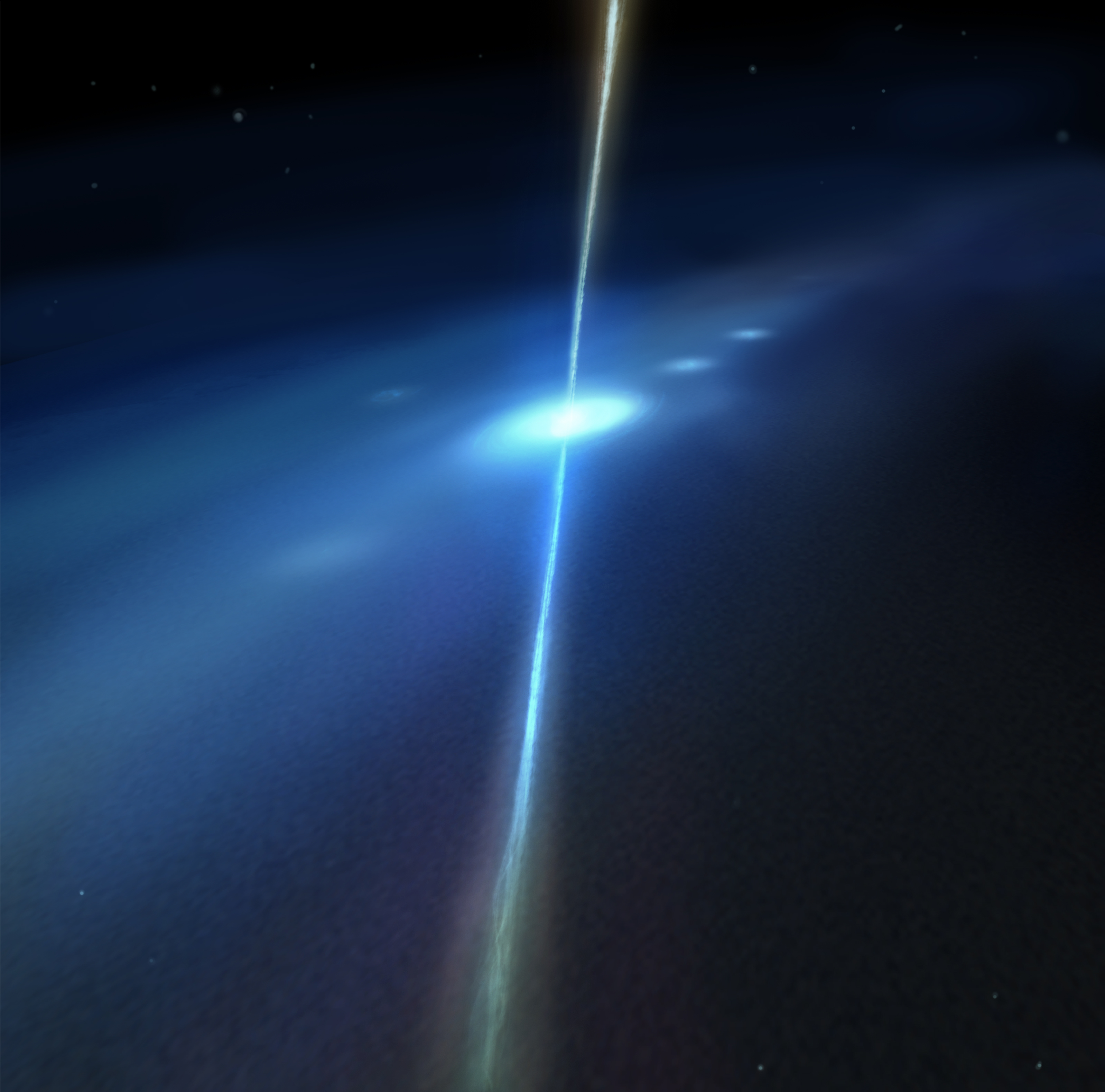
NASA Detects Neutron Star Collision in Unexpected Galactic Environment
The Gist
NASA missions have detected a neutron star collision within a small galaxy embedded in a gas stream, challenging existing astrophysical models.
Explain Like I'm Five
"Imagine two super-heavy stars crashed in a tiny town far, far away! Scientists using special telescopes saw it happen, and it helps them understand how the universe makes gold and other stuff."
Deep Intelligence Analysis
The observation involved a coordinated effort from multiple NASA telescopes, including the Chandra X-ray Observatory, Fermi Gamma-ray Space Telescope, Neil Gehrels Swift Observatory, and Hubble Space Telescope. The combined capabilities of these instruments were crucial in pinpointing the location of the event and characterizing its properties. The discovery also provides insights into the origin of heavy elements, such as gold and platinum, found in stars located far from galactic centers. The collision may have ejected these elements into intergalactic space, where they were later incorporated into newly formed stars.
However, the rarity of such events poses a challenge for comprehensive analysis. The limited availability of data may restrict our ability to draw definitive conclusions about the underlying processes. Future observations and theoretical modeling are needed to further refine our understanding of neutron star collisions and their role in the evolution of galaxies. This discovery highlights the importance of continued investment in space-based observatories and international collaboration in astronomical research. The event also underscores the dynamic nature of the universe and the ongoing need to challenge existing paradigms in astrophysics.
*Transparency Disclosure: This analysis was composed by an AI model to provide a comprehensive summary of the provided text.*
_Context: This intelligence report was compiled by the DailyOrbitalWire Strategy Engine. Verified for Art. 50 Compliance._
Impact Assessment
This discovery challenges existing models of neutron star collisions and gamma-ray burst origins. It may provide insights into the distribution of heavy elements in galaxies.
Read Full Story on NASA Breaking NewsKey Details
- ● The collision occurred approximately 4.7 billion light-years away.
- ● The event, dubbed GRB 230906A, was detected on September 6, 2023.
- ● The discovery involved multiple NASA telescopes, including Chandra, Fermi, Swift, and Hubble.
- ● The galaxy is embedded within a 600,000 light-year long gas stream.
Optimistic Outlook
Further research could reveal new details about the formation and evolution of galaxies. This could refine our understanding of the universe's composition and structure.
Pessimistic Outlook
The rarity of such events makes it difficult to gather sufficient data for comprehensive analysis. This may limit our ability to draw definitive conclusions about the underlying processes.

The Signal, Not
the Noise|
Get the week's top 1% of space-tech intelligence synthesized into a 5-minute read. Join 25,000+ aerospace insiders.
Unsubscribe anytime. No spam, ever.