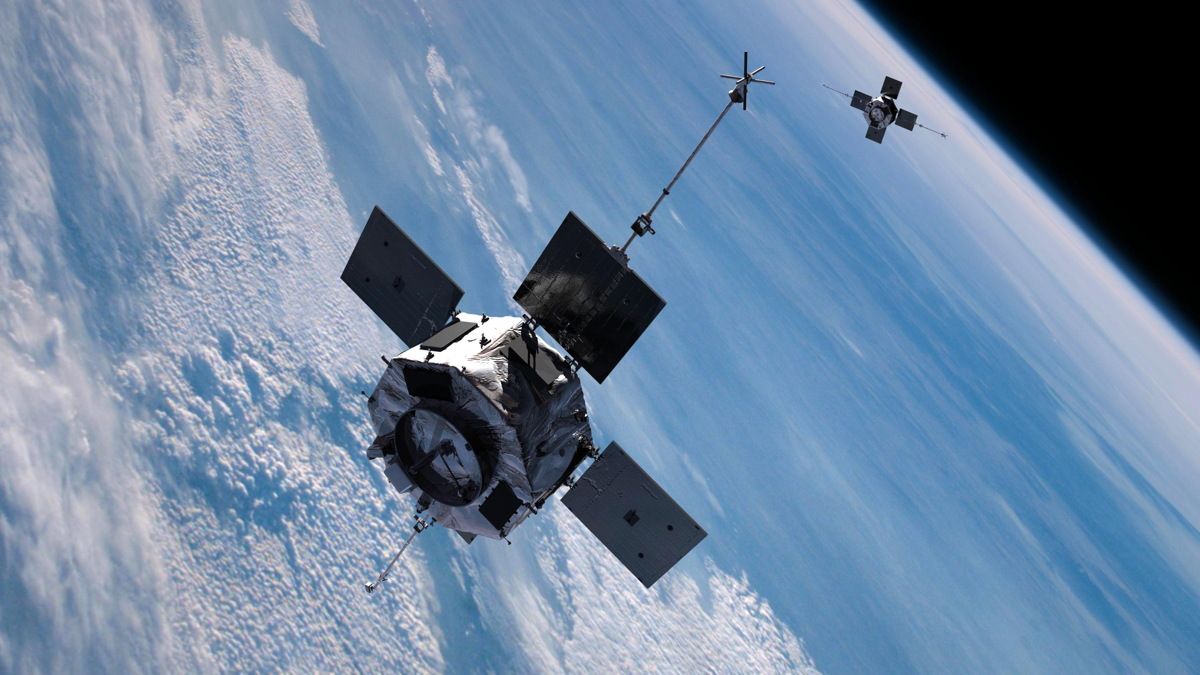
NASA Satellite to Reenter Earth's Atmosphere
The Gist
A 1,323-pound NASA satellite, Van Allen Probe A, is expected to reenter Earth's atmosphere around March 10, 2026.
Explain Like I'm Five
"Imagine throwing a ball really high. This old NASA ball (satellite) is falling back down to Earth, and most of it will burn up like a shooting star. Don't worry, it's very unlikely to hurt anyone!"
Deep Intelligence Analysis
The accelerated reentry of Probe A, initially expected to remain in orbit until 2034, is attributed to increased solar activity, which has caused the Earth's atmosphere to expand, leading to greater frictional drag on orbiting satellites. This phenomenon highlights the interconnectedness of space weather and satellite operations, emphasizing the need for robust monitoring and prediction capabilities. The risk of harm to individuals on Earth is statistically low, but the event serves as a reminder of the potential consequences of uncontrolled reentries.
Looking ahead, the development and implementation of active debris removal technologies and responsible deorbiting strategies are essential for mitigating the risks associated with space debris. International cooperation and the establishment of clear regulatory frameworks are crucial for ensuring the long-term sustainability of space activities and safeguarding the space environment for future generations. The incident also highlights the need for more resilient satellite designs that can withstand the effects of increased atmospheric drag and solar activity.
_Context: This intelligence report was compiled by the DailyOrbitalWire Strategy Engine. Verified for Art. 50 Compliance._
Impact Assessment
The reentry highlights the increasing challenge of space debris management and the impact of solar activity on satellite orbits. Understanding these factors is crucial for ensuring the safety and longevity of future space missions and infrastructure.
Read Full Story on Space.comKey Details
- ● Van Allen Probe A, weighing 1,323 pounds (600 kg), is predicted to reenter the atmosphere around March 10.
- ● The satellite launched in August 2012 to study Earth's radiation belts.
- ● NASA estimates a low risk of harm to anyone on Earth, approximately 1 in 4,200.
- ● Van Allen Probe B is expected to reenter before 2030.
Optimistic Outlook
The mission provided valuable data on Earth's radiation belts, improving space weather forecasts. Controlled deorbiting technologies and improved space traffic management could mitigate future reentry risks.
Pessimistic Outlook
Uncontrolled reentries pose a small but non-negligible risk to populated areas. Increased solar activity could accelerate the deorbit of other satellites, exacerbating the space debris problem.

The Signal, Not
the Noise|
Get the week's top 1% of space-tech intelligence synthesized into a 5-minute read. Join 25,000+ aerospace insiders.
Unsubscribe anytime. No spam, ever.