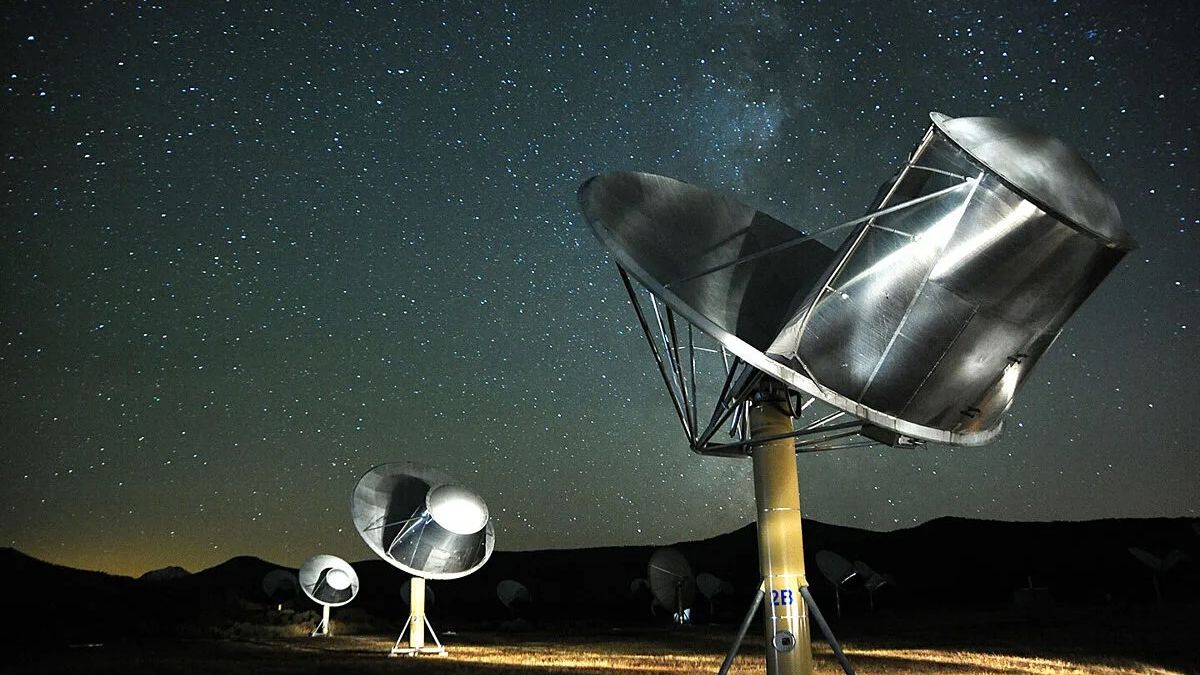
Space Weather May Obscure Alien Signals, Hampering SETI
The Gist
Space weather's electromagnetic disturbances could be scrambling potential alien radio transmissions, hindering detection efforts.
Explain Like I'm Five
"Imagine trying to hear someone far away, but the wind keeps messing up their voice. Space weather is like that wind, making it hard to hear alien messages."
Deep Intelligence Analysis
Vishal Gajjar and Grayce Brown from the SETI Institute are working to quantify these effects to improve signal processing techniques. By understanding how space weather distorts signals, scientists can develop methods to filter out the noise and enhance the sensitivity of SETI searches. This research highlights the importance of considering environmental factors when searching for extraterrestrial intelligence.
However, if space weather proves to be a pervasive and highly disruptive force, current SETI methods may need a fundamental re-evaluation. The challenge lies in distinguishing between natural interference and genuine extraterrestrial signals, requiring sophisticated algorithms and a deeper understanding of stellar environments. The success of future SETI endeavors may depend on our ability to overcome these obstacles and adapt our search strategies accordingly. The research underscores the complexity of the search for extraterrestrial life and the need for innovative approaches to address the challenges posed by the interstellar medium.
_Context: This intelligence report was compiled by the DailyOrbitalWire Strategy Engine. Verified for Art. 50 Compliance._
Impact Assessment
Understanding space weather's impact is crucial for refining SETI search strategies. Mitigating signal distortion could improve the chances of detecting extraterrestrial intelligence.
Read Full Story on Space.comKey Details
- ● Space weather includes electromagnetic disturbances from stellar winds and coronal mass ejections.
- ● Plasma and electrons from space weather can negatively impact coherent radio signals.
- ● Diffractive scintillation, caused by plasma interaction, can broaden narrowband signals.
- ● SETI searches are optimized for narrowband signals due to their artificial nature.
Optimistic Outlook
Quantifying space weather effects could lead to advanced signal processing techniques. These techniques could filter out interference, enhancing the sensitivity of SETI searches and potentially uncovering previously undetectable signals.
Pessimistic Outlook
If space weather significantly distorts alien signals, current SETI methods may be inadequate. This could mean that many potential signals are being missed, requiring a complete overhaul of search strategies.

The Signal, Not
the Noise|
Get the week's top 1% of space-tech intelligence synthesized into a 5-minute read. Join 25,000+ aerospace insiders.
Unsubscribe anytime. No spam, ever.