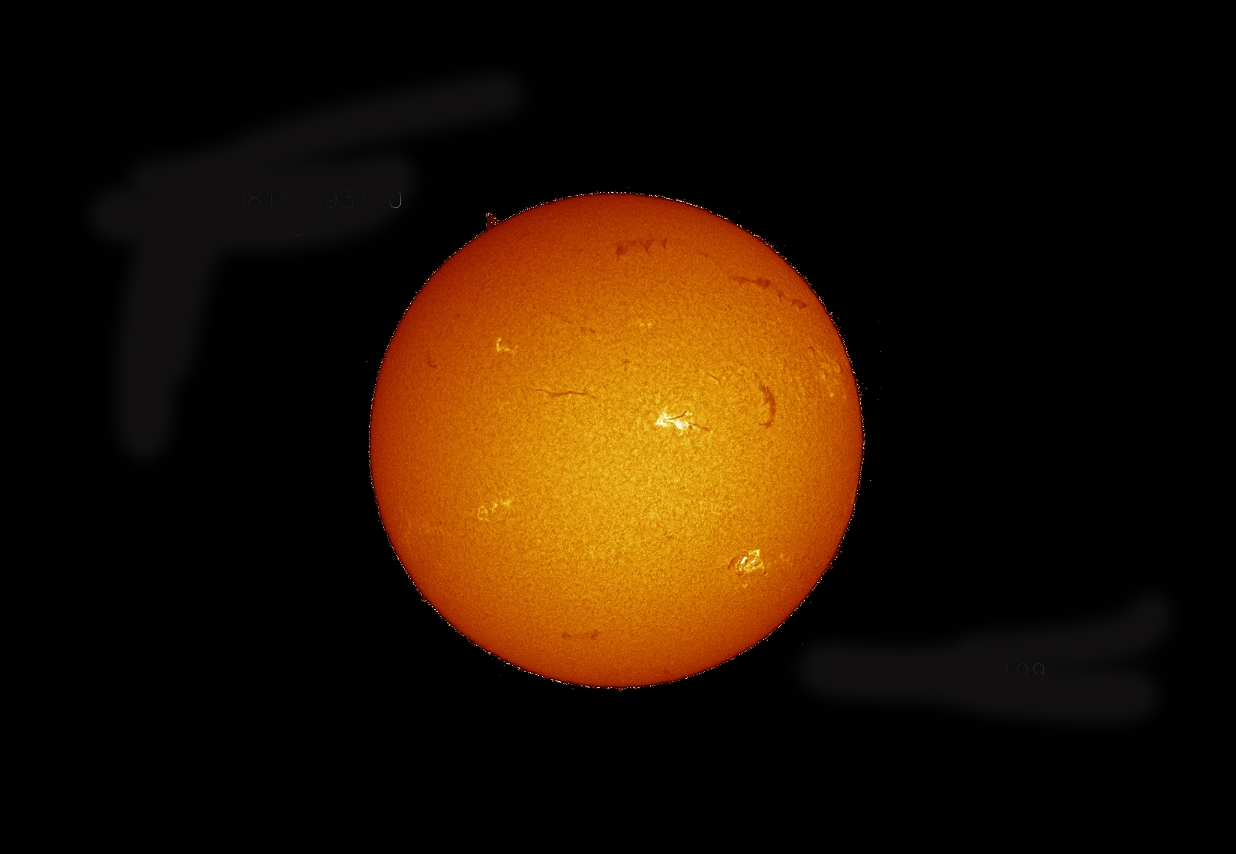
Unusual Spectral Behavior Observed During Solar Flare Decline
The Gist
Scientists observed unexpected spectral fingerprints of calcium II H and hydrogen-epsilon lines during the decline of a C-class solar flare.
Explain Like I'm Five
"Imagine the sun burping, and scientists saw some weird colors in the burp that they didn't expect. It means we don't fully understand how the sun burps!"
Deep Intelligence Analysis
The DKIST's high-resolution capabilities enabled the detailed observation of these spectral lines, which have historically been challenging to study due to limitations in telescope time and instrumentation. The observed light signatures were broader and differed in brightness in ways the models can't yet explain, particularly as they showed up when the flare was declining. This finding has implications for the accuracy of space weather forecasting, as current models may not fully capture the dynamics of solar flares.
Further research is needed to refine these models and incorporate the newly observed spectral behavior. This will involve analyzing the DKIST data in conjunction with other observations and developing more sophisticated simulations of solar flare physics. Ultimately, a better understanding of solar flares is essential for protecting space-based assets and ensuring the safety of astronauts during space missions. The team will use the data from these observations to strengthen the models for future use.
_Context: This intelligence report was compiled by the DailyOrbitalWire Strategy Engine. Verified for Art. 50 Compliance._
Impact Assessment
Understanding solar flare dynamics is crucial for protecting satellites and predicting space weather. This discovery highlights gaps in current solar flare models, potentially impacting future forecasting accuracy.
Read Full Story on Universe TodayKey Details
- ● Observations were made using the Daniel K. Inouye Solar Telescope (DKIST) on August 19, 2022.
- ● The spectral lines of calcium II H and hydrogen-epsilon were stronger than expected during the flare's decline.
- ● Current computer models cannot fully explain the observed spectral behavior.
Optimistic Outlook
Improved solar flare models, informed by this data, could lead to more accurate space weather predictions. This could enhance the resilience of satellite infrastructure and future space missions.
Pessimistic Outlook
Inaccurate solar flare models pose a risk to satellite operations and astronaut safety. The unexplained spectral behavior suggests a more complex understanding of solar physics is needed.

The Signal, Not
the Noise|
Get the week's top 1% of space-tech intelligence synthesized into a 5-minute read. Join 25,000+ aerospace insiders.
Unsubscribe anytime. No spam, ever.