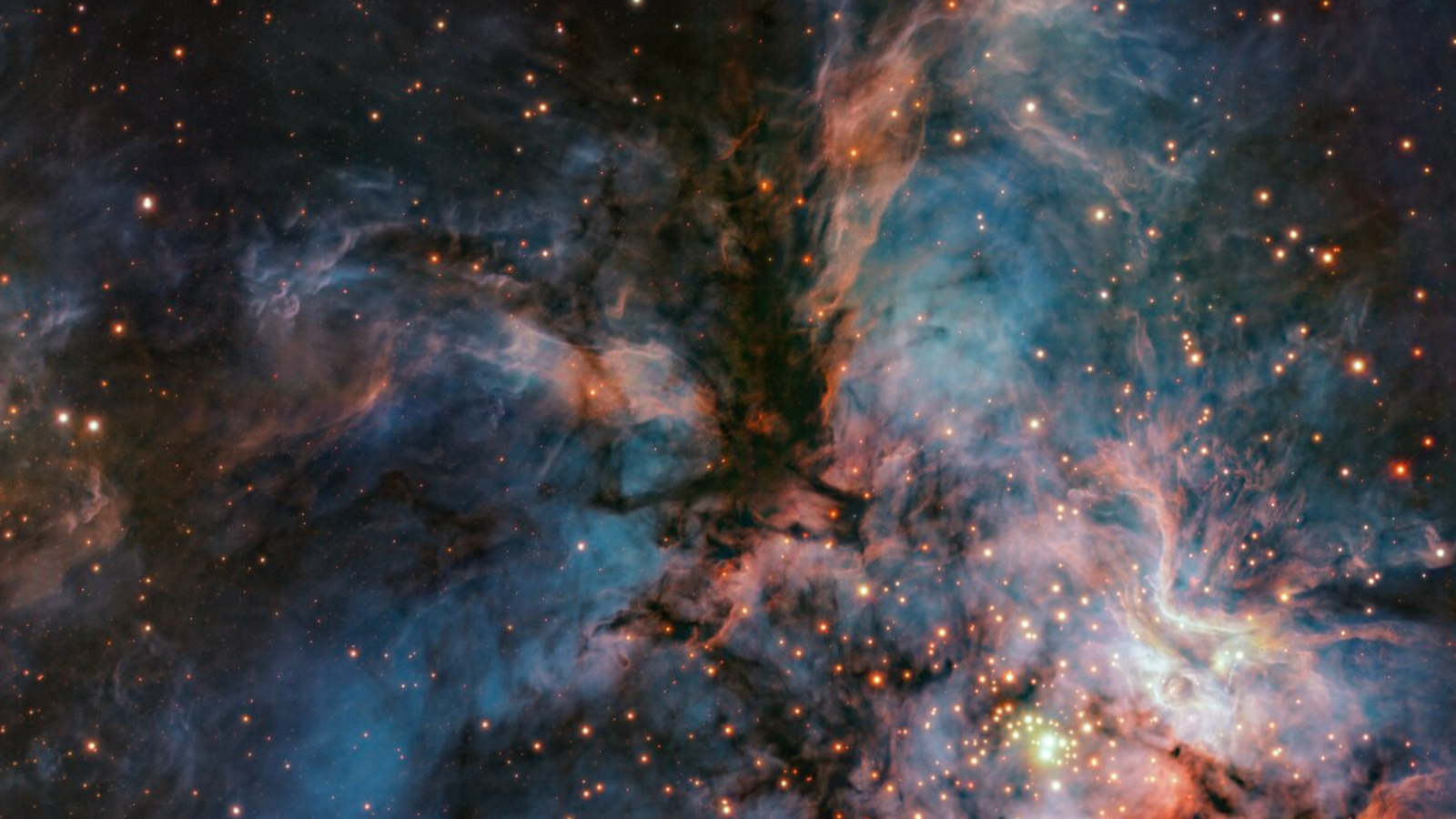
Very Large Telescope Captures Stunning Image of Cosmic Hawk Nebula
The Gist
The Very Large Telescope captured an image of the RCW 36 nebula, resembling a cosmic hawk, located 2,300 light-years away.
Explain Like I'm Five
"Imagine a giant cloud in space that looks like a hawk! Inside, there are baby stars and even some 'failed stars' that didn't get big enough."
Deep Intelligence Analysis
_Context: This intelligence report was compiled by the DailyOrbitalWire Strategy Engine. Verified for Art. 50 Compliance._
Impact Assessment
The image provides insights into star formation and the characteristics of brown dwarfs. Studying nebulae like RCW 36 helps us understand the evolution of stars and planetary systems.
Read Full Story on Space.comKey Details
- ● The RCW 36 nebula is located 2,300 light-years away in the Vela constellation.
- ● The nebula contains dark clouds, filaments of gas and dust, and a stellar nursery.
- ● Astronomers are interested in the brown dwarfs within the nebula.
- ● The image was captured by the VLT instrument HAWK-I.
Optimistic Outlook
Advanced telescopes like the VLT continue to reveal new details about the universe. Further observations of RCW 36 could provide valuable data on the formation and properties of brown dwarfs.
Pessimistic Outlook
The vast distances involved make it challenging to study these objects in detail. Limited data on brown dwarfs hinders our understanding of their role in the universe.

The Signal, Not
the Noise|
Get the week's top 1% of space-tech intelligence synthesized into a 5-minute read. Join 25,000+ aerospace insiders.
Unsubscribe anytime. No spam, ever.