BREAKING: • HSC Weak Lensing Catalog Calibrated with DESI Data • Mitigating Gain Calibration Errors in Epoch of Reionisation Observations with SKA1-Low • Calibrating Photometric Redshift Bias with Lensing Shear Ratios for HSC-Y3 Survey • Cosmological Constraints on Varying Electron Mass and Early Dark Energy • Radio Band Gravitational Wave Detection Enhanced by Pulsar Magnetospheres
HSC Weak Lensing Catalog Calibrated with DESI Data
Satellites Mar 31
arXiv Cosmology // 2026-03-31

HSC Weak Lensing Catalog Calibrated with DESI Data

THE GIST: The Hyper Suprime Camera (HSC) weak lensing catalog is now fully calibrated using Dark Energy Spectroscopic Instrument (DESI) data.

IMPACT: Accurate calibration of weak lensing data is crucial for cosmological analysis and understanding the distribution of matter in the universe. This calibration improves the precision of future cosmological studies.
Optimistic
Pessimistic
ELI5
Deep Dive // Full Analysis
Mitigating Gain Calibration Errors in Epoch of Reionisation Observations with SKA1-Low
Satellites Mar 31
arXiv Cosmology // 2026-03-31

Mitigating Gain Calibration Errors in Epoch of Reionisation Observations with SKA1-Low

THE GIST: <b>A hybrid foreground mitigation technique allows recovery of the HI signal with SKA1-Low despite gain calibration errors.</b>

IMPACT: Accurate foreground mitigation is crucial for detecting the 21-cm signal from the Epoch of Reionisation. This work demonstrates the effectiveness of a hybrid technique for mitigating gain calibration errors in SKA1-Low observations.
Optimistic
Pessimistic
ELI5
Deep Dive // Full Analysis
Calibrating Photometric Redshift Bias with Lensing Shear Ratios for HSC-Y3 Survey
Satellites Mar 31
arXiv Cosmology // 2026-03-31

Calibrating Photometric Redshift Bias with Lensing Shear Ratios for HSC-Y3 Survey

THE GIST: <b>Small-scale galaxy-galaxy lensing is used to calibrate photometric redshift distributions for source galaxies in the HSC-Y3 weak lensing survey.</b>

IMPACT: Accurate calibration of photometric redshifts is crucial for weak lensing cosmology. This work demonstrates the utility of small-scale lensing as an independent probe for calibrating photo-z bias.
Optimistic
Pessimistic
ELI5
Deep Dive // Full Analysis
Cosmological Constraints on Varying Electron Mass and Early Dark Energy
Satellites Mar 31
arXiv Cosmology // 2026-03-31

Cosmological Constraints on Varying Electron Mass and Early Dark Energy

THE GIST: <b>Analysis of varying electron mass and axionlike early dark energy models using DESI DR2 and ACT DR6 data provides cosmological constraints.</b>

IMPACT: Constraining the varying electron mass and early dark energy helps refine cosmological models and address the Hubble tension. The results provide insights into the inflationary epoch and the nature of dark energy.
Optimistic
Pessimistic
ELI5
Deep Dive // Full Analysis
Radio Band Gravitational Wave Detection Enhanced by Pulsar Magnetospheres
Satellites Mar 31
arXiv Cosmology // 2026-03-31

Radio Band Gravitational Wave Detection Enhanced by Pulsar Magnetospheres

THE GIST: <b>Numerical simulations suggest FAST and SKA2-MID telescopes could detect faint radio-band signals from gravitational waves interacting with pulsar magnetospheres.</b>
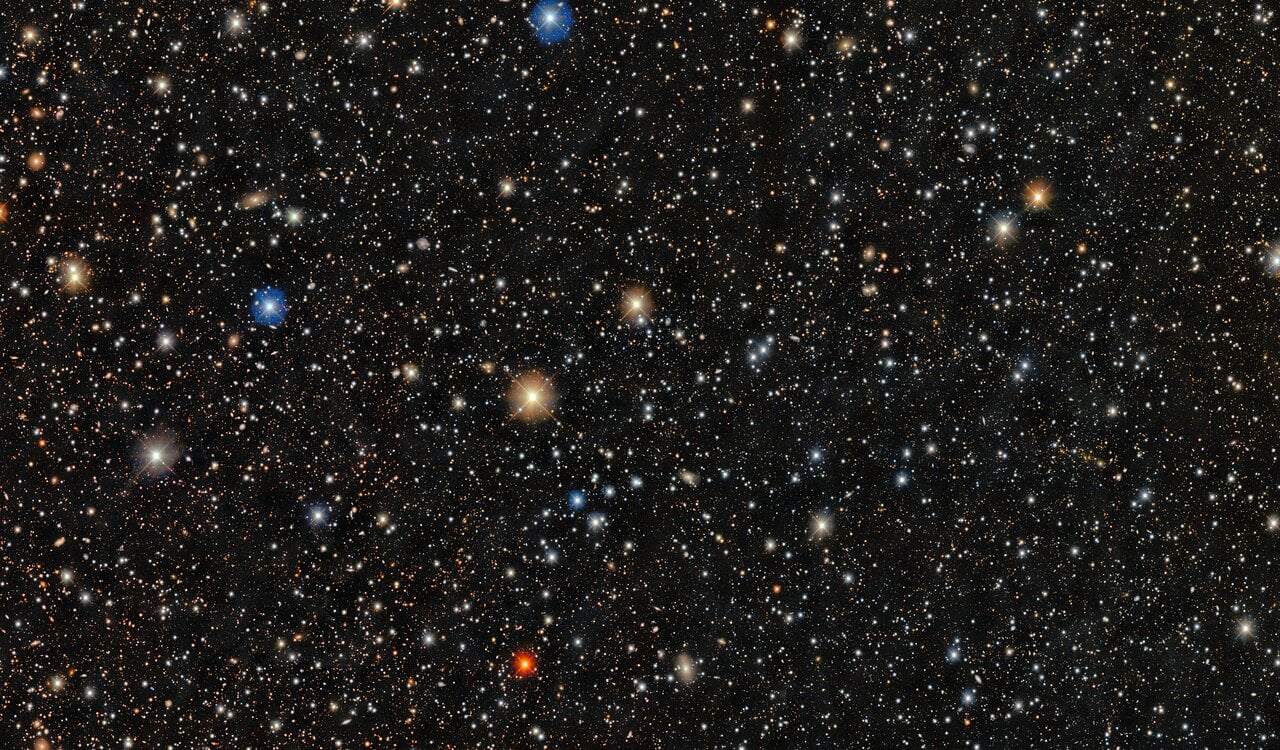
IMPACT: Detecting radio-band gravitational waves could open new avenues for studying primordial black hole mergers and stochastic gravitational wave backgrounds. The MPMT method offers a robust approach to validate detections and reject false positives, increasing confidence in results.
Optimistic
Pessimistic
ELI5
Deep Dive // Full Analysis
Ancient Star Reveals Clues to Early Universe Chemistry
Satellites Mar 30
Universe Today // 2026-03-30

Ancient Star Reveals Clues to Early Universe Chemistry

THE GIST: A chemically peculiar star, PicII-503, found in the Pictor II dwarf galaxy, offers insights into the chemical composition of the universe's first stars.

IMPACT: Studying stars like PicII-503 helps understand the chemical evolution in the early universe. These stars act as time capsules, preserving elements from the first stars and providing insights into their formation and death.
Optimistic
Pessimistic
ELI5
Deep Dive // Full Analysis
NISAR Satellite's Left-Looking Radar Analyzed for Passive Bistatic Applications
Satellites Mar 30
Hacker News Space // 2026-03-30

NISAR Satellite's Left-Looking Radar Analyzed for Passive Bistatic Applications

THE GIST: Analysis reveals NISAR satellite's left-looking radar configuration and provides scripts for predicting illumination.
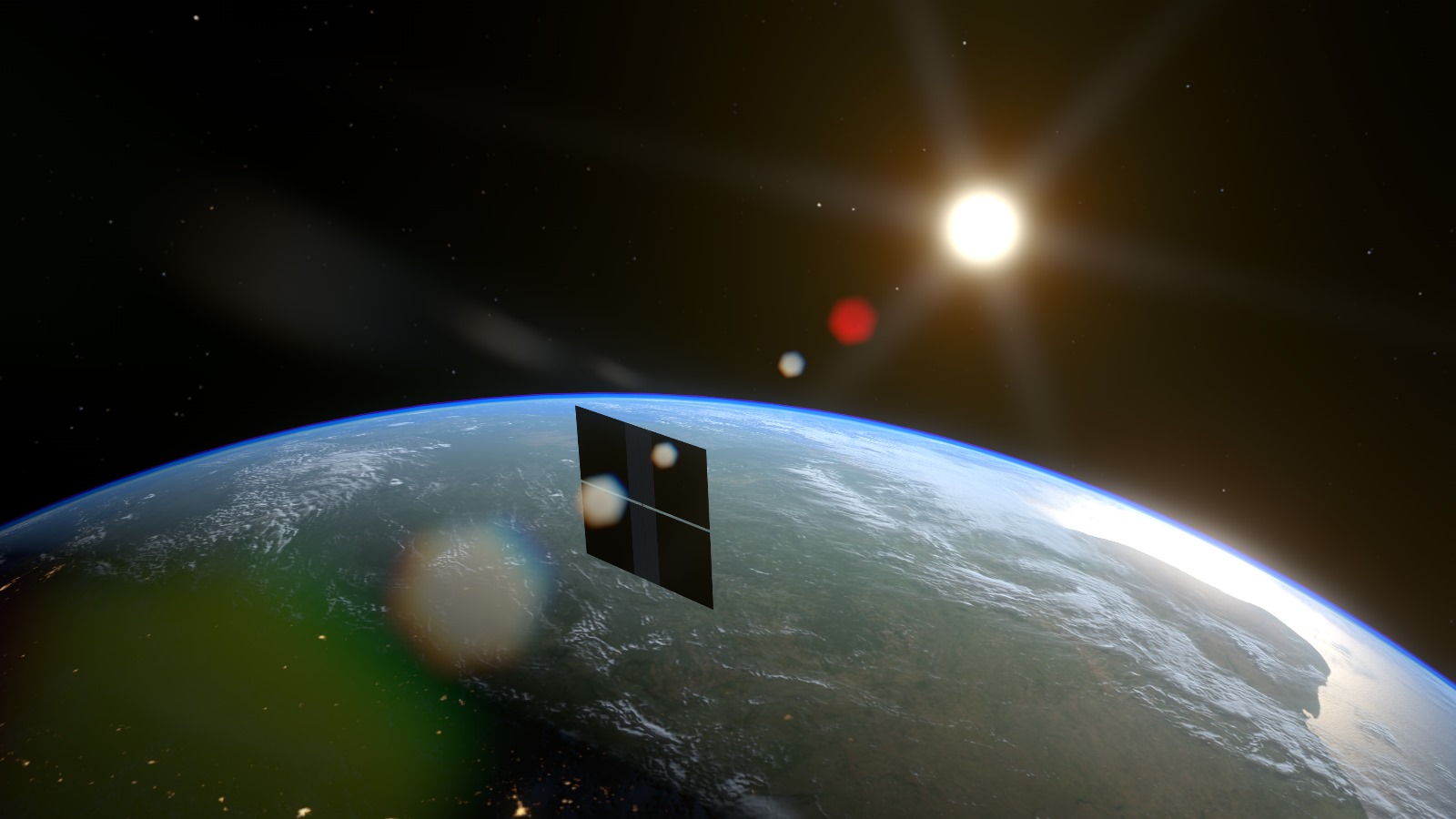
IMPACT: Understanding NISAR's radar characteristics enables passive bistatic radar applications, potentially expanding remote sensing capabilities. The provided scripts facilitate the prediction of illumination events, aiding in data acquisition and analysis.
Optimistic
Pessimistic
ELI5
Deep Dive // Full Analysis
Starcloud Secures $170M Series A Funding at $1.1B Valuation
Satellites Mar 30
Payload Space // 2026-03-30

Starcloud Secures $170M Series A Funding at $1.1B Valuation

THE GIST: Starcloud, an orbital data center startup, raised $170M in Series A funding, valuing the company at $1.1B.

IMPACT: Starcloud's funding round highlights the growing investor interest in orbital data centers and the potential for space-based computing. The company's plans to utilize Starship for future deployments could significantly reduce launch costs and enable new applications.
Optimistic
Pessimistic
ELI5
Deep Dive // Full Analysis
Vegetation's Red Edge: A Biosignature for Exoplanet Detection
Satellites Mar 30
Universe Today // 2026-03-30

Vegetation's Red Edge: A Biosignature for Exoplanet Detection

THE GIST: The vegetation red edge, a spectral fingerprint of photosynthetic life, could be detectable on exoplanets despite atmospheric and surface complexities.

IMPACT: Detecting biosignatures like the vegetation red edge is crucial for identifying potentially habitable exoplanets. This research demonstrates the feasibility of detecting such signatures even with atmospheric and surface variations.
Optimistic
Pessimistic
ELI5
Deep Dive // Full Analysis
Cosmological 21 cm Signal Detected at z ~ 1 by CHIME
Satellites Mar 30
arXiv Instrumentation // 2026-03-30

Cosmological 21 cm Signal Detected at z ~ 1 by CHIME

THE GIST: The Canadian Hydrogen Intensity Mapping Experiment (CHIME) has detected the cosmological 21 cm signal in auto-correlation at z ~ 1 with 12.5 sigma significance.

IMPACT: This detection demonstrates CHIME's capability to probe large-scale structure through 21 cm intensity mapping without reliance on external galaxy surveys. It provides valuable insights into the early universe.
Optimistic
Pessimistic
ELI5
Deep Dive // Full Analysis
Successful Fusion of JWST Data Achieved, Enhancing Astronomical Observations
Satellites Mar 30
arXiv Instrumentation // 2026-03-30

Successful Fusion of JWST Data Achieved, Enhancing Astronomical Observations

THE GIST: Researchers successfully fused JWST data, creating high-resolution hyperspectral cubes and unlocking unprecedented spatial resolution for astronomical observations.

IMPACT: This breakthrough enables astronomers to extract physical properties from JWST data with unprecedented spatial resolution. It showcases the transformative potential of data fusion in astronomy.
Optimistic
Pessimistic
ELI5
Deep Dive // Full Analysis
Hardware-Software Codesign Optimization for Scientific and Industrial Systems
Satellites Mar 30
arXiv Instrumentation // 2026-03-30

Hardware-Software Codesign Optimization for Scientific and Industrial Systems

THE GIST: Research explores hardware-software co-design optimization in scientific experiments and industrial systems, highlighting the importance of addressing inter-relations between parameters.

IMPACT: Optimizing complex systems requires considering the interplay between hardware and software. This research provides insights into co-design procedures that can improve performance in both scientific and industrial applications.
Optimistic
Pessimistic
ELI5
Deep Dive // Full Analysis
Previous
Page 21 of 49
Next
```