BREAKING: • AI Maps Dark Matter with Physics-Guided Diffusion Models • DEAP-3600 Detector Improves Dark Matter Search Limits • Probing Early Universe Physics with Gravitational-Wave Correlators • BBH Mergers Calibrate Spectral Siren Cosmology • CosmoDS Toolkit Streamlines Cosmological Model Analysis
AI Maps Dark Matter with Physics-Guided Diffusion Models
Satellites Mar 17
arXiv Cosmology // 2026-03-17

AI Maps Dark Matter with Physics-Guided Diffusion Models

THE GIST: New AI method reconstructs dark matter distribution in galaxy clusters using physics-guided diffusion models and a large simulated dataset.

IMPACT: Efficient dark matter mapping is crucial for analyzing data from upcoming wide-field cosmological surveys. This AI-driven approach offers a scalable solution for processing vast amounts of cluster data.
Optimistic
Pessimistic
ELI5
Deep Dive // Full Analysis
DEAP-3600 Detector Improves Dark Matter Search Limits
Satellites Mar 17
arXiv Cosmology // 2026-03-17

DEAP-3600 Detector Improves Dark Matter Search Limits

THE GIST: The DEAP-3600 detector at SNOLAB sets improved limits on WIMP-nucleon spin-independent cross section using liquid argon.

IMPACT: This research provides improved constraints on the properties of WIMP dark matter, furthering the search for these elusive particles. The DEAP-3600 detector's sensitivity is limited by alpha-decays from dust particulates.
Optimistic
Pessimistic
ELI5
Deep Dive // Full Analysis
Probing Early Universe Physics with Gravitational-Wave Correlators
Satellites Mar 17
arXiv Cosmology // 2026-03-17

Probing Early Universe Physics with Gravitational-Wave Correlators

THE GIST: Research explores non-Gaussian features of stochastic gravitational-wave backgrounds to probe early-Universe physics and dark-sector dynamics.

IMPACT: This work provides tools to characterize higher-order GW correlators, offering a complementary observable to probe the origin of GW backgrounds and distinguish cosmological from astrophysical sources.
Optimistic
Pessimistic
ELI5
Deep Dive // Full Analysis
BBH Mergers Calibrate Spectral Siren Cosmology
Satellites Mar 17
arXiv Cosmology // 2026-03-17

BBH Mergers Calibrate Spectral Siren Cosmology

THE GIST: Synthetic catalogs of binary black hole mergers are used to calibrate spectral siren cosmology, reducing bias in Hubble constant determination.

IMPACT: This research addresses biases in Hubble constant determination by using BBH mergers as standard sirens. Calibrating these sirens with synthetic catalogs improves the accuracy of cosmological measurements.
Optimistic
Pessimistic
ELI5
Deep Dive // Full Analysis
CosmoDS Toolkit Streamlines Cosmological Model Analysis
Satellites Mar 17
arXiv Cosmology // 2026-03-17

CosmoDS Toolkit Streamlines Cosmological Model Analysis

THE GIST: CosmoDS, a new Python toolkit, facilitates cosmological model analysis using dynamical systems within the Cobaya framework.

IMPACT: This toolkit simplifies the process of studying nonlinear cosmological systems, particularly those involving dark energy. By integrating with Cobaya, it allows researchers to leverage existing statistical tools for parameter estimation and model analysis.
Optimistic
Pessimistic
ELI5
Deep Dive // Full Analysis
SpaceX Nears 10,000 Starlink Satellite Milestone with Falcon 9 Launch
Satellites Mar 16
Spaceflight Now // 2026-03-16

SpaceX Nears 10,000 Starlink Satellite Milestone with Falcon 9 Launch

THE GIST: SpaceX approaches 10,000 Starlink satellites in LEO with a Falcon 9 launch from California.

IMPACT: Reaching 10,000 satellites signifies a major expansion of SpaceX's Starlink constellation, potentially improving global internet access. The booster's 14th flight demonstrates increasing reusability, lowering launch costs and improving launch cadence.
Optimistic
Pessimistic
ELI5
Deep Dive // Full Analysis
Nvidia Unveils Computing Platforms for Orbital Data Centers
Satellites Mar 16
Hacker News Space // 2026-03-16

Nvidia Unveils Computing Platforms for Orbital Data Centers

THE GIST: Nvidia announces Vera Rubin Space-1 Module for AI-powered orbital data centers, addressing power and cooling challenges in space.
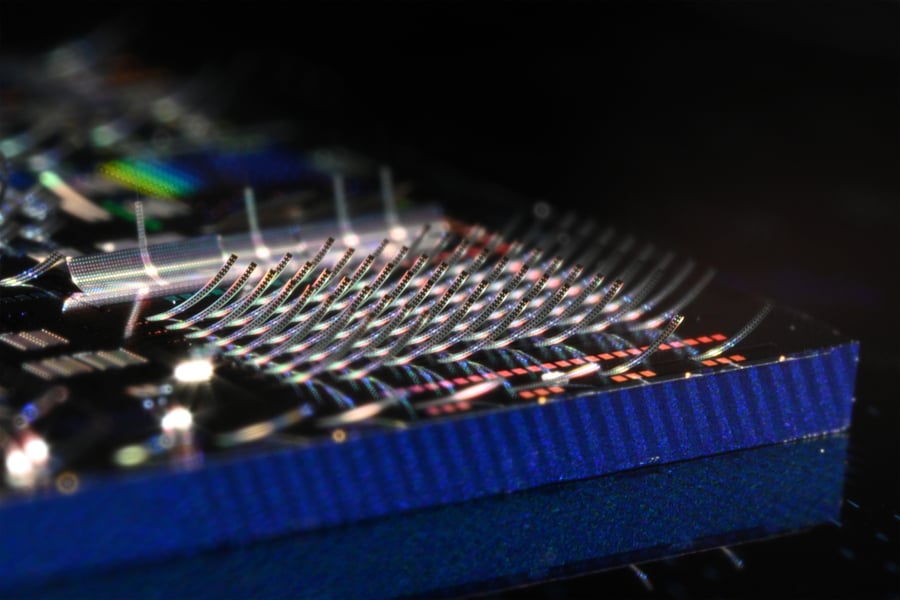
IMPACT: This initiative could revolutionize AI processing by leveraging space's virtually unlimited solar power. Overcoming cooling challenges is critical for deploying high-performance computing in orbit.
Optimistic
Pessimistic
ELI5
Deep Dive // Full Analysis
Microscopic 'Ski-Jumps' Could Revolutionize Spacecraft LiDAR Systems
Satellites Mar 16
Universe Today // 2026-03-16

Microscopic 'Ski-Jumps' Could Revolutionize Spacecraft LiDAR Systems

THE GIST: A new 'photonic ski-jump' technology could drastically reduce the size, weight, and power consumption of spacecraft LiDAR systems.
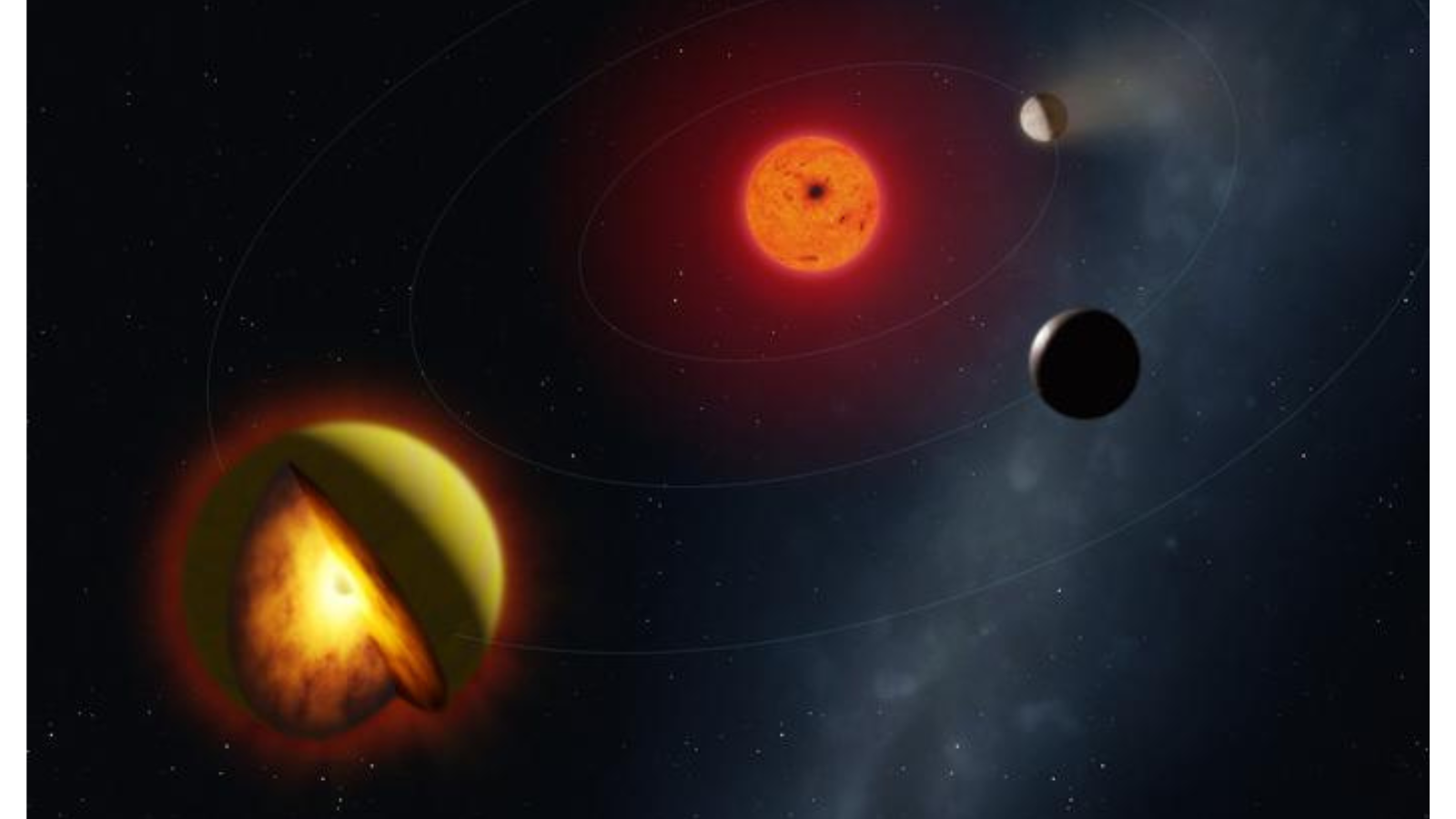
IMPACT: This innovation addresses the significant SWaP challenges associated with traditional LiDAR systems, potentially enabling smaller, more efficient spacecraft. The technology's scalability and low power requirements could also open new possibilities for in-situ resource utilization and advanced satellite constellations.
Optimistic
Pessimistic
ELI5
Deep Dive // Full Analysis
New Type of Exoplanet Discovered: A Rotten-Egg-Smelling Lava World
Satellites Mar 16
Space.com // 2026-03-16

New Type of Exoplanet Discovered: A Rotten-Egg-Smelling Lava World

THE GIST: Astronomers discovered L 98-59 d, a unique exoplanet with a hydrogen sulfide-rich atmosphere and magma ocean.

IMPACT: The discovery expands our understanding of exoplanet diversity and challenges existing classification systems. It highlights the potential for unique planetary compositions.
Optimistic
Pessimistic
ELI5
Deep Dive // Full Analysis
Van Allen Probe Re-enters Earth's Atmosphere After 14 Years
Satellites Mar 16
Hacker News Space // 2026-03-16

Van Allen Probe Re-enters Earth's Atmosphere After 14 Years

THE GIST: The Van Allen Probe, launched in 2012, re-entered Earth's atmosphere, concluding its mission to study radiation belts.

IMPACT: The mission provided unprecedented data on Earth's radiation belts, which shield the planet from harmful solar activity. Understanding these belts is crucial for protecting satellites and astronauts.
Optimistic
Pessimistic
ELI5
Deep Dive // Full Analysis
Lunar Magnetic Anomalies Explained by Kelvin-Helmholtz Instability
Satellites Mar 16
Universe Today // 2026-03-16

Lunar Magnetic Anomalies Explained by Kelvin-Helmholtz Instability

THE GIST: Researchers have identified a non-linear Kelvin-Helmholtz instability as the likely cause of lunar external magnetic enhancements (LEMEs).

IMPACT: Understanding LEMEs is crucial for protecting lunar assets from solar wind and charged dust particles. This new model helps explain how these magnetic anomalies extend far above the lunar surface, impacting spacecraft operations.
Optimistic
Pessimistic
ELI5
Deep Dive // Full Analysis
JWST Observations Constrain Exoplanet Cloud Microphysics
Satellites Mar 16
arXiv Instrumentation // 2026-03-16

JWST Observations Constrain Exoplanet Cloud Microphysics

THE GIST: JWST data, combined with cloud models, reveals insights into silicate cloud formation in exoplanet atmospheres.

IMPACT: Understanding exoplanet cloud formation helps characterize exoplanet atmospheres and assess their potential habitability. This research bridges the gap between observations and microphysical models.
Optimistic
Pessimistic
ELI5
Deep Dive // Full Analysis
Previous
Page 37 of 50
Next
```