BREAKING: • CSST Faces Challenges Resolving Stellar Populations in Palomar 5 • Improved CMB Telescope Windows Enhance Detector Sensitivity • AI Speeds Up Black Hole Image Generation • Traveling-Wave Parametric Amplifier for Scalable Quantum Computing • Global IoT Networks as Distributed Radio Telescopes: A Feasibility Study
CSST Faces Challenges Resolving Stellar Populations in Palomar 5
Satellites Mar 16
arXiv Instrumentation // 2026-03-16

CSST Faces Challenges Resolving Stellar Populations in Palomar 5

THE GIST: Simulations suggest the Chinese Space Station Survey Telescope (CSST) will struggle to resolve multiple stellar populations in distant stellar streams.

IMPACT: Understanding the limitations of CSST helps optimize observation strategies for studying stellar populations. Future observations will require multiple epochs and bands to obtain necessary data.
Optimistic
Pessimistic
ELI5
Deep Dive // Full Analysis
Improved CMB Telescope Windows Enhance Detector Sensitivity
Satellites Mar 16
arXiv Instrumentation // 2026-03-16

Improved CMB Telescope Windows Enhance Detector Sensitivity

THE GIST: New thin composite polymer vacuum windows improve detector sensitivity in millimeter-wave telescopes observing the cosmic microwave background.

IMPACT: Increased detector sensitivity allows for more precise measurements of the cosmic microwave background. This leads to a better understanding of the early universe and its fundamental properties.
Optimistic
Pessimistic
ELI5
Deep Dive // Full Analysis
AI Speeds Up Black Hole Image Generation
Satellites Mar 16
arXiv Instrumentation // 2026-03-16

AI Speeds Up Black Hole Image Generation

THE GIST: A new AI model drastically reduces the computational cost of generating black hole images.

IMPACT: Faster black hole image generation enables quicker parameter exploration and more precise tests of strong-field gravity. This accelerates research and potentially improves our understanding of black hole physics.
Optimistic
Pessimistic
ELI5
Deep Dive // Full Analysis
Traveling-Wave Parametric Amplifier for Scalable Quantum Computing
Satellites Mar 16
arXiv Instrumentation // 2026-03-16

Traveling-Wave Parametric Amplifier for Scalable Quantum Computing

THE GIST: A traveling-wave parametric amplifier achieves broadband amplification and backward isolation in a compact circuit for superconducting quantum computers.

IMPACT: This technology could simplify the readout hardware for superconducting quantum computers, enabling scalability and improved measurement efficiency.
Optimistic
Pessimistic
ELI5
Deep Dive // Full Analysis
Global IoT Networks as Distributed Radio Telescopes: A Feasibility Study
Satellites Mar 16
arXiv Instrumentation // 2026-03-16

Global IoT Networks as Distributed Radio Telescopes: A Feasibility Study

THE GIST: Researchers propose using global IoT networks as a distributed radio telescope, potentially increasing antenna gain and survey speed significantly.

IMPACT: This innovative approach could revolutionize radio astronomy by providing a cost-effective and widely accessible platform for astronomical observations. The increased antenna gain and survey speed could lead to new discoveries.
Optimistic
Pessimistic
ELI5
Deep Dive // Full Analysis
Dichroic Metasurface Design Enables Dual-Angle Beam Refraction
Satellites Mar 16
arXiv Instrumentation // 2026-03-16

Dichroic Metasurface Design Enables Dual-Angle Beam Refraction

THE GIST: A transmissive Huygens' metasurface model achieves diverse refraction angles at two distinct frequency bands, potentially improving satellite communication.

IMPACT: This technology could lead to more efficient and versatile satellite communication systems. The ability to refract beams at different angles and frequencies could improve signal targeting and reduce interference.
Optimistic
Pessimistic
ELI5
Deep Dive // Full Analysis
Assembly Theory: A New Approach to Detecting Extraterrestrial Life
Satellites Mar 16
Universe Today // 2026-03-16

Assembly Theory: A New Approach to Detecting Extraterrestrial Life

THE GIST: <b>Assembly Theory offers a novel method for detecting life by assessing molecular complexity rather than specific biosignatures.</b>
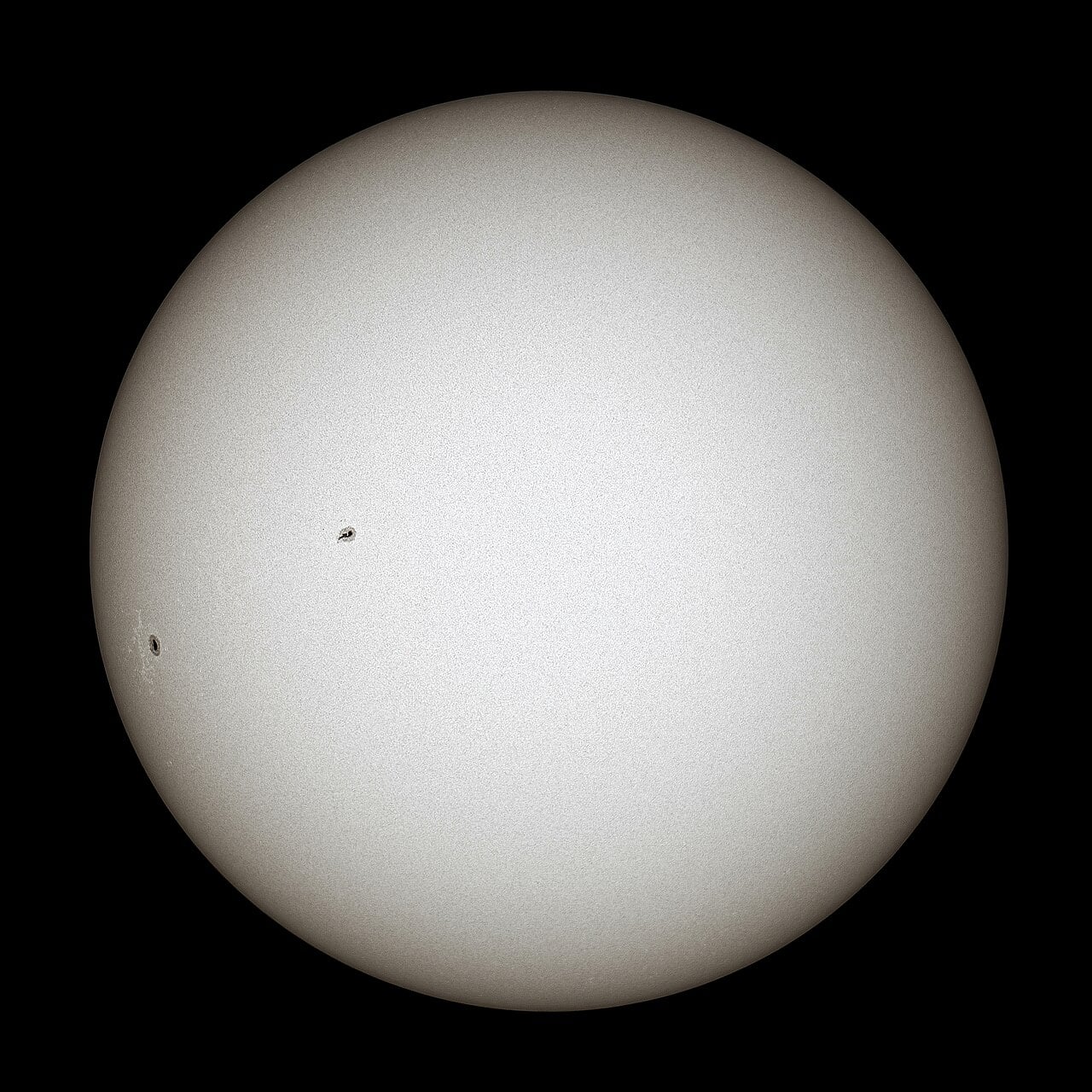
IMPACT: Assembly Theory provides a new, agnostic approach to detecting life on exoplanets, moving beyond the limitations of Earth-centric biosignature searches. It offers a continuous complexity score, potentially capturing the gradual transition between abiotic and biotic environments.
Optimistic
Pessimistic
ELI5
Deep Dive // Full Analysis
Solar Siblings: Evidence Suggests the Sun Migrated from the Galactic Core
Satellites Mar 16
Universe Today // 2026-03-16

Solar Siblings: Evidence Suggests the Sun Migrated from the Galactic Core

THE GIST: <b>Analysis of solar twins suggests the Sun migrated from the Milky Way's core during a period of galactic bar formation.</b>

IMPACT: The discovery of the Sun's migration from the galactic core provides insights into the conditions necessary for life to arise. Escaping the hostile galactic center allowed the Sun to find the stable environment needed for planetary development and the emergence of life.
Optimistic
Pessimistic
ELI5
Deep Dive // Full Analysis
Signet: Autonomous Wildfire Tracking via Satellite Data
Satellites Mar 15
Hacker News Space // 2026-03-15

Signet: Autonomous Wildfire Tracking via Satellite Data

THE GIST: Signet autonomously tracks wildfires using satellite, thermal, and weather data across the continental US.
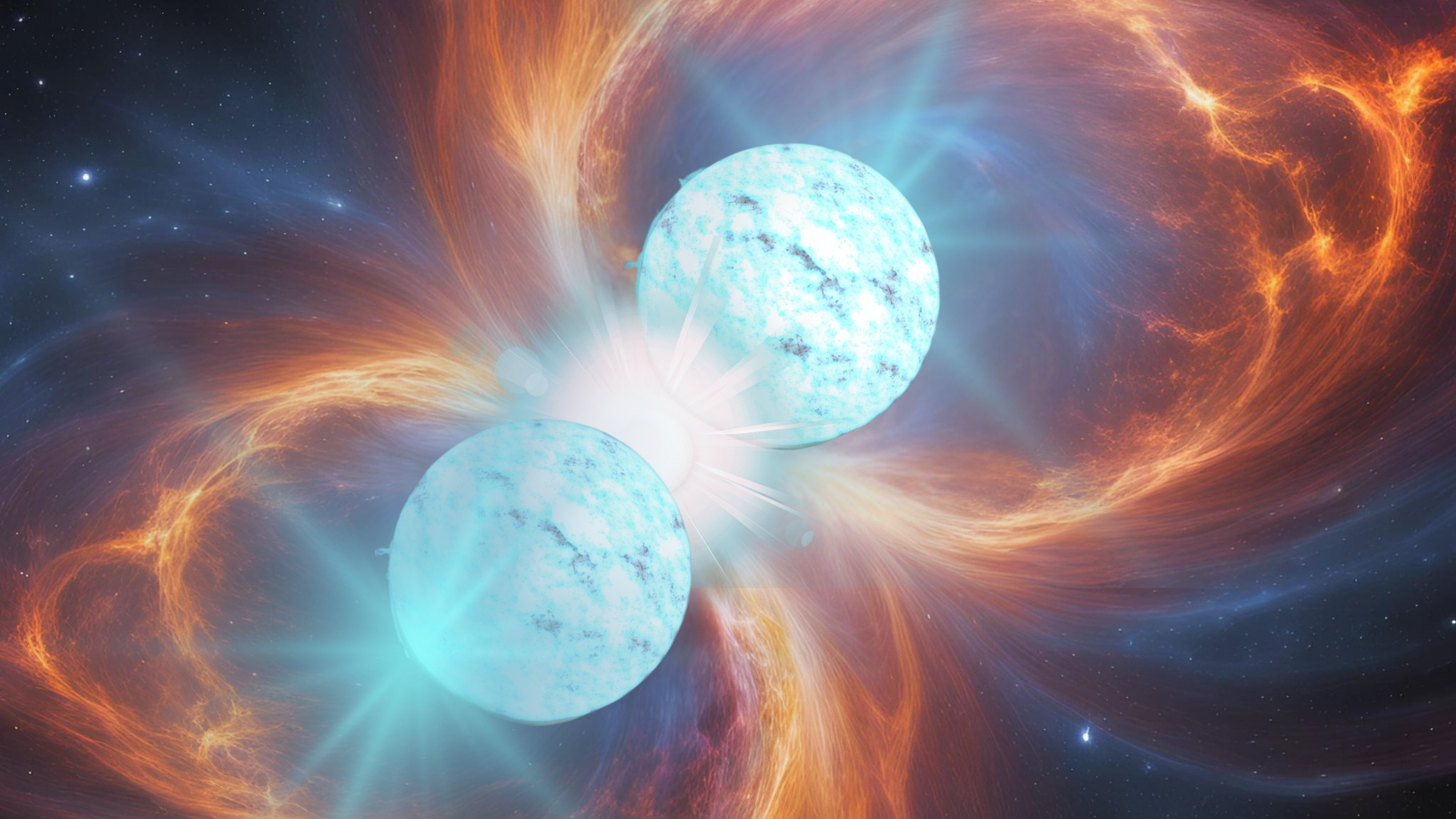
IMPACT: Autonomous wildfire tracking can provide faster and more comprehensive monitoring, aiding in emergency response and resource allocation. The system's multimodal reasoning approach enhances the accuracy and reliability of wildfire assessments.
Optimistic
Pessimistic
ELI5
Deep Dive // Full Analysis
Neutron Star Gravitational Waves May Reveal Quark-Gluon Plasma
Satellites Mar 15
Space.com // 2026-03-15

Neutron Star Gravitational Waves May Reveal Quark-Gluon Plasma

THE GIST: Scientists believe gravitational waves from neutron star mergers can reveal the presence of quark-gluon plasma, a state of matter from the early universe.
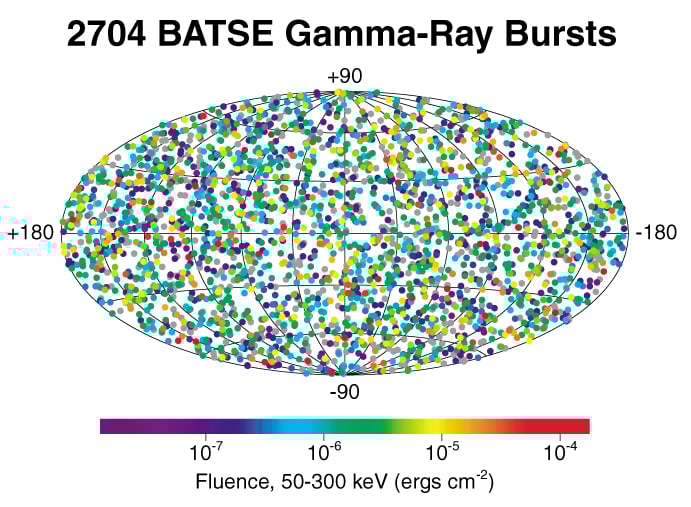
IMPACT: Understanding neutron star interiors could provide insights into the state of matter immediately after the Big Bang. Analyzing gravitational waves offers a novel method for probing extreme physics and the composition of these celestial objects.
Optimistic
Pessimistic
ELI5
Deep Dive // Full Analysis
Record-Breaking Gamma-Ray Burst Challenges Black Hole Theories
Satellites Mar 15
Universe Today // 2026-03-15

Record-Breaking Gamma-Ray Burst Challenges Black Hole Theories

THE GIST: GRB 250702B, the longest gamma-ray burst ever recorded, challenges existing models and suggests the presence of intermediate-mass black holes.
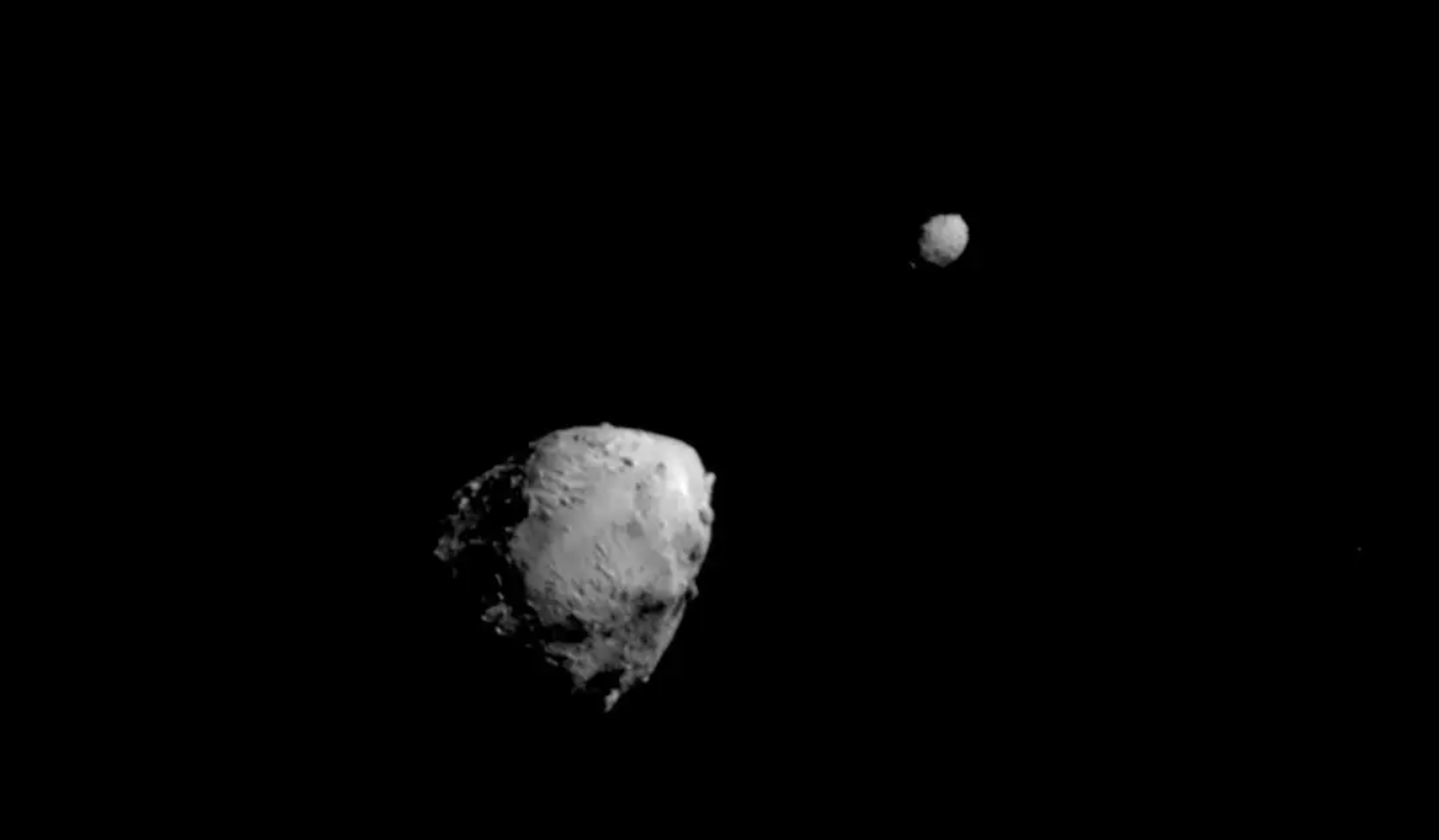
IMPACT: The discovery of GRB 250702B provides a unique opportunity to study intermediate-mass black holes, a largely missing population in astrophysics. Understanding these black holes could refine our models of galactic evolution and black hole formation.
Optimistic
Pessimistic
ELI5
Deep Dive // Full Analysis
DART Mission Impacted Solar Orbit of Asteroid System
Satellites Mar 14
Universe Today // 2026-03-14

DART Mission Impacted Solar Orbit of Asteroid System

THE GIST: NASA's DART mission successfully altered the solar orbit of the Didymos asteroid system, marking the first time humanity has changed a celestial body's path around the Sun.

IMPACT: This demonstrates the viability of kinetic impact as a planetary defense strategy. The change in the solar orbit, though small, validates the technique's potential for deflecting hazardous asteroids over time.
Optimistic
Pessimistic
ELI5
Deep Dive // Full Analysis
Previous
Page 38 of 50
Next
```