BREAKING: • Nebraska Wildfires Devastate Grasslands in Early 2026 • Massive Neutrinos' Impact on Large-Scale Structure • FLAMINGO Simulations: CMB Anisotropies and Extragalactic Foregrounds • Forecasting Primordial Non-Gaussianities with UNIONS and Planck • HSC Weak Lensing Catalog Calibrated with DESI Data
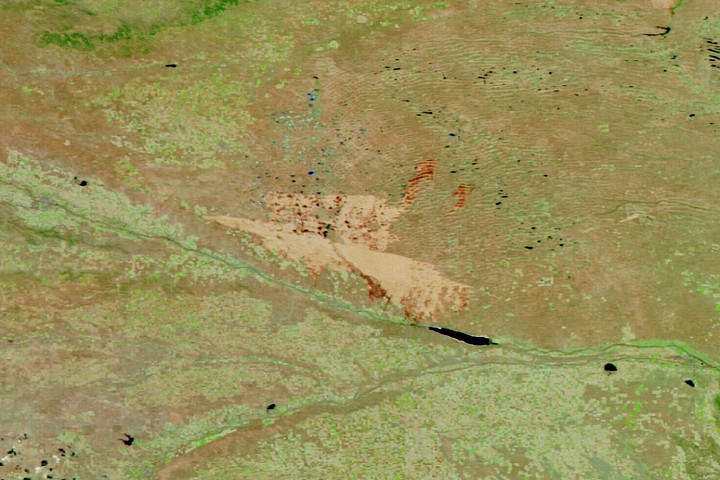
Nebraska Wildfires Devastate Grasslands in Early 2026
Defense & Policy Mar 31
NASA Technology // 2026-03-31

Nebraska Wildfires Devastate Grasslands in Early 2026

THE GIST: A massive wildfire in Nebraska burned over 640,000 acres in a week, becoming the state's largest wildfire.

IMPACT: The Nebraska wildfires highlight the increasing risk of large-scale wildfires due to dry conditions and unusual weather patterns. This event underscores the need for improved wildfire prevention and response strategies, especially in vulnerable regions like the Great Plains.
Optimistic
Pessimistic
ELI5
Deep Dive // Full Analysis
Massive Neutrinos' Impact on Large-Scale Structure
Satellites Mar 31
arXiv Cosmology // 2026-03-31

Massive Neutrinos' Impact on Large-Scale Structure

THE GIST: Researchers investigate how massive neutrinos affect the three-point correlation function (3PCF) of large-scale structures.

IMPACT: Understanding the impact of massive neutrinos on large-scale structure is crucial for constraining neutrino masses and refining cosmological models. The 3PCF offers a complementary tool for these studies.
Optimistic
Pessimistic
ELI5
Deep Dive // Full Analysis
FLAMINGO Simulations: CMB Anisotropies and Extragalactic Foregrounds
Satellites Mar 31
arXiv Cosmology // 2026-03-31

FLAMINGO Simulations: CMB Anisotropies and Extragalactic Foregrounds

THE GIST: New mock CMB maps from the FLAMINGO simulations provide a self-consistent model of secondary anisotropies and extragalactic foregrounds.

IMPACT: Understanding secondary CMB anisotropies and extragalactic foregrounds is crucial for accurately interpreting CMB data and testing cosmological models. These simulations provide a valuable resource for exploring correlations between different signals.
Optimistic
Pessimistic
ELI5
Deep Dive // Full Analysis
Forecasting Primordial Non-Gaussianities with UNIONS and Planck
Satellites Mar 31
arXiv Cosmology // 2026-03-31

Forecasting Primordial Non-Gaussianities with UNIONS and Planck

THE GIST: Researchers forecast the ability to measure local Primordial Non-Gaussianities (PNGs) using UNIONS Lyman-Break Galaxies and Planck CMB lensing.

IMPACT: Measuring PNGs provides insights into the physics of inflation, the period of rapid expansion in the early universe. This research forecasts the potential of future surveys to constrain models of inflation.
Optimistic
Pessimistic
ELI5
Deep Dive // Full Analysis
HSC Weak Lensing Catalog Calibrated with DESI Data
Satellites Mar 31
arXiv Cosmology // 2026-03-31

HSC Weak Lensing Catalog Calibrated with DESI Data

THE GIST: The Hyper Suprime Camera (HSC) weak lensing catalog is now fully calibrated using Dark Energy Spectroscopic Instrument (DESI) data.

IMPACT: Accurate calibration of weak lensing data is crucial for cosmological analysis and understanding the distribution of matter in the universe. This calibration improves the precision of future cosmological studies.
Optimistic
Pessimistic
ELI5
Deep Dive // Full Analysis
Mitigating Gain Calibration Errors in Epoch of Reionisation Observations with SKA1-Low
Satellites Mar 31
arXiv Cosmology // 2026-03-31

Mitigating Gain Calibration Errors in Epoch of Reionisation Observations with SKA1-Low

THE GIST: <b>A hybrid foreground mitigation technique allows recovery of the HI signal with SKA1-Low despite gain calibration errors.</b>

IMPACT: Accurate foreground mitigation is crucial for detecting the 21-cm signal from the Epoch of Reionisation. This work demonstrates the effectiveness of a hybrid technique for mitigating gain calibration errors in SKA1-Low observations.
Optimistic
Pessimistic
ELI5
Deep Dive // Full Analysis
Calibrating Photometric Redshift Bias with Lensing Shear Ratios for HSC-Y3 Survey
Satellites Mar 31
arXiv Cosmology // 2026-03-31

Calibrating Photometric Redshift Bias with Lensing Shear Ratios for HSC-Y3 Survey

THE GIST: <b>Small-scale galaxy-galaxy lensing is used to calibrate photometric redshift distributions for source galaxies in the HSC-Y3 weak lensing survey.</b>

IMPACT: Accurate calibration of photometric redshifts is crucial for weak lensing cosmology. This work demonstrates the utility of small-scale lensing as an independent probe for calibrating photo-z bias.
Optimistic
Pessimistic
ELI5
Deep Dive // Full Analysis
Cosmological Constraints on Varying Electron Mass and Early Dark Energy
Satellites Mar 31
arXiv Cosmology // 2026-03-31

Cosmological Constraints on Varying Electron Mass and Early Dark Energy

THE GIST: <b>Analysis of varying electron mass and axionlike early dark energy models using DESI DR2 and ACT DR6 data provides cosmological constraints.</b>

IMPACT: Constraining the varying electron mass and early dark energy helps refine cosmological models and address the Hubble tension. The results provide insights into the inflationary epoch and the nature of dark energy.
Optimistic
Pessimistic
ELI5
Deep Dive // Full Analysis
Radio Band Gravitational Wave Detection Enhanced by Pulsar Magnetospheres
Satellites Mar 31
arXiv Cosmology // 2026-03-31

Radio Band Gravitational Wave Detection Enhanced by Pulsar Magnetospheres

THE GIST: <b>Numerical simulations suggest FAST and SKA2-MID telescopes could detect faint radio-band signals from gravitational waves interacting with pulsar magnetospheres.</b>
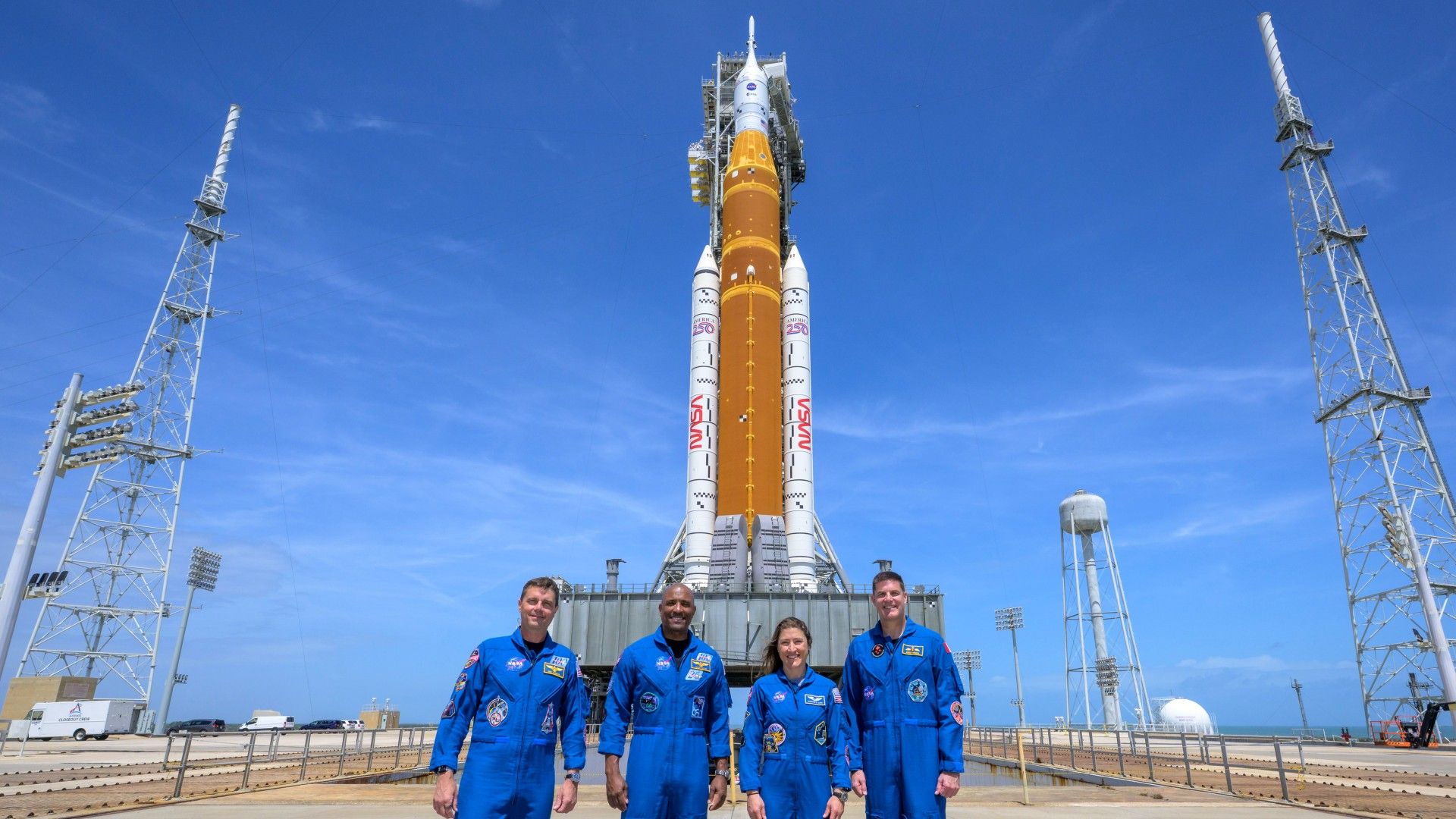
IMPACT: Detecting radio-band gravitational waves could open new avenues for studying primordial black hole mergers and stochastic gravitational wave backgrounds. The MPMT method offers a robust approach to validate detections and reject false positives, increasing confidence in results.
Optimistic
Pessimistic
ELI5
Deep Dive // Full Analysis
NASA: Solar Flare Poses No Threat to Artemis 2 Launch
Launch Vehicles Mar 30
Space.com // 2026-03-30

NASA: Solar Flare Poses No Threat to Artemis 2 Launch

THE GIST: NASA confirms that a recent X1.4-class solar flare and CME pose no threat to the Artemis 2 mission launch scheduled for April 1.
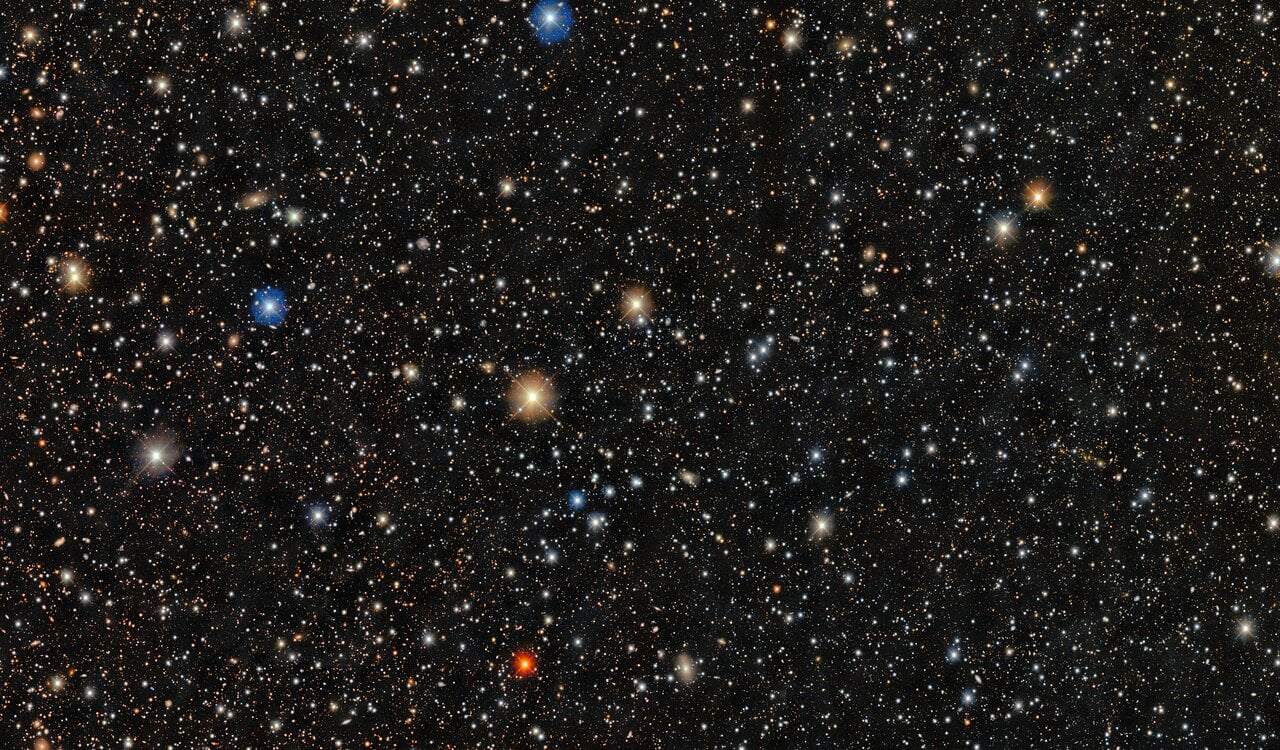
IMPACT: Ensuring astronaut safety is paramount, and NASA's proactive monitoring of space weather demonstrates its commitment. The Artemis 2 mission marks a significant step in returning humans to the moon and testing radiation protection measures.
Optimistic
Pessimistic
ELI5
Deep Dive // Full Analysis
Ancient Star Reveals Clues to Early Universe Chemistry
Satellites Mar 30
Universe Today // 2026-03-30

Ancient Star Reveals Clues to Early Universe Chemistry

THE GIST: A chemically peculiar star, PicII-503, found in the Pictor II dwarf galaxy, offers insights into the chemical composition of the universe's first stars.

IMPACT: Studying stars like PicII-503 helps understand the chemical evolution in the early universe. These stars act as time capsules, preserving elements from the first stars and providing insights into their formation and death.
Optimistic
Pessimistic
ELI5
Deep Dive // Full Analysis
Apollo Veterans Eager for Artemis II Launch, Urge Faster Moon Missions
Launch Vehicles Mar 30
Hacker News Space // 2026-03-30

Apollo Veterans Eager for Artemis II Launch, Urge Faster Moon Missions

THE GIST: Apollo-era personnel express enthusiasm for Artemis II but advocate for accelerated lunar missions.

IMPACT: The Artemis program represents a renewed focus on lunar exploration, but faces pressure to accelerate its pace to compete with China. The experience and perspectives of Apollo-era personnel highlight the importance of efficient and timely execution in space programs.
Optimistic
Pessimistic
ELI5
Deep Dive // Full Analysis
Previous
Page 85 of 134
Next
```